Home Decor Ideas for Rooms You Use Every Day
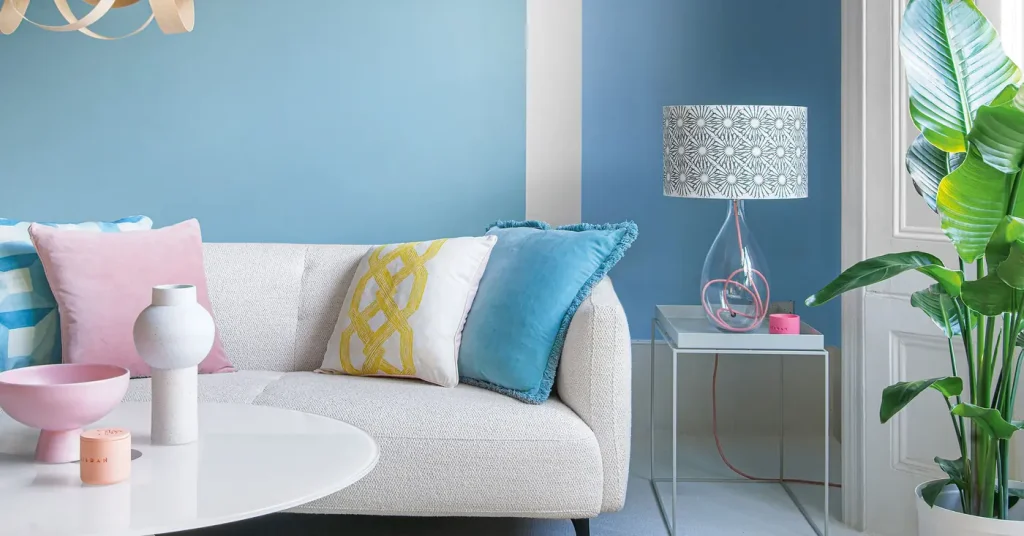
Home decor brings color, furniture, fabrics, lighting, and personal objects together in the rooms you use. Start with a daily frustration or an unfinished corner, keep the large pieces that work, and choose a small change that improves the whole view. A softer bed, a clearer counter, or a better placed lamp can give the room a direction.
The ideas below move from choosing a room to coordinating its surfaces, then into living rooms, bedrooms, kitchens, bathrooms, storage, and seasonal changes. These are decorating suggestions based on the arrangements shown, so adapt the details to the furniture and routines in your home.
On this page
- Choose the room and the decorating job
- Build home decor colors around a piece you own
- Home decor with plain furniture and textured fabric
- Look at room lighting before adding more objects
- Separate display surfaces from everyday storage
- Make living room decor work around the seats
- Let the bed set the bedroom decor direction
- Kitchen dining and bathroom decor for useful surfaces
- Use storage to make seasonal decor easy to change
Choose the Room and the Decorating Job
Pick a room where a small change would be welcome during an ordinary day. A living room might need a place to put a drink; a bedroom might have a bed you like beside a crowded nightstand. Naming that particular problem makes it easier to choose between another ornament and a piece with a useful role.
Look at the room from its entrance, then from the place where you spend time. The doorway shows the broad arrangement. The seat or bedside reveals what falls within reach, what blocks the view, and which surface keeps collecting things. Those views can point to different needs, so consider both before buying.
Choose a task you can describe plainly: connect a green sofa to the room, soften a white bed, or make a clear space beside the sink. Keep that sentence nearby while gathering ideas, because a beautiful picture offers plenty of details, and borrowing the one that answers your task leaves the rest of the room free to develop differently.
For a compact room, these small bedroom decorating ideas begin with a useful bedside surface before adding color through fabrics and wall details.
Build Home Decor Colors Around a Piece You Own
A sofa, floor, or favorite rug gives a room a starting color before any new paint arrives. Compare possible additions beside that existing surface. The useful question is how much of each color you want to see, including the wall behind the furniture and the floor beneath it.
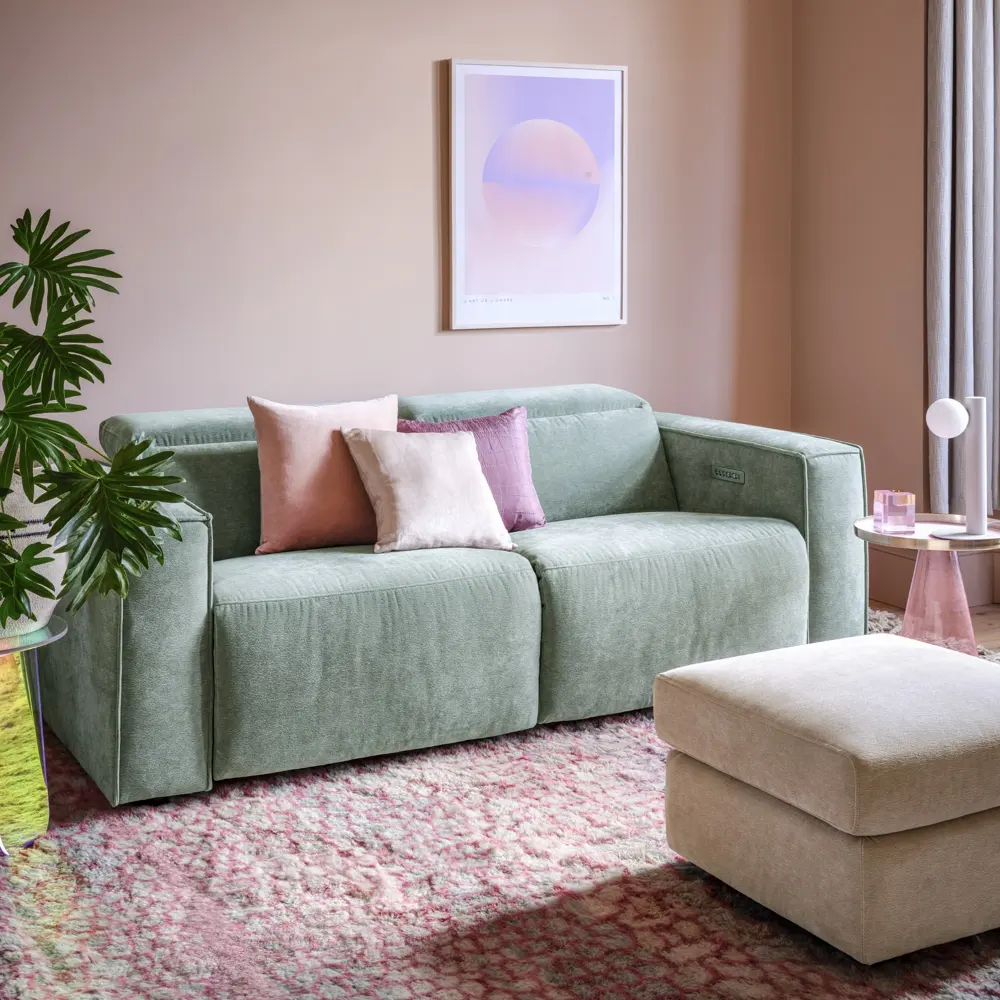
The green sofa above remains a distinct shape against a pale pink wall. Pink appears again in cushions and the rug, making a connection across the room. Borrowing a cushion color is a manageable first comparison if the sofa is staying; the broad wall can wait until that smaller pairing appeals to you.
A deeper background changes the balance even when the furniture stays pale. In the next room, the blue-gray wall gives the pink sofa a stronger outline, while the light rug keeps a broad pale area in front. Cream cushions repeat that lightness on the seat.
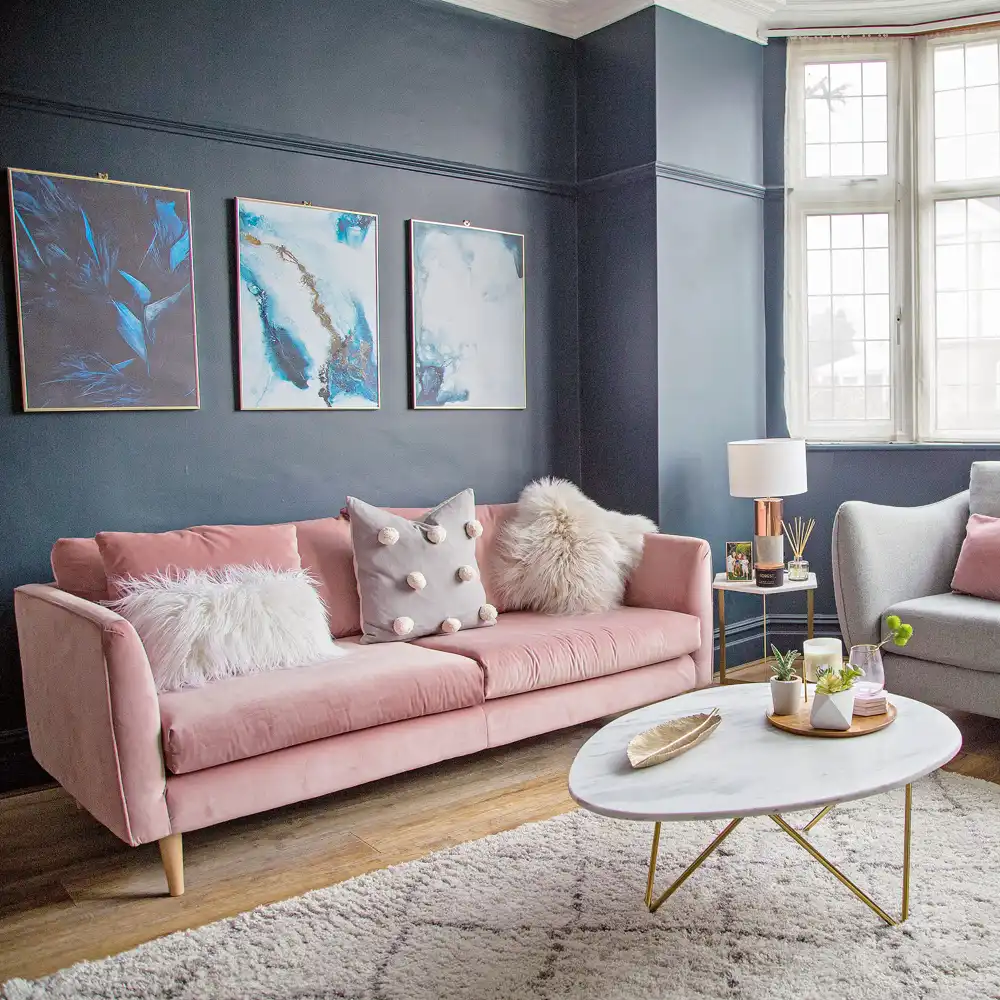
Choose physical samples for the room after a picture helps narrow the direction. A screen leaves out the changes under your own window light and evening lamps. Our living room color pairings compare more of these relationships between walls, sofas, cushions, and rugs.
Home Decor with Plain Furniture and Textured Fabric
Once the colors feel connected, consider whether the room needs a change of surface. A smooth cover beside a visibly woven throw gives the fabric edges something to stand against. Texture can provide that detail while the palette stays quiet, which suits a room already full of favorite objects or pictures.
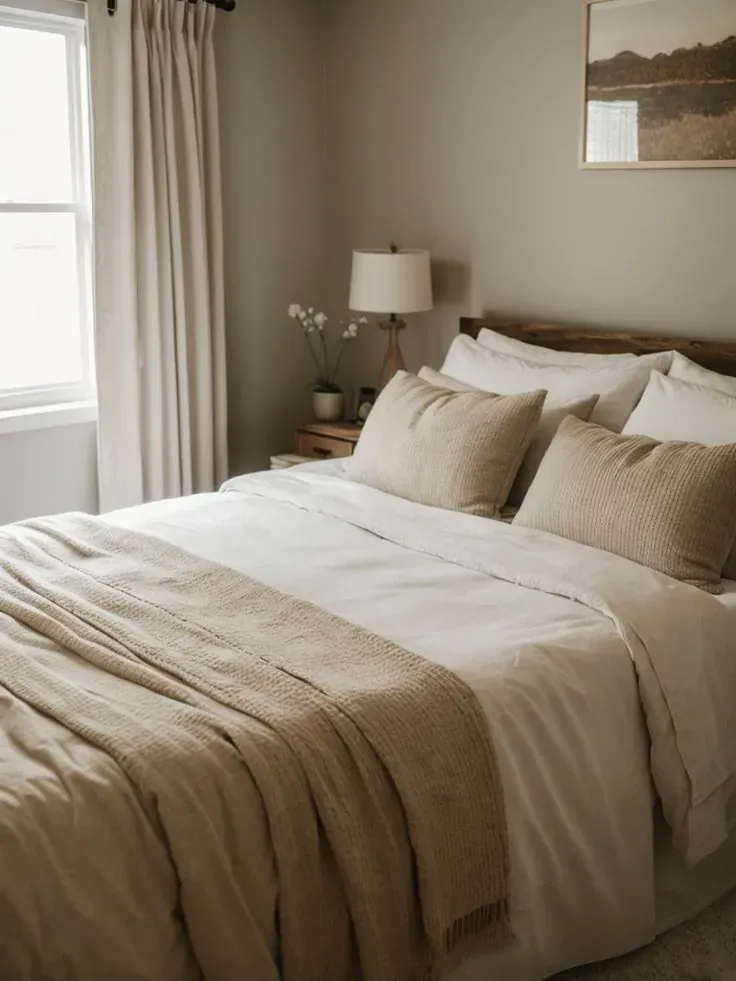
This bed keeps a broad white area between the beige pillows and folded throw. The different surfaces remain easy to distinguish because each has some space. Try a similar relationship with the bedding or sofa you own: introduce a throw, then look at how much of the original fabric still shows.
The extra layer needs somewhere to go when it comes off. A throw used each evening earns its place differently from several pillows moved into a pile at bedtime, so choose the amount of fabric around what you want to move and put away each day.
The cozy bedroom fabric examples include both richly layered covers and simpler beds.
Look at Room Lighting Before Adding More Objects
Fabric changes how a surface looks, and the light around it changes what becomes noticeable. Before decorating an empty-looking corner, view it under the lamps you use in the evening. You may want a visible pool of light near the seat, or a quieter shade beside a patterned cover.
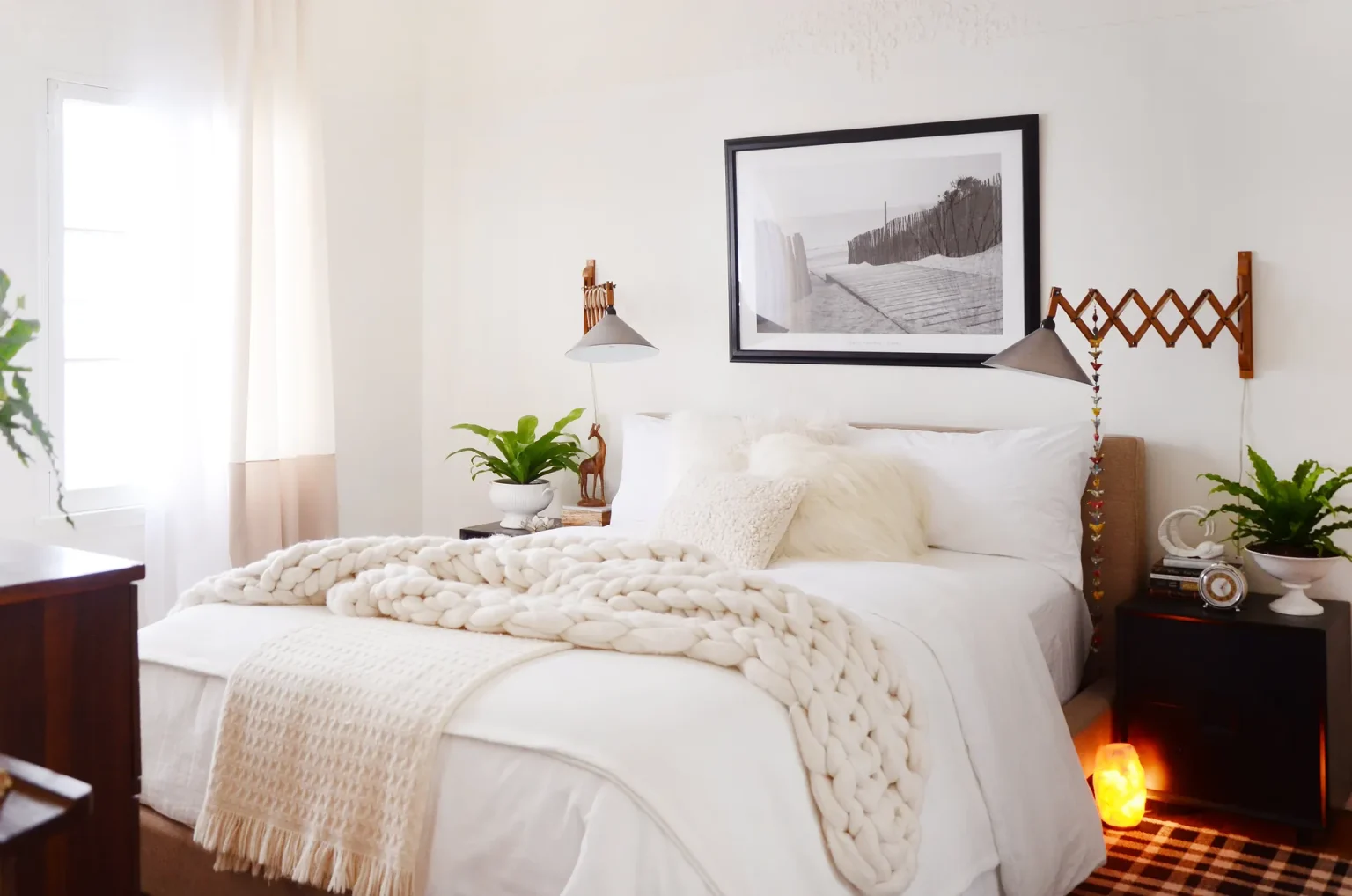
The amber light beside this white bed brings a warm patch near the textured blanket. Above it, dark frames and wall lamps have clearer outlines. These are separate visual effects: the light close to the floor adds a glow, while the lamps above remain part of the bed’s outline even in daylight.
Choose the effect that answers the room’s use. A reading seat needs light where the book sits; a decorative glow can sit elsewhere in the view. Compare the shade, furniture, and nearby textiles together. This picture offers a visual direction, while the lamp’s actual suitability depends on the product and your room.
The bedroom lighting examples give reading lamps and background lights separate jobs, with arrangements around the bed and nearby furniture.
Separate Display Surfaces from Everyday Storage
A lamp also asks for a surface, and that surface often serves several purposes. Decide where the things used every day belong before arranging ornaments around them. A place for a phone or water glass should remain easy to use after the room is styled.
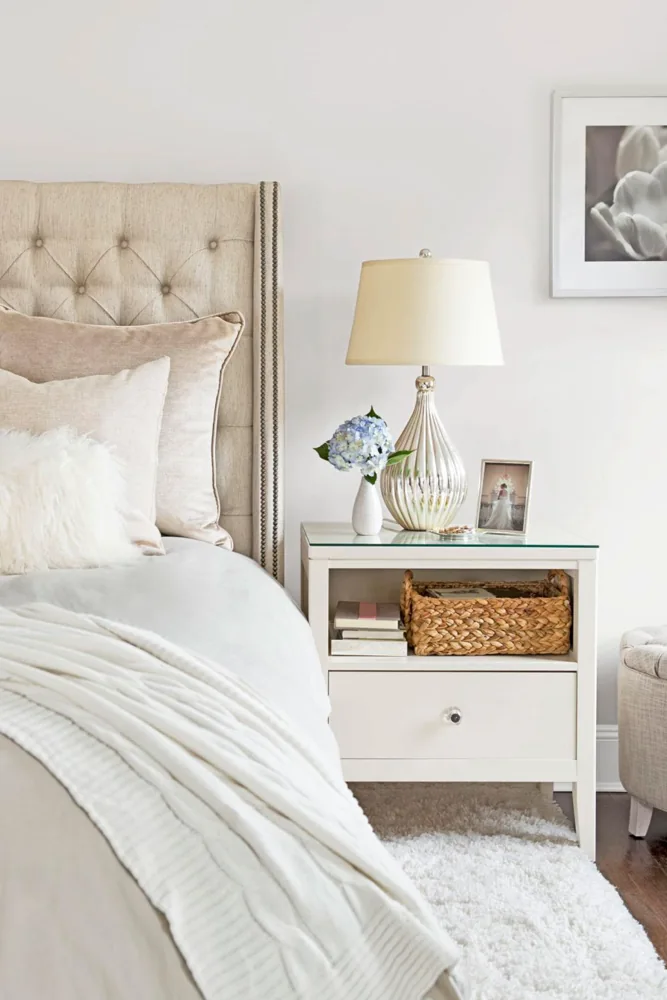
The cabinet shown combines a display on top with books, a basket, and a drawer below. The useful distinction is between what stays visible and what can be put away. Give loose objects a defined group inside the basket or drawer; reserve the open shelf for things you can retrieve without disturbing the whole arrangement.
Carry that choice to a living room console or a hallway shelf. Some objects deserve a display position because you enjoy seeing them. Everyday supplies need a place you can reach and return them to. A tray can gather a group on a tabletop, provided the group still leaves room for the tabletop’s daily job.
When the objects belong in a display, the living room wall decor ideas compare pictures, mirrors, and other arrangements with the furniture below them.
Make Living Room Decor Work Around the Seats
The surface beside a seat is part of a larger living room arrangement. Start with the places people actually sit and the route between them. A decorated corner works better when the table, lamp, or basket supports that use, with the details chosen around the seating already in place.
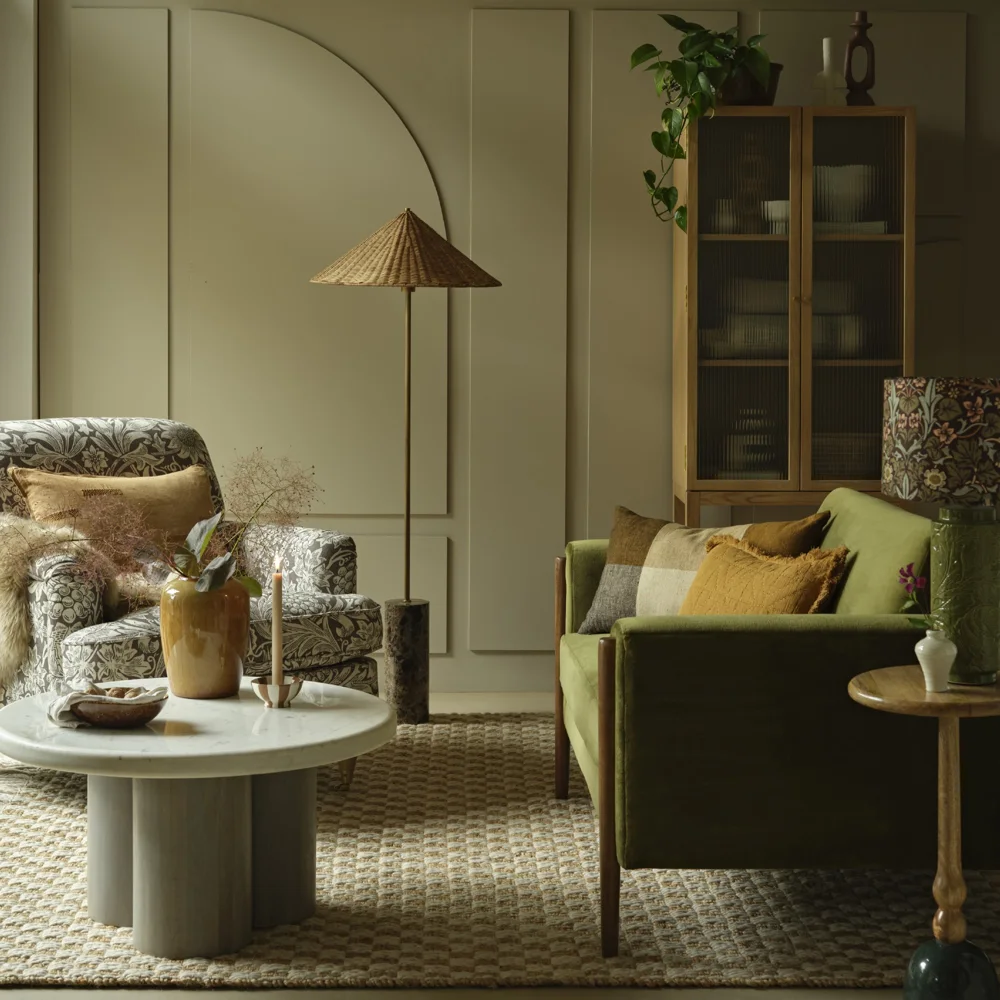
This room brings related greens across the wall and upholstery, with a patterned armchair offering a different surface. Yellow cushions make smaller breaks in the green, and the pale rug separates the seats from the floor. The room has variety without requiring every large piece to carry a different bright color.
Decide which part of your seating area needs that variety. Plain upholstery may welcome a patterned cushion; an already busy chair might need a quieter neighbor.
Keep the table reachable and the approach usable while judging the finished view. For the room as a whole, choose the decoration after the seating arrangement feels workable.
For seating with a strong existing color, the green couch living room ideas compare wall, rug, and pillow choices around that piece.
Let the Bed Set the Bedroom Decor Direction
A bedroom shifts the focus from a group of seats to the bed and its immediate surroundings. The bedcover is a large visible surface, so changing its color or texture can set the direction for nearby pillows, curtains, and the part of the floor left exposed.
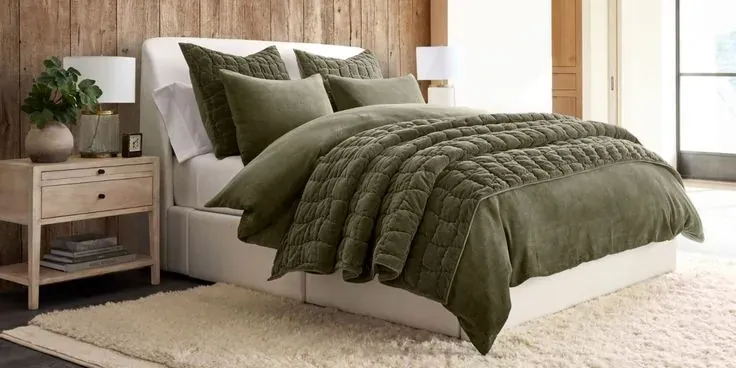
Here, the olive quilt provides a broad colored area, while the cream bed and rug make lighter borders around it. The wood-toned nightstands sit beside those fabric surfaces. A room with a cover you already enjoy can use the same idea: look for a quieter neighboring surface that leaves the cover’s color or pattern clear.
Settle the bed before filling every gap around it. A useful bedside top, a curtain that suits the window, and room to approach storage may matter more than a bench or extra chair. Choose the view you enjoy from the doorway, then check that the ordinary bedtime and morning routines still work.
Our bedroom rug ideas show how a broad rug, a bedside runner, or a colored border changes the floor area visible around the bed.
Kitchen Dining and Bathroom Decor for Useful Surfaces
The same balance between appearance and use becomes especially clear on kitchen counters, dining tables, and bathroom vanities. Those surfaces have active jobs, so begin with the objects used there. A decorative addition earns its place when preparing food, setting a meal, or washing up remains straightforward.
On a kitchen counter, keep the preparation area available and gather the items that belong to one activity together. On a dining table, consider where a bowl or vase will go when the table is set. A centerpiece that moves easily makes a different everyday choice from a collection spread across the whole surface.
A bathroom can take its color from towels or a small group beside the sink. Keep the supplies you reach for easy to distinguish from the decoration. If the counter repeatedly needs clearing before use, shift the decorative detail to a towel, curtain, or an existing shelf with room for it.
The kitchen counter decorating ideas focus on arranging that particular work surface. Choose a room-specific example once you know whether the immediate task is grouping daily items, adding a little color, or recovering a clear area.
Use Storage to Make Seasonal Decor Easy to Change
Decorating becomes easier to maintain when the things resting between uses have a home. Before adding a seasonal cover or display, decide where the previous one will go. Keeping that exchange small lets a room change with the season while its furniture and daily arrangement stay familiar.
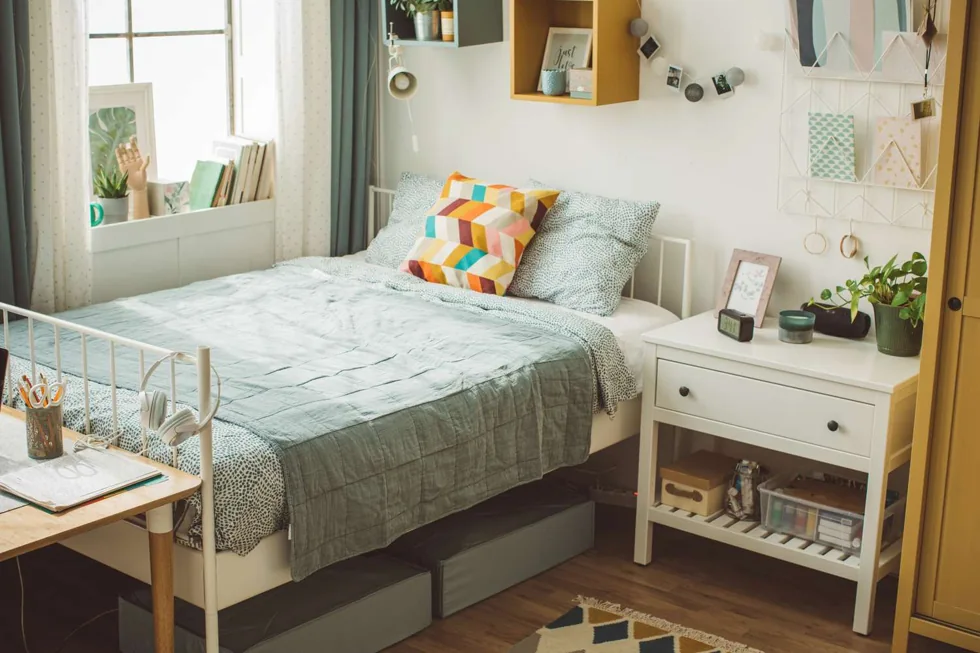
Low boxes beneath a bed offer one possible place for occasional layers. Check the route for pulling a box out as well as the gap underneath. Our small bedroom storage ideas compare boxes, drawers, baskets, and furniture by how you reach and open them.
For a seasonal change, choose an existing place to revisit: the throw on a sofa, the cover on the bed, or a bowl on a console. Exchange the item already there and put it away deliberately. A room can gain a different color or pattern through that small change without accumulating another layer of loose objects.
Leave the room in use for a while before deciding what comes next. Notice the surface you keep clearing or the corner you enjoy more now. That observation gives the next decorating choice a purpose, and ZM Home offers room ideas when you’re ready to follow it further.
Explore the room guides
All ideas in this guide
- 8 Cozy Living Room Ideas for a Warm and Inviting Home
- 8 Neutral Bedroom Decor Ideas with Soft Color and Texture
- Guest Bedroom Ideas: Twin Beds, Lighting, and Luggage
- 8 Bedroom Curtain Ideas for a Finished, Layered Look
- Narrow Living Room Layout Ideas for Long, Rectangular Rooms
- 8 Neutral Living Room Ideas: Warm Decor in Cream and Taupe
- Green Couch Living Room Ideas: Walls, Rugs and Pillows
- Boho Bedroom Ideas with Color, Woven Texture, and Soft Layers
- Small Living Room Ideas: Open, Inviting Decor for Apartments
- Living Room Curtain Ideas to Finish the Space
- Living Room Lighting Ideas: Warm Lamps for Softer Evenings
- Boho Living Room Ideas with Natural Texture: Minimalist & Modern
- Small Bedroom Ideas for Bedding, Bedside Tables, and Curtains
- Cozy Bedroom Ideas for Soft Bedding and Warm Bedside Light
- Bedroom Paint Colors: Blue, Pink, and White Bedding Pairings
- Bedroom Accent Wall Ideas: Floral, Slatted, and Abstract
- Living Room Color Ideas: Paint Colors and Warm Pairings
- Living Room Wall Decor Ideas: Gallery Walls, Mirrors and Shelves
- Mid-Century Modern Living Room Ideas: Wood and Color
- Small Living Room Layout Ideas for Doors, Windows, and Seating
- Small Bedroom Layout Ideas for Awkward Rooms
- Bedroom Lighting Ideas: Bedside Lamps and Soft Layers
- Small Bedroom Storage Ideas: Beds, Baskets and Drawers
- 8 Bedroom Rug Ideas for Color and Placement
- Kitchen Counter Decor Ideas That Leave Room to Cook
- Bathroom Decor Ideas for a Simple, Pulled-Together Refresh
- Fall Living Room Decor Ideas You Can Put Away After the Season