A bedroom accent wall gives the bed a backdrop through a strong color, a repeated line, or a picture-like pattern. Choose the part you want to notice from the doorway, then let the headboard and bedding support it. These bedroom accent wall ideas range from a low band behind the pillows to a floral design that fills the view above the bed.
You’re choosing how much wall to emphasize as well as which color or pattern to use. A tall pattern keeps drawing the eye above the headboard; a lower panel leaves a broad, quiet area higher up. Compare that outline with the bed you already have before choosing the detail inside it.
Let a Navy Floral Wall Frame a Plain Bed
Large pale flowers and branches spread across this navy wall, with blue bedding carrying the background color onto the bed. The woven-looking headboard and round bedside tables add smaller details below the main pattern. There’s a clear division between the busy wall and the simpler sleeping surface.
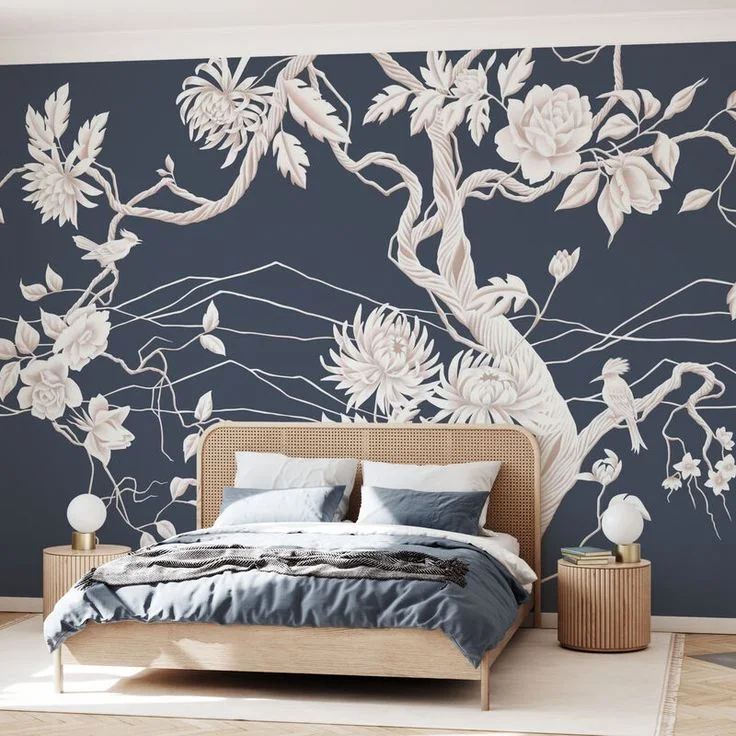
Keep the duvet mostly plain if the flowers are the detail you love. A small blue cushion or cover can repeat the wall color without reproducing the whole print. You don’t need matching botanical art beside the bed when the wall already supplies branches, leaves, and flowers.
A tall, ornate headboard would cover more of the design. Before committing to a large pattern, look at where its most interesting shapes will sit above your existing bed. For a more layered version of this relationship, the colorful bedding and woven details in these boho bedrooms carry the wall’s colors into fabric and art.
Take Vertical Bedroom Wall Lines Up to the Ceiling
A floral wall has a loose outline; repeated vertical lines give the bed a more regular frame. Here, the warm brown lines run to the ceiling beside pale side walls. Light bedding and slim hanging lights leave much of that tall pattern visible.
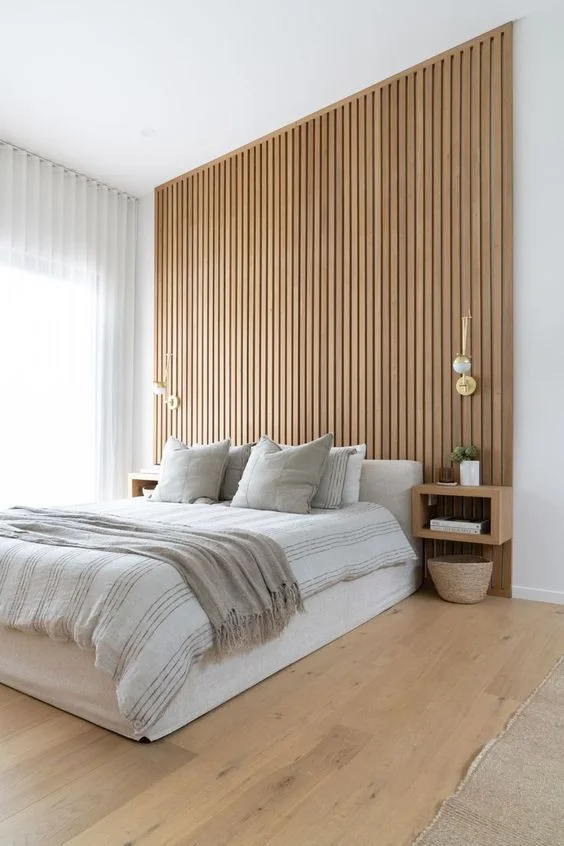
The contrast at the corner is worth noticing. The pale side wall marks where the accent ends, so the pattern reads as a distinct backdrop. We like the restrained bedding here because a large print on the duvet would introduce a second rhythm directly below the lines.
You can borrow that contrast without copying every furnishing. Keep a bedside surface that works for your everyday things, and judge its outline against the patterned wall. The narrow shelves and smaller bedside tables in these compact bedrooms give that practical decision more attention.
Add Large Geometric Shapes to a Lined Bedroom Wall
Straight lines can also sit behind a larger design. This wall combines a fine vertical pattern with broad brown geometric sections above a pale bed. The larger shapes interrupt the repetition, while the small bedside lamps sit below the most detailed area.
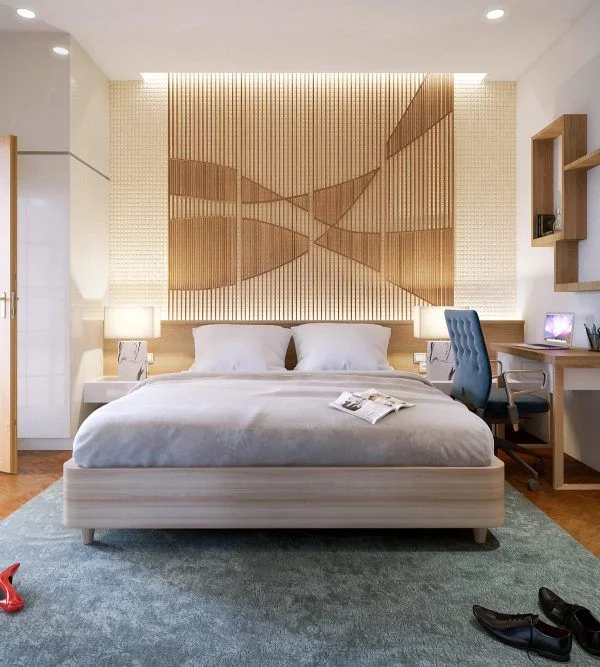
Choose this direction when evenly spaced lines alone feel too restrained. The important comparison is the size of the larger shapes against the headboard: a design with broad areas remains distinct above the pillows, while tiny shapes would add another dense pattern.
Keep nearby wall art out of the decision at first. The geometric backdrop doesn’t need another picture above it. If you’re keeping patterned bedding, compare it with the wall from across the room so the two patterns don’t merge into a busy patch around the headboard.
Stop a Vertical Accent Below the Upper Wall
A large composition fills the view above the bed; a lower accent gives the upper wall room to stay quiet. This vertical panel continues behind the bed and floating bedside drawer, with a wide pale area above. Its top edge becomes a visible line across the bedside corner.
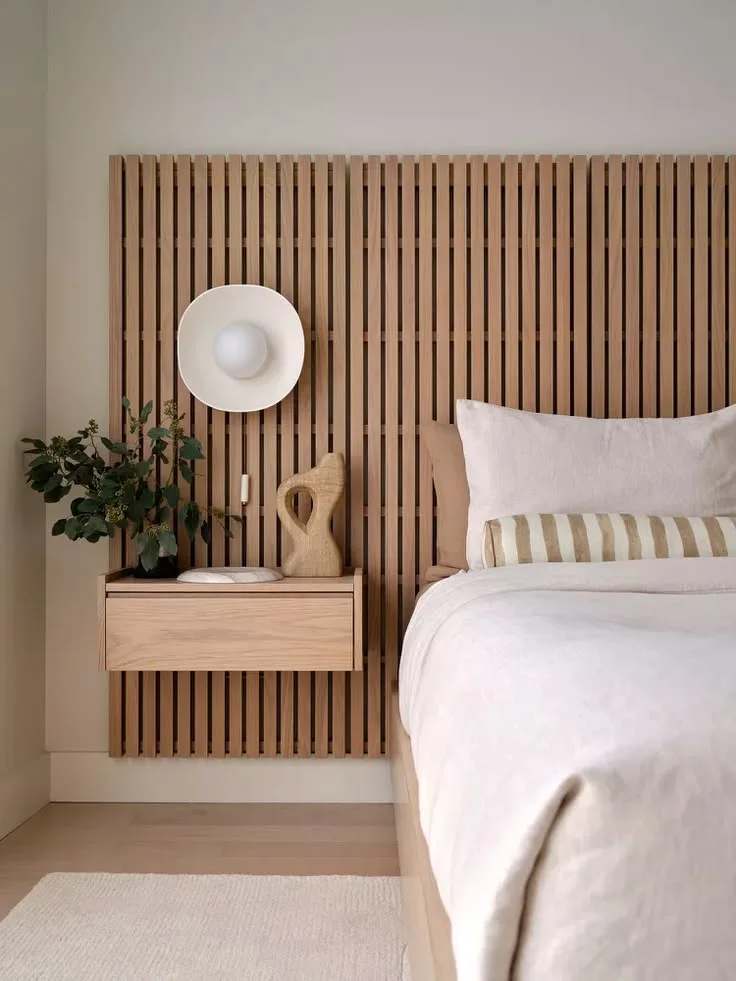
Look at that top edge together with your headboard. If their heights are very close, the backdrop may disappear behind the bed; if they’re far apart, more pattern will remain visible. The photograph doesn’t supply a height to copy; it offers a relationship to compare with your own bed.
The pale pillows soften the lines without hiding all of them. A loose cover or textured cushion can carry that softer detail onto the bed. These bedcover, throw, and rug combinations explore the fabric side of the arrangement if the wall is already doing enough.
Pair a Horizontal Bedroom Wall Panel with Framed Art
The quiet upper wall can also become a place for pictures. Here, horizontal lines sit behind white bedding, while a group of framed prints gathers above the panel’s top edge. The frames vary in size, but their overlapping arrangement gives them a shared place in the room.
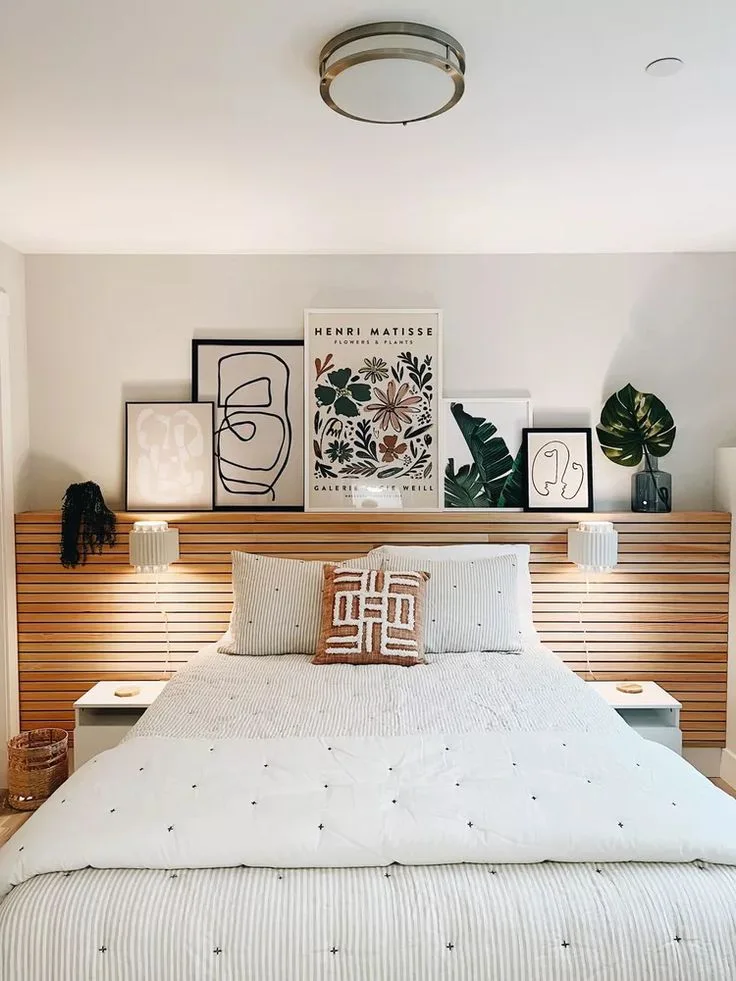
Think of the panel and pictures as a single backdrop when choosing the composition. A broad panel with a small cluster of art will feel different from pictures spread across its whole width. Matching frames aren’t required for a group that shares the same resting edge.
Don’t buy a matching set just to fill the space. Start with the art you want to see from the bed or doorway, and compare the group with the headboard below it. The illustrated lettering belongs to the artwork; its dark shapes contribute to the arrangement without needing to become the room’s theme.
Give a Small Repeat Pattern an Entire Bed Wall
Framed art creates separate points of interest; a small repeated mark spreads the detail across the backdrop. Black dashes cover this pale wall around the windows and above the bed. The adjoining wall and sloping ceiling stay plain, making the patterned surface easy to pick out.
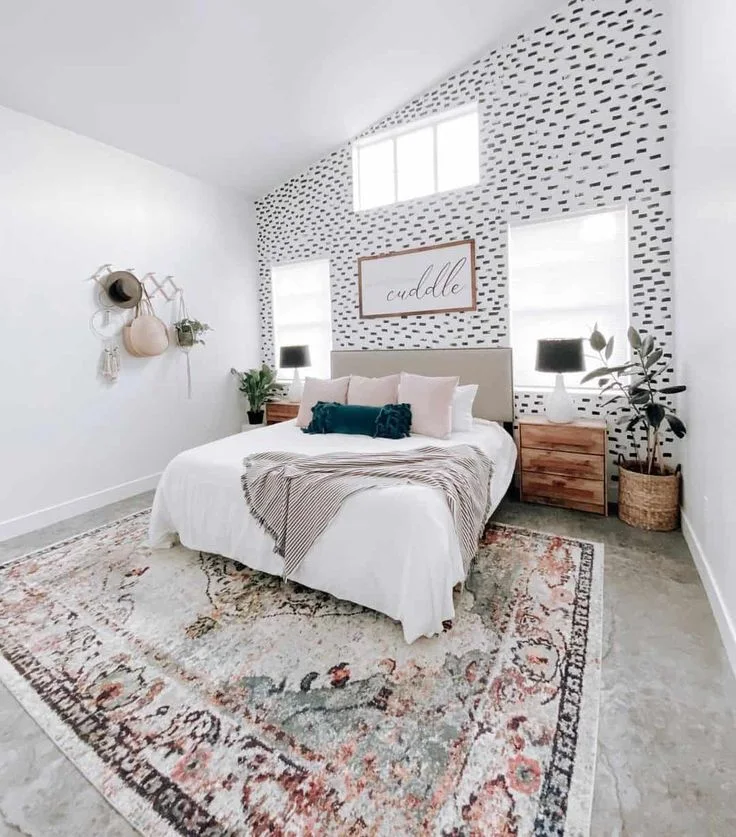
The headboard is quieter than the surrounding marks, and the bedding leaves a broad pale area beneath them. Keep that balance in mind if you enjoy fine pattern but don’t want every surface to demand attention. A dark cushion can echo the marks more quietly than another small print.
Window openings aren’t blank areas to fill; their positions shape how much pattern remains visible. Notice how much patterned wall remains around your own windows and headboard before comparing it with an uninterrupted wall. The shape of the available surface matters as much as the repeat itself.
Make a Brown Abstract Pattern the Main Bedroom Picture
Small marks distribute detail evenly; broad abstract shapes create distinct areas for the eye to follow. Cream and brown curves fill the backdrop in this bedroom, with pattern also visible near the ceiling. The pale upholstered bed sits in front as a simpler, lighter shape.
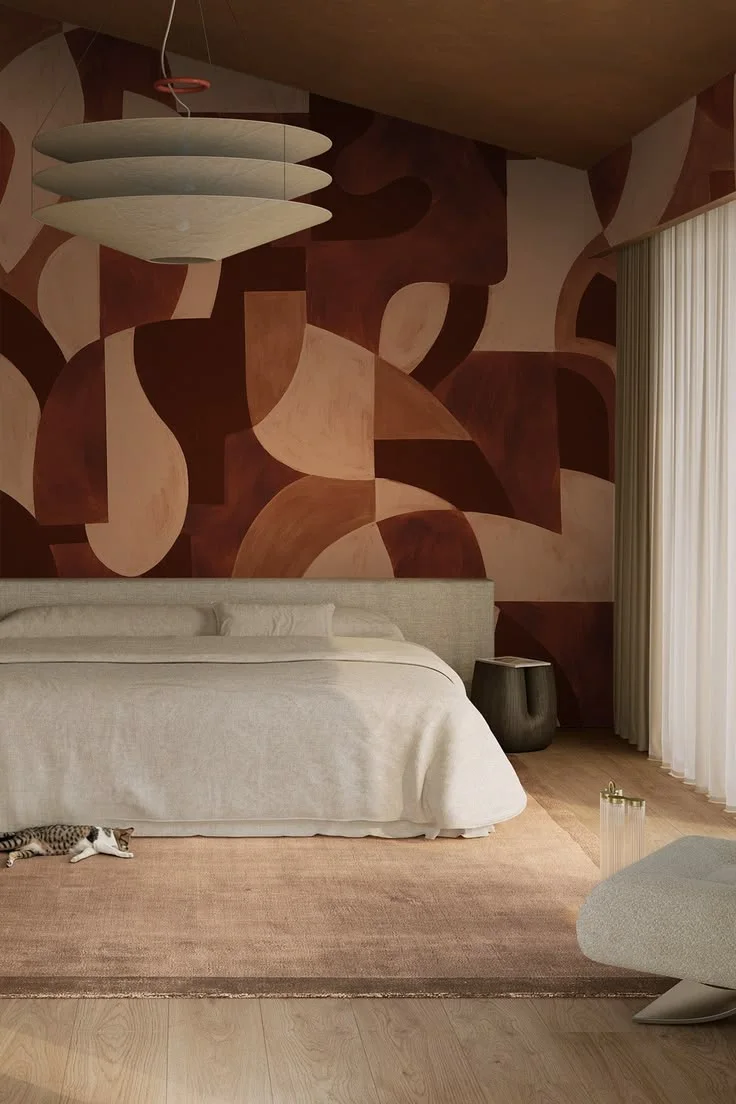
Borrow the scale of the pattern if that’s the part you enjoy. A large shape above the headboard can give the bed a strong setting without needing a gallery of smaller pictures. Keep the contrast between the bedding and the wall visible so the pillows don’t get lost against a similar patch of pattern.
In a guest room, that backdrop can supply much of the decoration while the bedside surfaces stay useful. The guest-room preparations for lamps, luggage, and personal belongings cover what visitors need beyond a finished-looking bed.
Outline an Orange Bed Wall with Dark Curves
The abstract example uses several large color areas; this orange wall puts dark curved lines against a strong, continuous background. A pale upholstered headboard stands in front, and an orange throw repeats the wall color across the foot of the bed. The dark lines stay visible above the pillows.
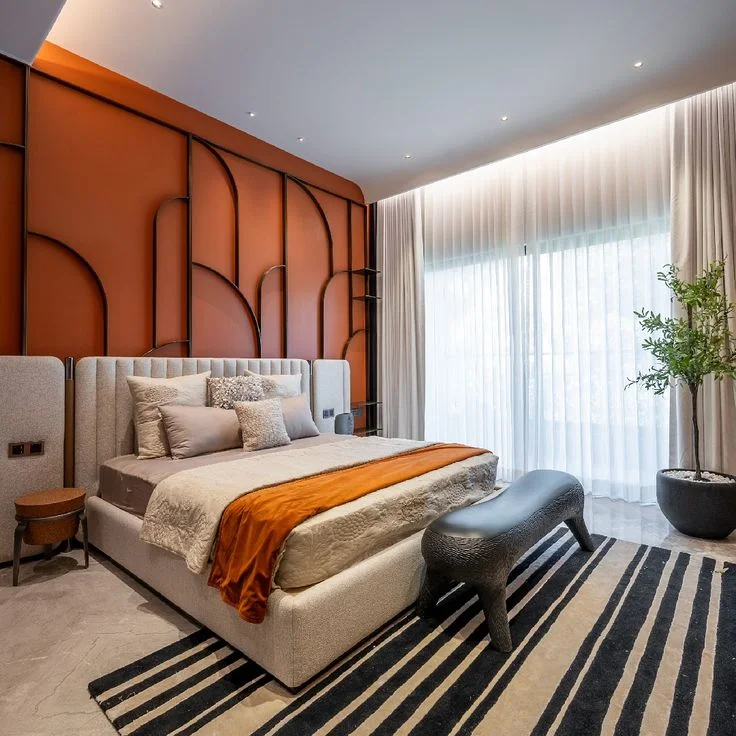
Keep the color connection small enough that the wall still leads. The throw links the bed to the backdrop while leaving plenty of pale bedding between them. An orange duvet would make a much larger color block, so compare that option with the wall before replacing the whole bedding set.
Dark outlines already give this wall detail. Simple pillows leave those curves easier to read; extra curved ornaments aren’t necessary to repeat the idea. From the doorway, check whether you notice the backdrop, the bed, and then the smaller pieces in the order you prefer. Stop adding decoration when that relationship feels settled. Browse ZM Home when you’re ready to carry a favorite color into another room.
For ideas that bring the whole room together, explore Bedroom Decor Ideas for a Room That Feels Put Together.