A bedroom can look finished and still feel a little bare around the bed. Soft bedding, a warm bedside glow, and a rug extending beyond the mattress give that sleeping area a more welcoming feel. These cozy bedroom ideas show where to add those layers, including floral covers, dark bed frames, and a compact corner with very little room for extra furniture.
Bring a Warm Glow Beside the Bed
A small amber glow changes the mood of this otherwise pale bed. The light sits beside white pillows and a thick, loosely gathered blanket, bringing out the folds near the bedside while leaving much of the wall quiet. The room’s warmth comes from that close relationship between the light and fabric; there isn’t a large display filling the wall.
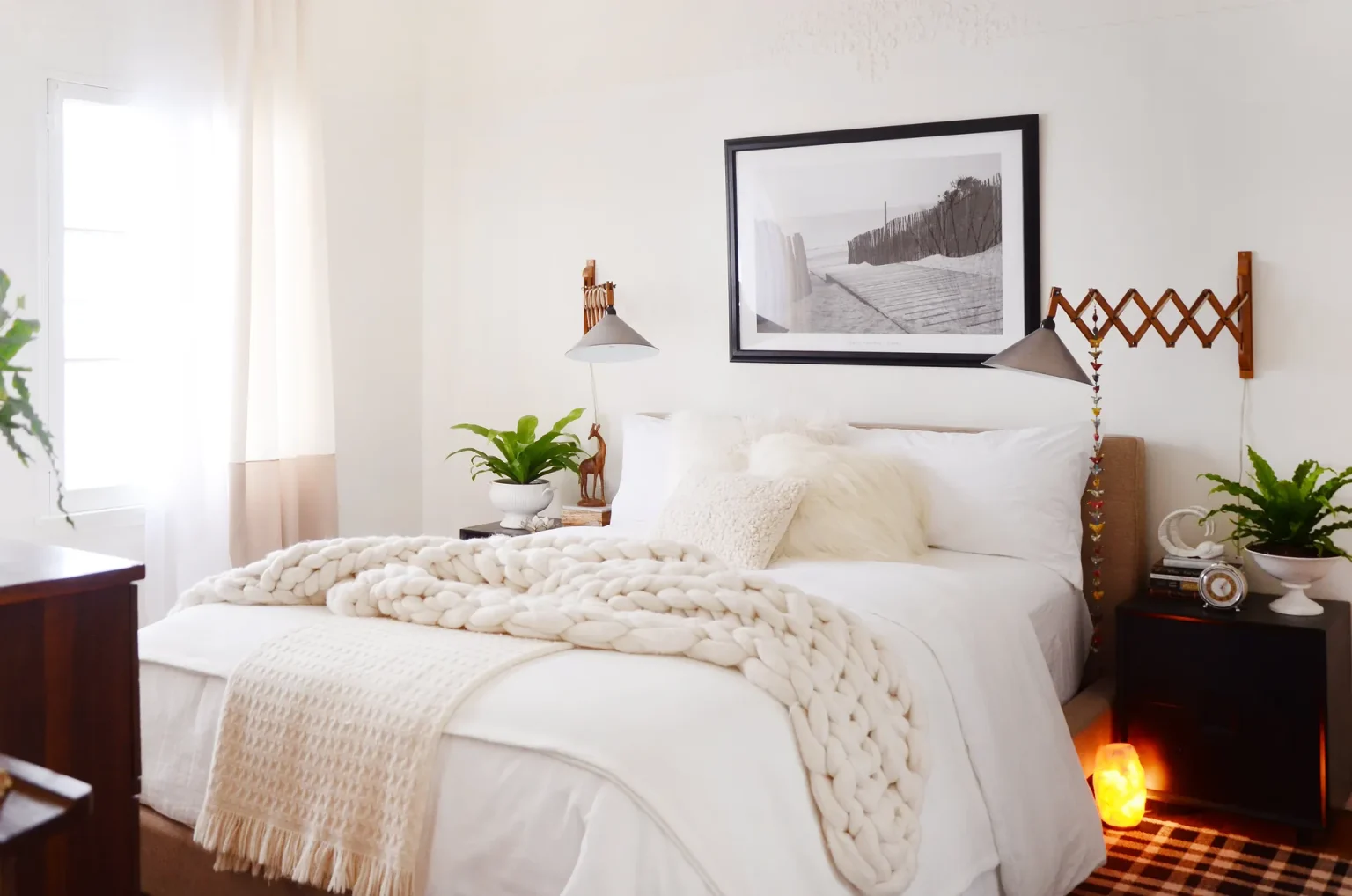
Look at the bed with the bedside light on before choosing more decoration. A bare-looking corner may need a gentler patch of light rather than another object. Keep a little of the tabletop available, too, so the lamp can sit beside the things actually used at bedtime. For a room shared with visitors, our guest bedside arrangements include an empty surface for their belongings.
The photograph is a guide to the visible glow, not a bulb specification. When choosing a lamp, compare its shade and the light it casts on your own bedding. We’d favor an effect that lets the folds and pillow edges show without making the bedside table the brightest feature in the room.
Give Cozy Bedding a Smooth Base and a Textured Finish
Light reveals the bedding’s surface, so the next choice is where the texture belongs. Here, a relatively smooth white cover sits beneath textured beige pillows, with a folded throw across the lower bed. The broad white area keeps those smaller changes easy to see. The shaded lamp and plain curtain continue the room’s quiet background.
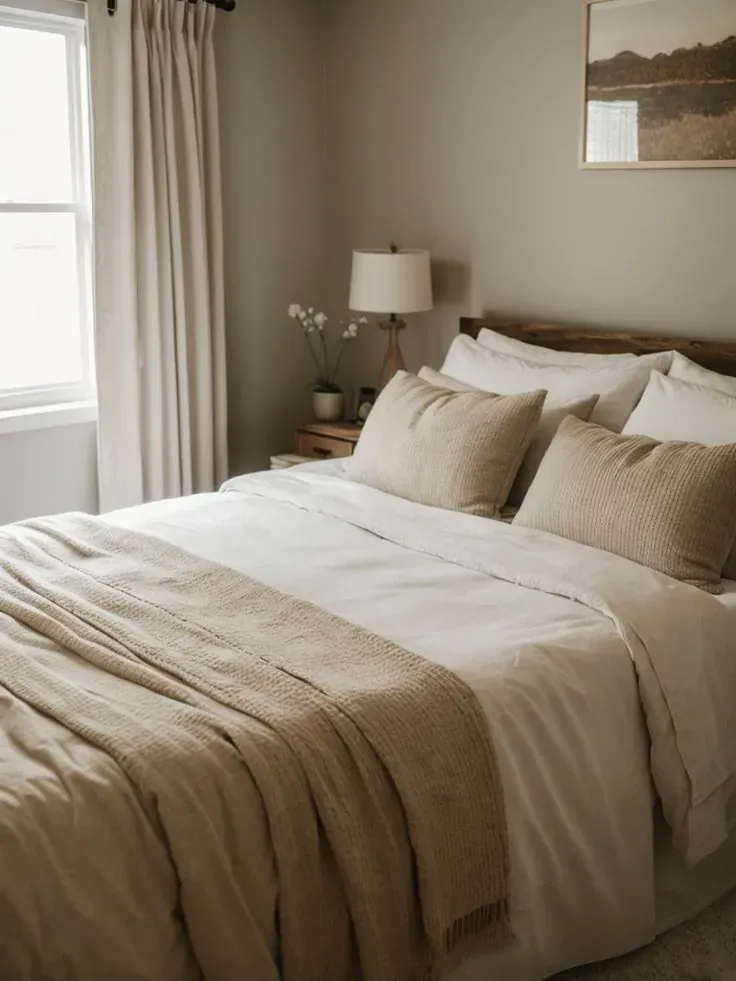
Use the bedding you like sleeping under as the starting point. A textured pillowcase or a throw can add a different surface without replacing the whole set. We’d leave some of the main cover exposed, especially when the added layer has a visible weave. Covering the entire bed with equally pronounced textures would lose the distinction shown here.
Choose the number of display pillows around how you use the room. If moving them every night feels like a chore, keep the texture in the cover or throw instead. For more detail on the pale palette itself, the neutral bedroom examples compare cream, taupe, charcoal, and different fabric surfaces.
Extend the Bed’s Soft Layers onto a Rug
Once the bed has some depth, the floor can carry that softness beyond its edges. In this room, an olive quilt falls over a pale bed, and a cream rug remains visible along the sides and foot. Wood-toned nightstands sit beside the broad fabric surfaces, with open floor beyond the rug. The bed feels like part of a larger sleeping area rather than an isolated piece of furniture.

Before choosing a rug, notice where you stand when getting into bed and where the bedding hangs. A rug hidden entirely underneath the frame won’t give the same visible border. Use this example for the relationship between bed and rug, then measure your own floor and furniture; the photograph doesn’t establish a room size or rug dimension.
The olive cover also shows that a cozy bed can have a strong color. Cream beneath it leaves the stitched surface distinct without adding another busy pattern. If the bedding already has small motifs, a plainer rug gives those details more room to show.
Give Bedroom Bedding Detail with Florals or Patchwork
A quiet rug leaves room for pattern on the bed itself. This brown floral cover brings small, repeated shapes across the mattress, while the beige pillows and pale upholstered headboard form larger areas of plain color. The pleated lamp shade supplies a different kind of detail at the bedside. The bedcover remains the main patterned surface.
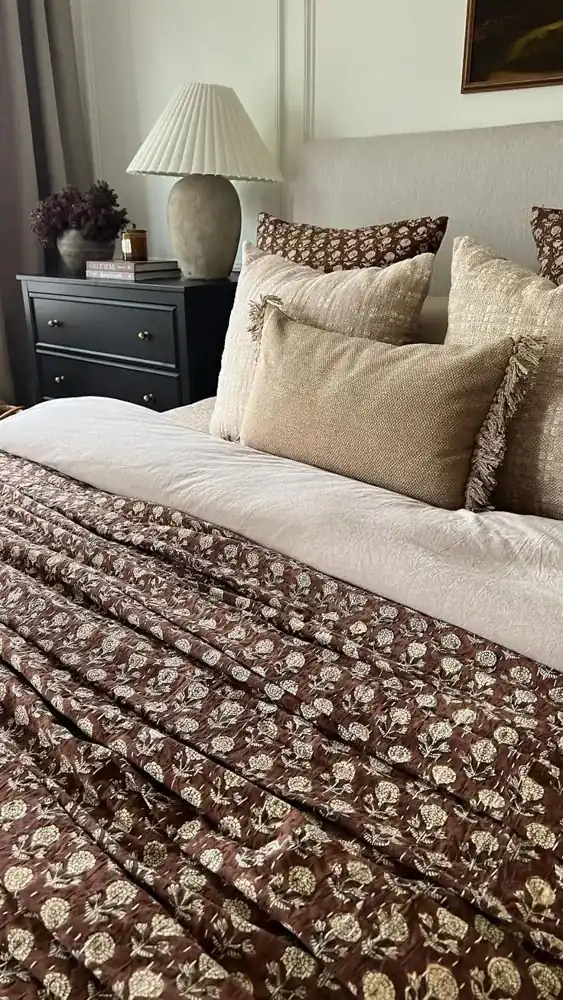
Try a favorite floral cover with plain pillowcases before adding a matching patterned set. A color already present in the flowers or background can guide that smaller choice. The plain area near the headboard gives the eye a pause, particularly when the print is dense enough to read as texture from across the room.
A patchwork quilt offers a more varied version of the same idea. Below, small colored squares spread across the bed beneath a dark metal headboard. The quilt supplies plenty of detail on its own, and the frame’s thin bars stay visible above it. There is no need to repeat every square’s color elsewhere in the room.
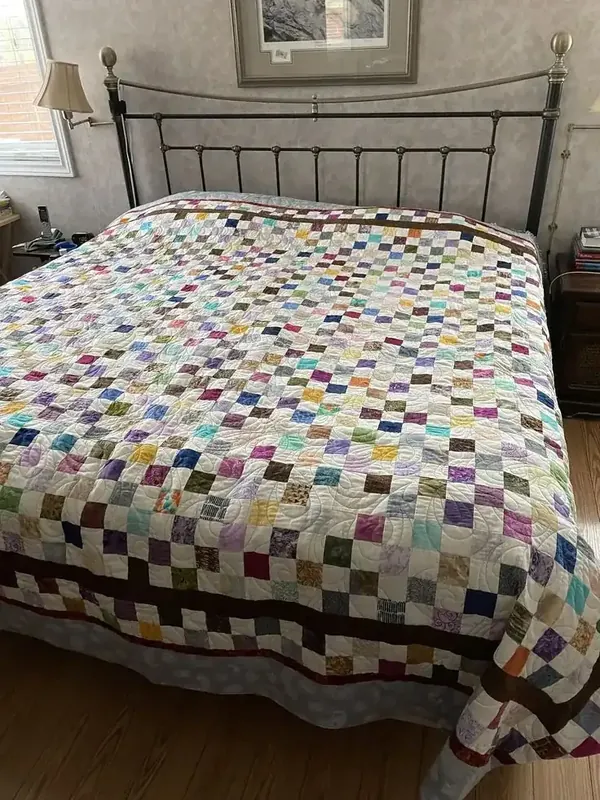
Choose the cover because you enjoy its pattern, then give it a simpler neighbor: a plain pillow, a quiet wall, or an uncluttered bedside surface. For brighter stripes and woven headboards alongside patterned bedding, our boho bedroom combinations explore those particular pairings.
Surround a Dark Bed Frame with Softer Surfaces
Pattern isn’t required to soften a firm bed outline. This black bed has a substantial headboard and footboard, balanced by pale bedding, a light patterned rug, and a soft-looking chair at the side. The tall floor lamp follows the bed’s dark outline but has a pale rounded shade. Those changes in surface and shape keep the black frame from dominating every part of the corner.
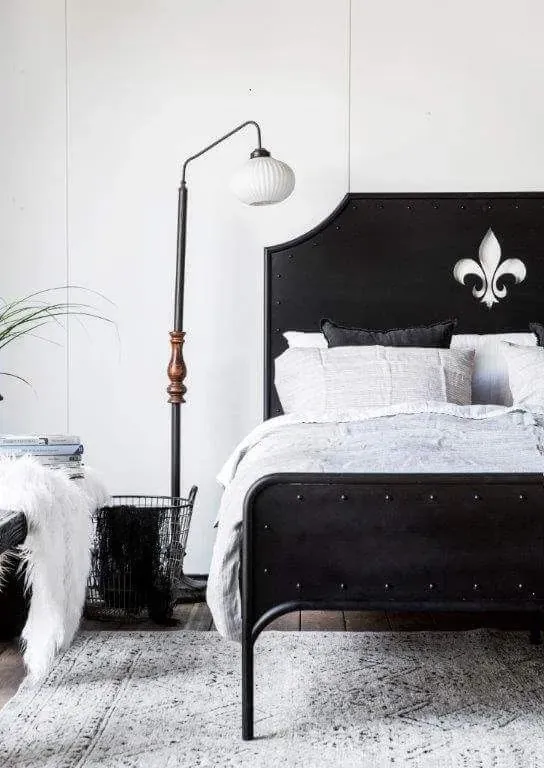
Keep a dark frame you already like and consider the surfaces closest to it. Light bedding makes the outline clear; a draped cover lets fabric cross a harder edge. If there is already a chair in the room, a soft cover or cushion can continue the fabric beyond the mattress. An extra chair isn’t necessary when it would crowd the route beside the bed.
Keep a Simple White Bed Cozy with a Loose Throw
A more open bedroom can use fewer soft layers than the dark-framed example. Here, white bedding sits against a gray upholstered headboard, with a dark throw draped across the lower bed. The throw’s loose folds stand out from the broad white cover, while the bright window and largely clear floor keep the room feeling spare.
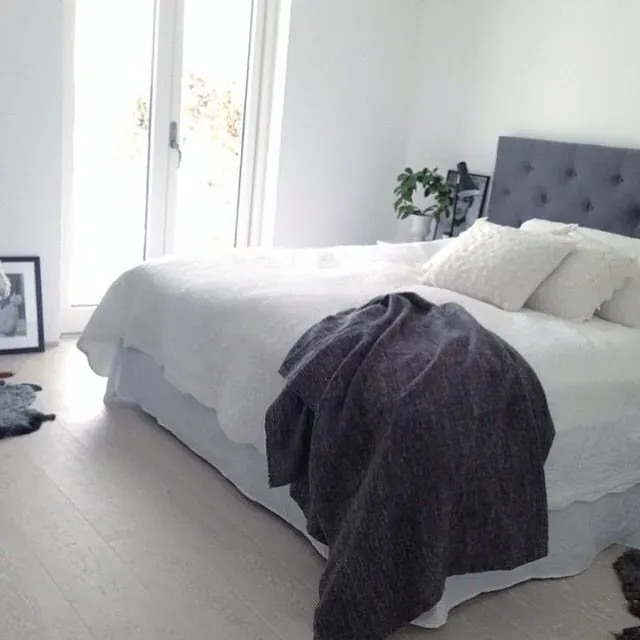
We’d keep the contrast at the foot if you enjoy a simple bed. Leave white around the throw so its edge and loose folds show. More pillows aren’t needed just because there’s space. Choose fabric for its feel in person; a photograph can suggest texture but can’t tell you how it feels against your skin.
Wrap a Compact Bed Corner in Coordinated Fabrics
The spare white room leaves its walls open; a compact corner can take a more enclosed approach. These narrow daybeds sit close to the walls beneath blue-green patterned curtains. Patchwork covers and a cluster of pillows continue related colors across the seating and sleeping surfaces. Fabric carries the room’s detail where additional furniture would have little space to go.
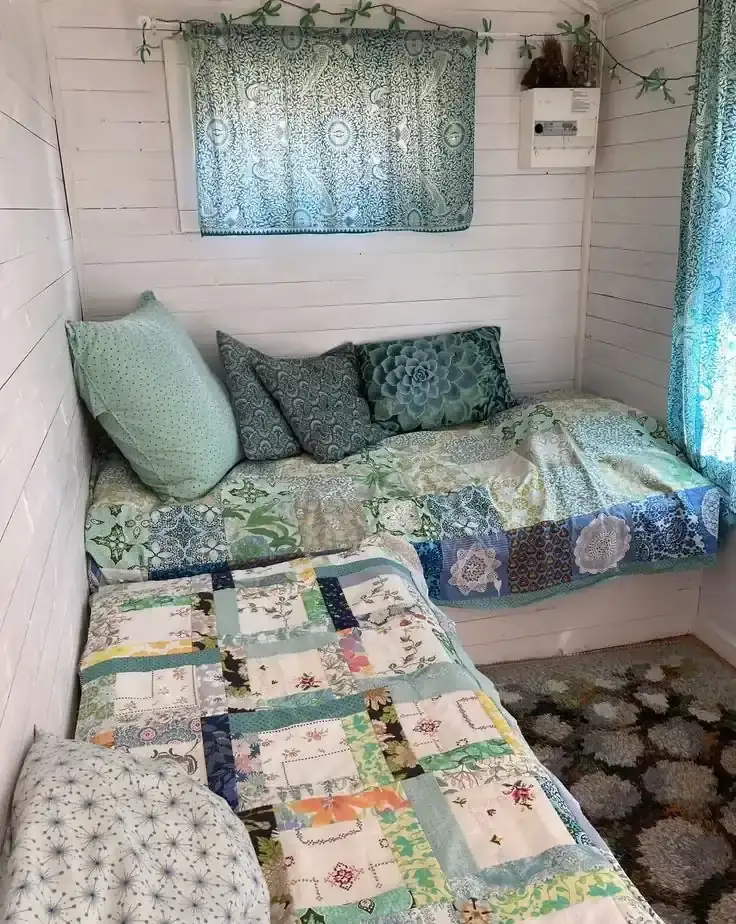
Borrow the color connection rather than every piece of the arrangement. A curtain and pillow can share blue-green while using different patterns. Keep the bedcover quieter if the window fabric already feels busy. Our curtain and bedding pairings show how plain panels, small checks, and larger floral prints change that relationship.
For a bed that also serves as a daytime seat, decide where the extra pillows will go at night. A nearby shelf or basket can help only if there’s room for it; otherwise, use fewer pillows. The cozy part worth keeping is the fabric close to the body and around the corner, with enough clear space left to use the bed easily. To carry that comfort beyond the bedding, compare these bedroom lamp arrangements and the rug colors and placements around a bed before adding more cushions.
For ideas that bring the whole room together, explore Bedroom Decor Ideas for a Room That Feels Put Together.