Bedroom lighting needs to serve the book beside your pillow as well as the space beyond the bed. Pair a lamp you can aim at the page with a shaded light for the surrounding room, then choose their shapes around the furniture you already have. These bedroom lighting ideas show how desk lamps, wall lights, pendants, and a floor lamp can share those jobs without crowding the bedside.
Give Bedside and Background Lights Different Jobs
A bedside lamp and a ceiling light don’t have to do the same thing. In this attic bedroom, a small lamp glows beside the pillows, a black wall light sits farther across the room, and a white pendant hangs overhead. The sloping ceiling makes their different positions especially clear.
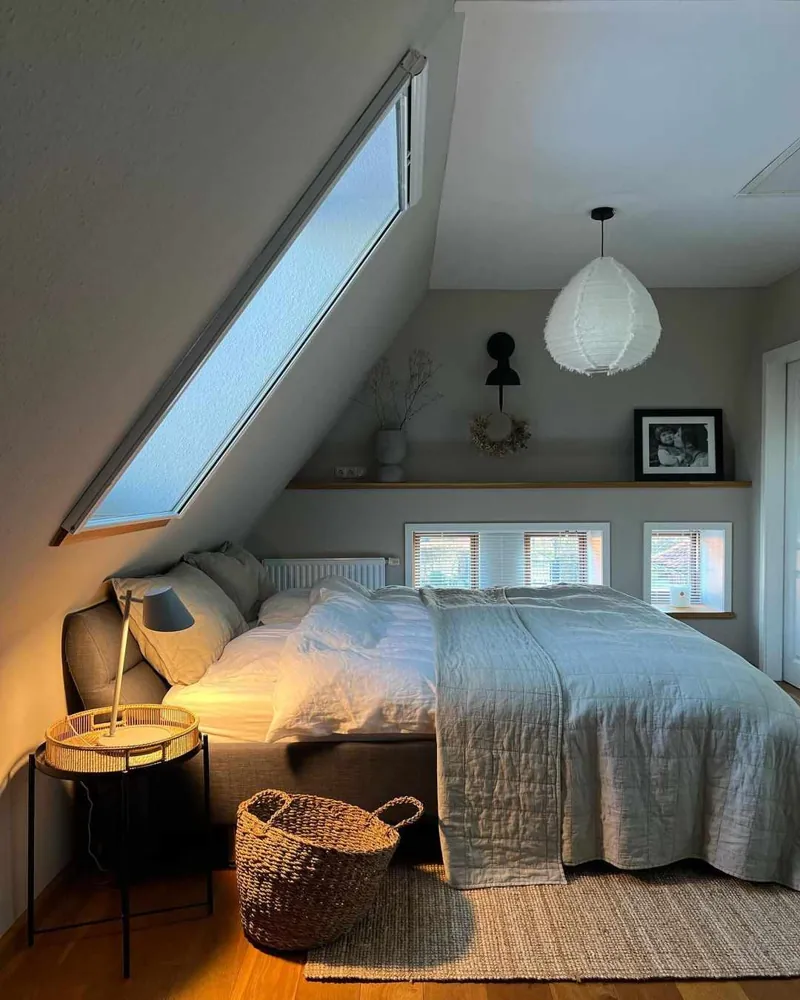
Treat that arrangement as a starting point rather than a shopping list. If the bedside already has a lamp that works for reading, consider what feels missing elsewhere: a dark seating corner, a bare wall, or a ceiling fixture that dominates the view. Add a light for that specific gap instead of another lamp beside the first.
We’d keep the bedside glow visually smaller than the whole room’s lighting. The low table lamp here gives the bed its own focus while the larger pendant remains part of the room above. For the broader fabric and color choices around that light, these cozy bedroom combinations offer a separate place to start.
Share a Reading Lamp Between the Desk and Bed
Once the bedside job is clear, look for a surface that’s already close enough to use. A slim lamp stands at the bed end of this desk beneath the window. Its small head and bent stem take up little of the view, while the desk provides a surface beside the pillow as well as a place for a chair.
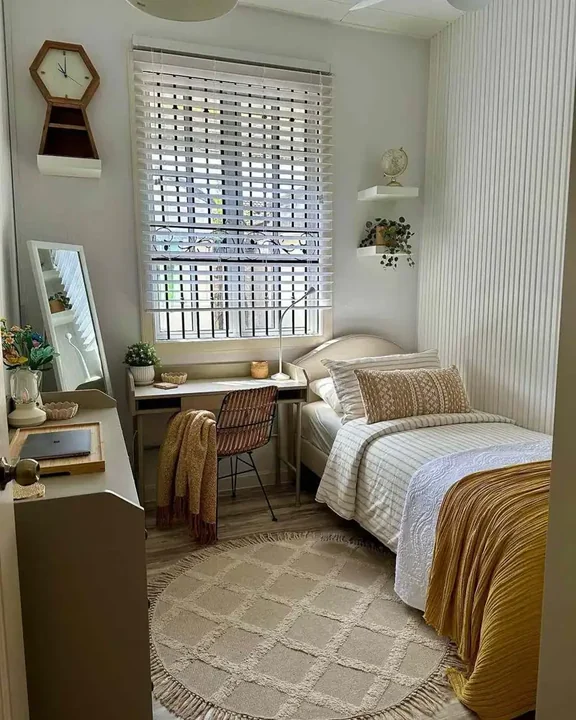
An adjustable lamp is worth considering when reading and desk work share this corner. Check the actual product’s range of movement, then try its positions from both the chair and the bed. A head that turns is useful only if the light reaches the place you want without the base taking over the work surface.
Leave room for the things that move between those uses, too. A book, a glass, and an open laptop ask different things of the same tabletop. If the desk has become a nightstand by default, the bedside furniture examples for small bedrooms can help you decide which objects deserve to stay there.
Use a Shaded Wall Light to Free the Bedside Surface
Where the tabletop is already busy, the wall can carry the lamp’s visual weight. A pale pleated shade hangs above the woven headboard in this pink bedroom, with a visible cord below it. The shade sits near the pillows without a lamp base occupying a bedside table.
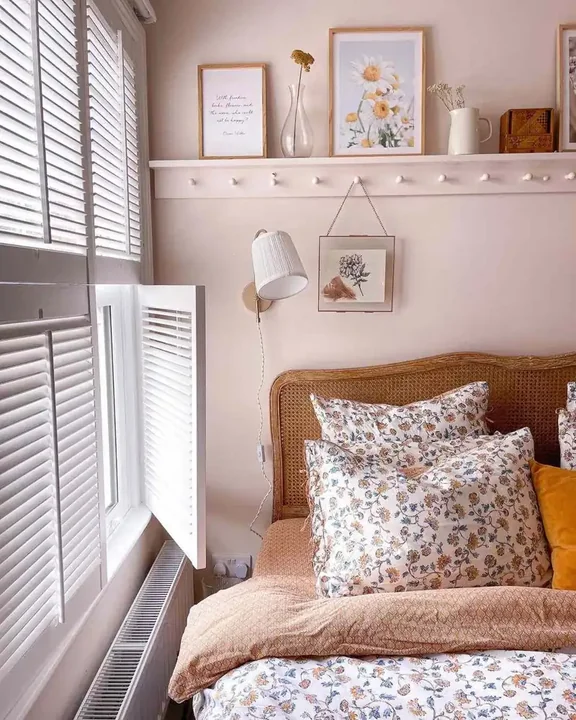
The shade’s shape matters as much as its color in this arrangement. Its pleats add a small, repeated detail beside the floral bedding, while the pale finish stays close to the wall. We’d use a quiet shade like this when the headboard and pillows already have enough texture to hold attention.
Compare the outline with nearby shelves, art, and the headboard before choosing a fixture. Here, the lamp sits below a long display ledge rather than competing with the objects on top. This is a decorating example; it doesn’t establish how a particular wall light should be mounted or connected.
Let a Tall Table Lamp Have a Small Footprint
A wall fixture isn’t the only way to keep a bedside cabinet useful. A tall pale lamp stands on a narrow cabinet beside this bed, with a slender stem beneath its shade. The base leaves part of the tabletop visible even though the lamp rises above the pillows.
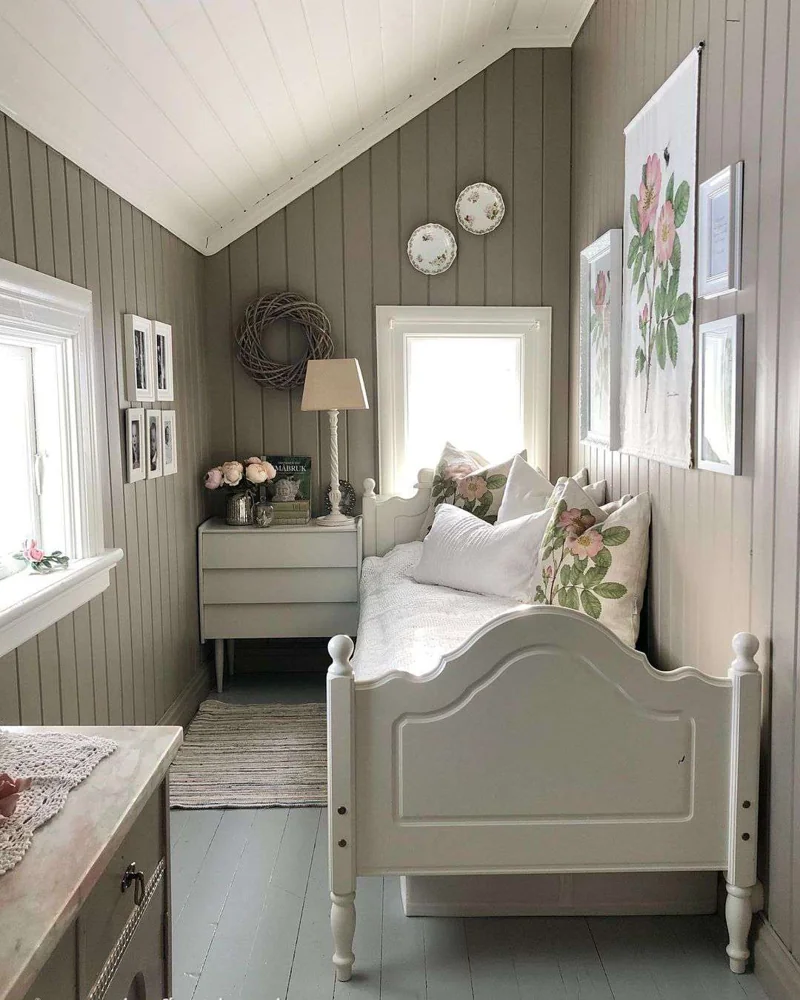
Judge a table lamp by its base and shade separately. A narrow base may suit the cabinet, while a broad shade can still extend into the bed’s space. Compare the whole outline from the doorway and from the pillow, rather than choosing height from the room photograph alone.
For a shaded lamp, use your normal reading position to check the result. Can you see the page comfortably, and is the bulb exposed in your line of sight? Those observations tell you more about your own setup than copying a height from another room. Try the lamp with the book you actually read before deciding the pairing works.
Repeat Bedside Globe Pendants at Different Heights
After considering a tall table lamp, a suspended shade offers a different bedside silhouette. White globe pendants hang on either side of this bed, with the left globe lower than the right. Their matching shape connects the sides even though the tables, wall colors, and hanging heights differ.
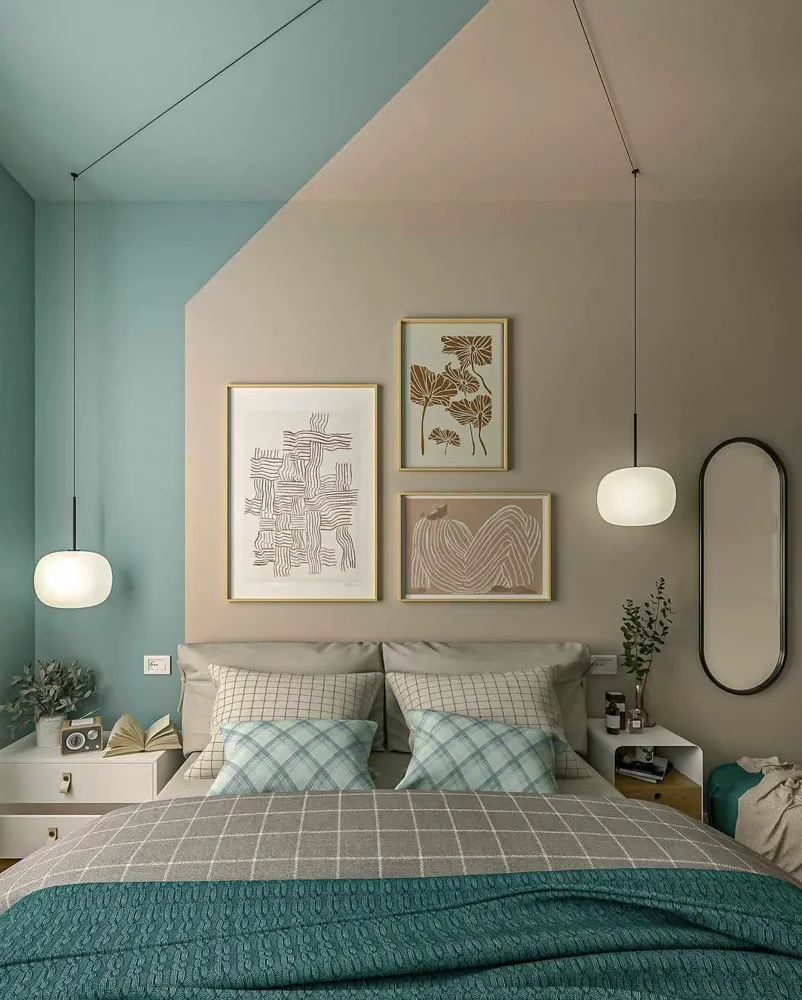
Matching globes suit a room where perfect symmetry would feel too rigid. Repeat the globe shape, then let the nearby furniture and wall decoration determine how balanced the room looks. The framed pictures occupy the center here, leaving the pendants to mark the outside edges of the bed.
A glowing globe isn’t proof that a fixture will suit close reading. Check the shade material and light-control options in its product details, and judge the lit fixture from your usual position. If you prefer a gentle general glow from the pendants, keep a separate reading lamp for the page rather than asking the globes to cover every task.
Pick a Dark Wall Light for a Sharper Bedside Outline
The rounded globes make a soft visual accent; a dark metal-looking shade draws a crisper line. A single black wall light is visible beside the window in this bedroom, above blue-and-white pillows. Its arm stands out against the pale wall, echoing the dark curtain rod overhead.
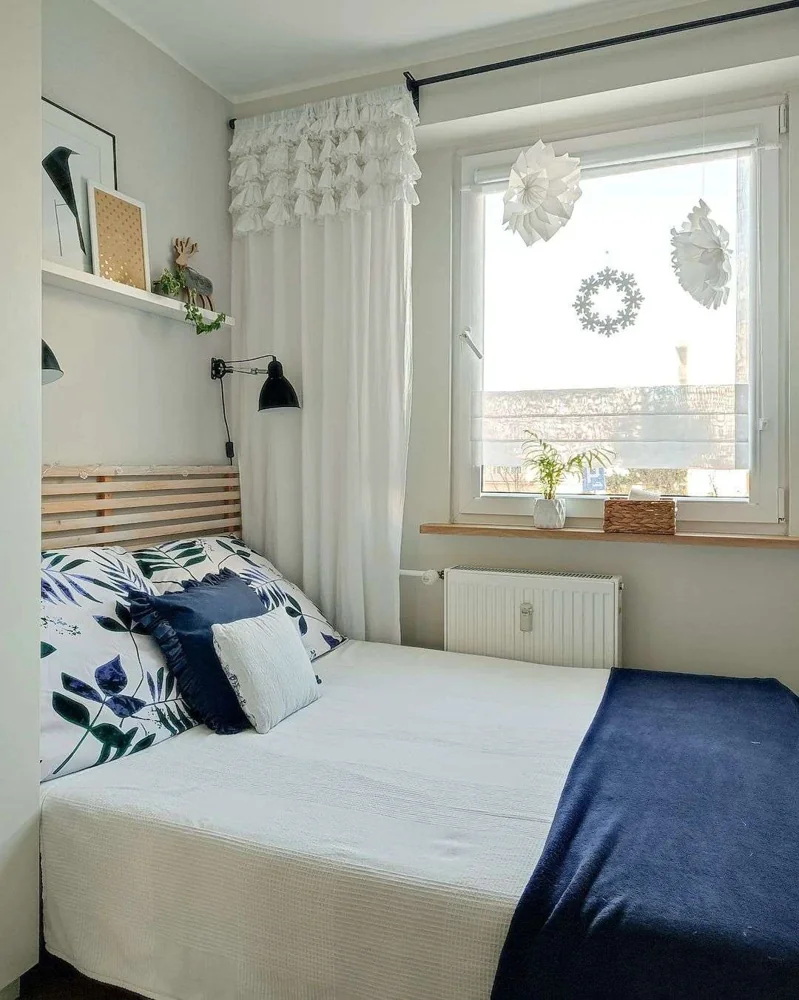
We’d consider this shape when pale lamps disappear against the wall or when the bed needs a small dark accent. The room doesn’t need several new black objects to make the light belong. The rod already provides a clear connection, and the deeper blue bedding adds another dark area below.
Look at the curtain and the lamp together, especially beside a narrow window. An elaborate shade and a busy curtain can compete within the same small corner. These bedroom curtain and bedding pairings show quieter panels as well as patterned options, so the window doesn’t have to take its cue from the lamp alone.
Pair an Adjustable Table Lamp with a Simple Pendant
A dark wall light can define the bedside with one strong shape; this gray bedroom uses contrasting shapes instead. A silver table lamp rises on a jointed arm beside the headboard, below a white pendant. The pendant has a compact, rounded outline, while the table lamp reaches diagonally toward the bed.
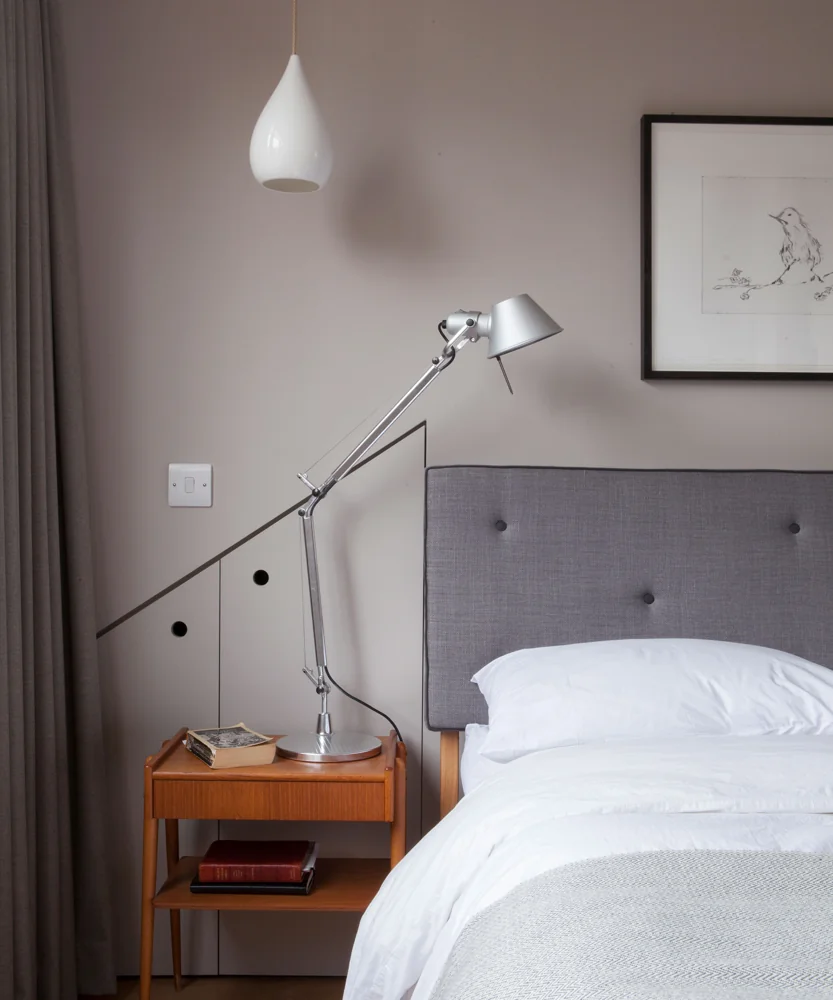
The combination gives a reading lamp a clear visual role without making every fixture match. Repeat a plain finish or a simple shade elsewhere if the arm already provides enough detail. A second jointed fixture overhead could make this corner feel crowded; we’d leave the pendant’s outline quiet.
The pale wall, white bedding, and gray headboard also give the lamp room to show. If your walls and duvet carry stronger colors, compare the metal finish beside those surfaces before choosing it. The wall and bedding color examples focus on those larger color relationships, which can change how much a small lamp stands out.
Give a Bedroom Reading Chair Its Own Floor Lamp
When reading happens away from the pillows, move the lighting decision to that seat. This large bedroom has a separate sitting area, with a floor lamp’s pale shade extending into view beside it. Wall lights frame the sofa, while the floor lamp introduces another light position closer to the seating.
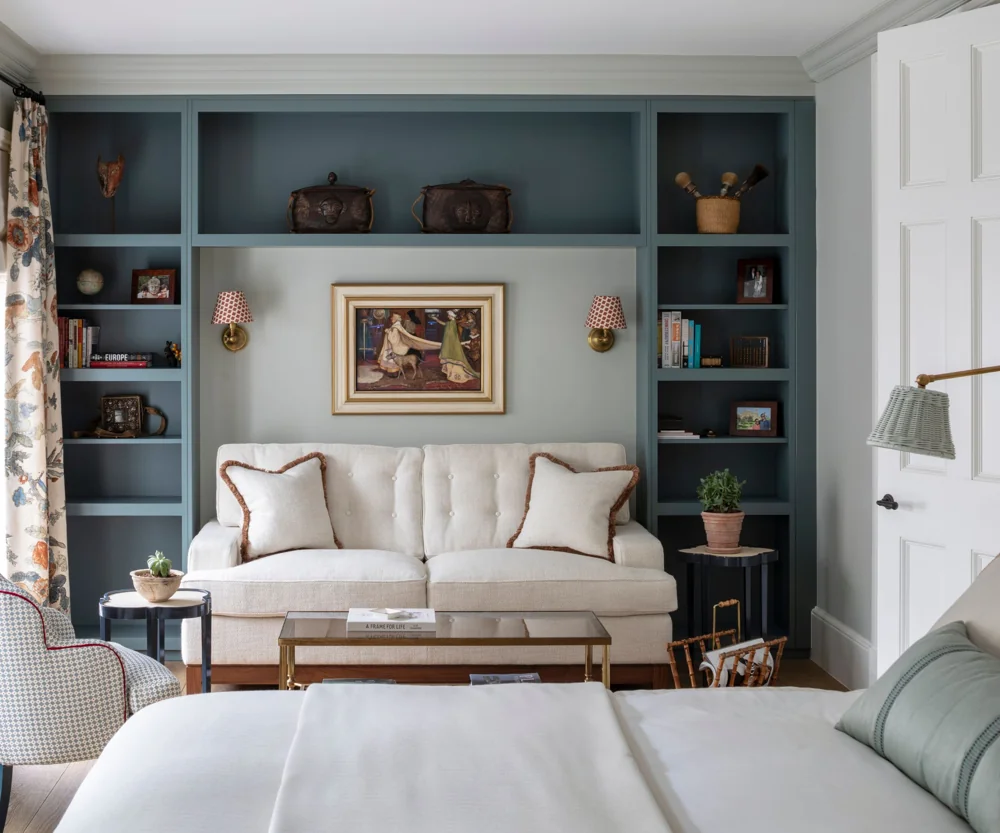
Borrow the separate reading spot rather than the scale of this suite. In a smaller room, keep a floor lamp only if its base and projecting shade fit alongside the chair without making the route around the bed awkward. A spare corner on a floor plan may already be needed for a door, a curtain, or getting dressed.
Choose the lamp for the seat you use, then check it while sitting with your book. If the bedroom has no chair and you always read in bed, the floor lamp may add less than improving the bedside light you already own. For more room ideas, ZM Home brings the decorating guides together.
Before buying another fixture, decide which task is still missing a light. Keep a reading source where the book is, choose shaded fixtures for the surrounding glow you prefer, and leave space for the furniture’s everyday use. Make the final choice with the lights on after dark; a daytime photograph can show a shape, but it can’t settle how that lamp feels beside your own bed.
For ideas that bring the whole room together, explore Bedroom Decor Ideas for a Room That Feels Put Together.