A small bedroom leaves little room for furniture that only holds decoration. Keep a useful surface beside the bed, then put more of the color and personality into bedding, wall art, and curtains. That gives each addition a job without asking the floor to hold another piece. The small bedroom ideas below show how to make those choices around a bed you’re keeping.
Start with the bedside spot that’s hardest to use. Perhaps a lamp crowds out your water glass, or a decorative stool has become a permanent pile of pillows. Solve that conflict first. The examples offer details to borrow; their photographs don’t establish room dimensions or prove that every arrangement will fit.
Trade a Bulky Bedside Cabinet for a Narrow Surface
A bedside surface can be a slim horizontal line rather than a cabinet extending down to the floor. Here, a narrow dark shelf holds a black lamp, white flowers, and a glass beside pale bedding. The wall remains visible beneath the shelf. Its shallow-looking outline is the useful detail for a compact bedside corner.
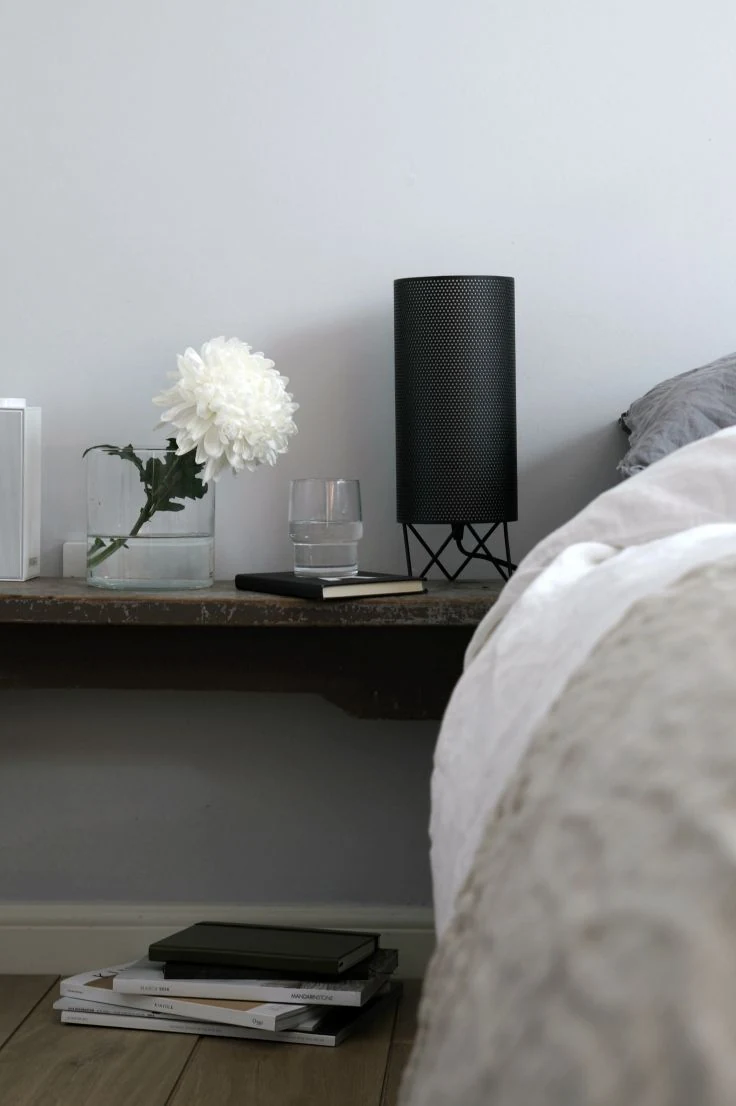
Decide what actually needs to stay within reach before choosing the surface. A phone and a glass ask for a different arrangement from books, medication, and a large table lamp. We’d remove the flowers first if the everyday items were getting pushed toward the edge. Fit the everyday things first.
A shelf also gives up the enclosed storage of a cabinet. Keep a drawer if you use it every day; a slimmer appearance won’t help if its contents end up scattered below. For the color side of this corner, the pale beds with darker accents offer several ways to define white bedding without replacing the bed.
Keep a Small Nightstand and Move the Lamp Off Its Top
A drawer may be worth keeping even when the bedside area is tight. This white nightstand has a drawer and an open lower shelf, while the lamp is mounted on the wall above it. The tabletop holds a small plant and bowl instead of a broad lamp base. White bedding and the pale headboard keep the cabinet’s outline fairly quiet.
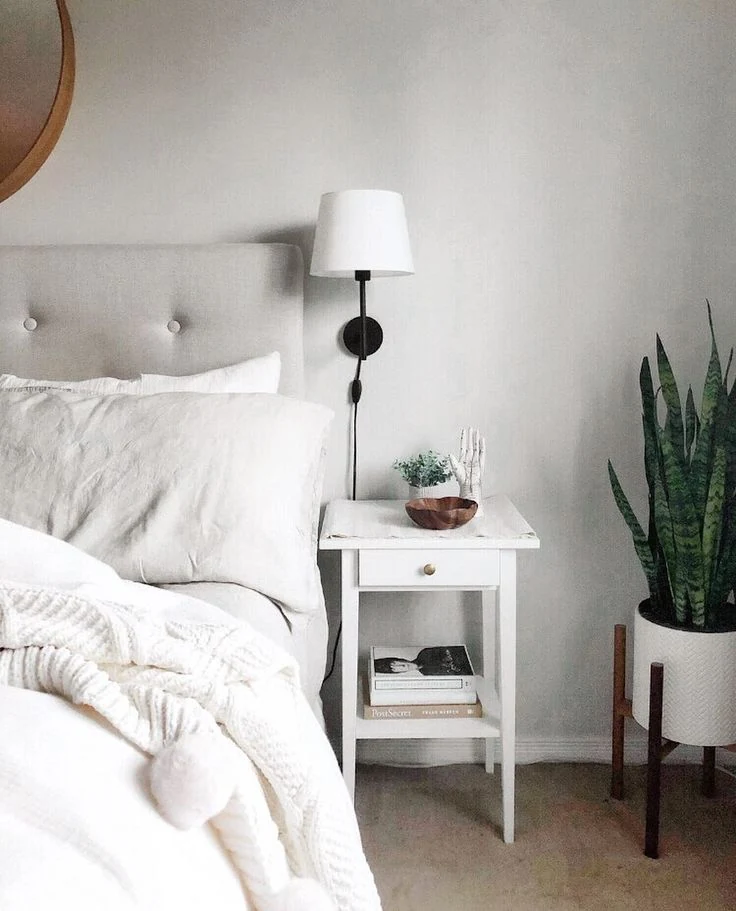
The tradeoff here is between where the light sits and how much tabletop remains. If you already have a wall light, try clearing the table before buying a different nightstand. If you’re choosing a table lamp, compare the base against the space needed for your bedtime things. A small shade alone doesn’t tell you how much surface the whole lamp will occupy.
Use the lower shelf deliberately, too. A short stack of books leaves the open shape visible; filling every gap would give this little table a heavier appearance. The tall floor plant is optional. We’d leave it out when its pot competes with the route beside the mattress.
Put Bedroom Pattern on the Bed Before Adding an Accent Chair
With the bedside essentials settled, give the room personality through something already occupying space. Caramel checks and paler checks bring pattern across these pillows and covers beneath a largely bare wall. The bed supplies the detail without an extra patterned chair or decorative stool beside it.
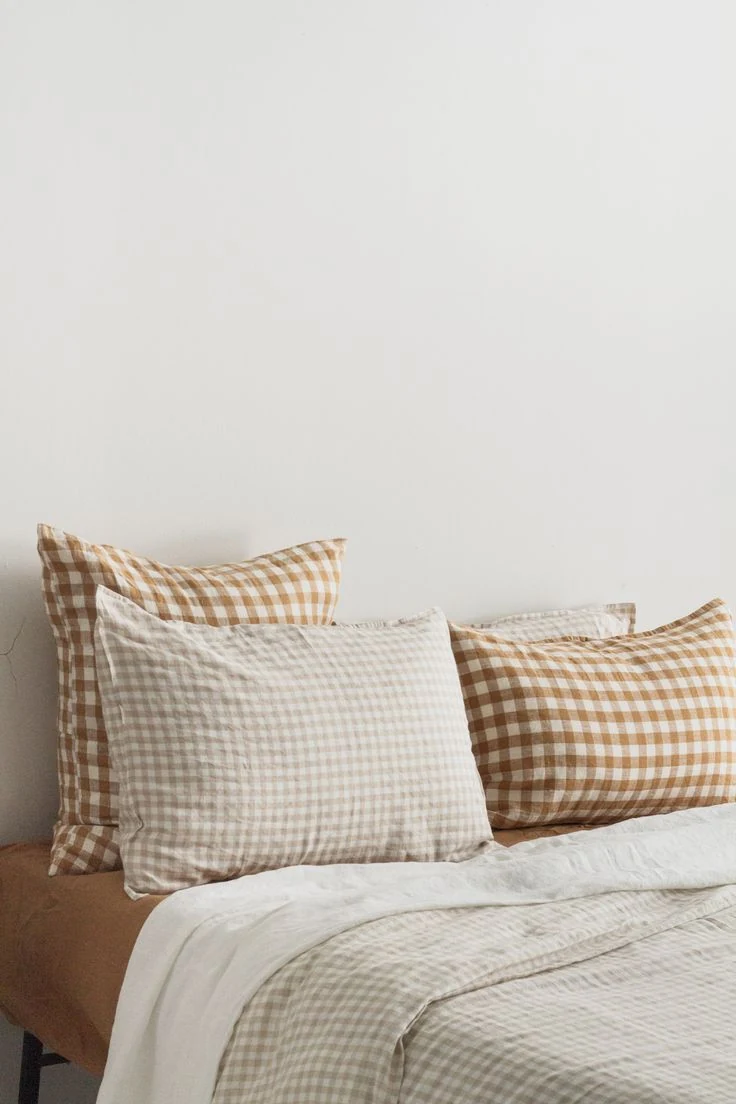
Try a checked pillowcase with the duvet you already own. If that’s enough pattern from the doorway, stop there. Additional display pillows need somewhere to go when the bed is in use; a smaller bedroom may be better served by a patterned cover that stays on the mattress.
The surrounding wall can stay plain even when the bedding feels playful. We’d make the fabric choice before shopping for a wall display, so the two don’t compete by accident. If checks aren’t your preference, these striped and graphic bedroom fabrics show stronger alternatives on the same main surface.
Gather Bedroom Pictures Above the Headboard
A patterned bed can leave the wall bare; a quieter bed offers room for a collection of pictures. White-framed images gather above and beside this curved headboard, with pale pillows and a striped cover below. Their repeated frame color connects different image sizes, while the wall beyond the grouping stays relatively clear.
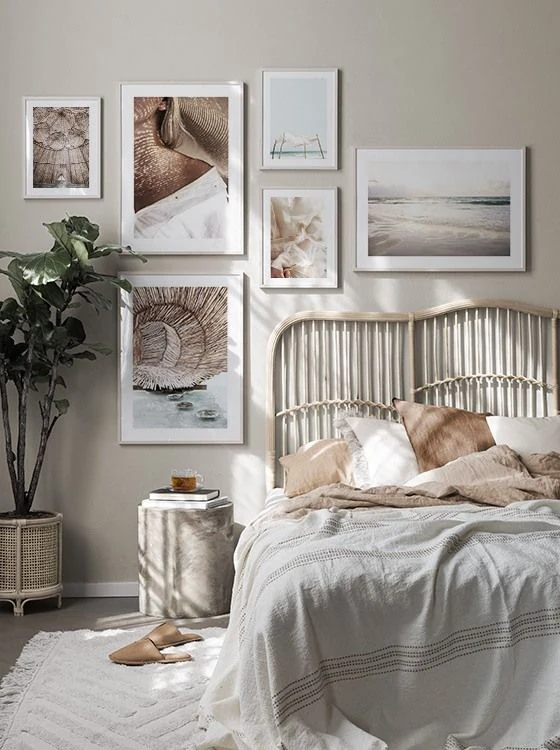
Look at the collection as a whole before adding pictures elsewhere. A group anchored to the bed can give favorite art a place without creating a separate display around every piece of furniture. If the bed already carries a busy print, try fewer pictures and leave more wall between the frames and nearby objects.
There’s also a difference between moving decoration onto a wall and needing more decoration. Keep the pieces you enjoy looking at. A single picture you love can finish a bedside area that doesn’t need a full gallery. For ideas elsewhere in the home, ZM Home brings the room guides together.
Connect Existing Furniture Through a Bedding Color
Once the wall has a clear role, use color to connect pieces that are already in the room. Broad blue-and-white stripes stand against pale blue walls in this example, with a white chest at the foot of the bed. The chest and the bedding’s white areas repeat a light note below the sloping ceiling.
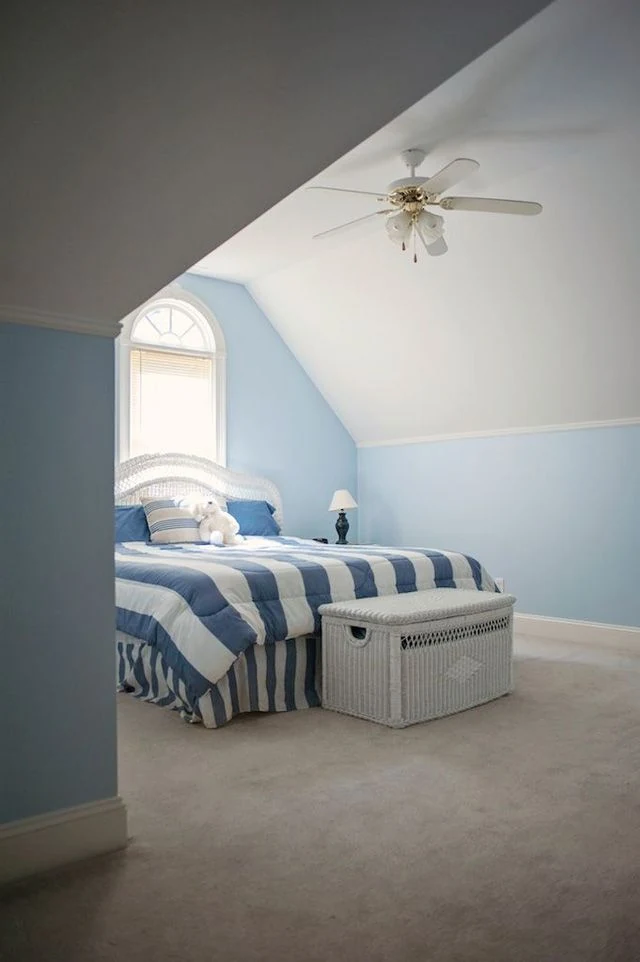
Borrow that relationship without adding the chest. If your bedroom already has a white dresser or pale bedside cabinet, a white area in the bedding can make it feel included. A striped cover brings a second color into the same surface, so there’s less reason to scatter matching ornaments across the furniture.
Keep a chest only when its place and purpose work for your room. A lid that can’t open or furniture that makes getting around the bed awkward calls for a different arrangement. The decorating choice here is the repeated color, which can work with furniture in several positions.
Give Twin Beds a Shared Bedside Center
Repeating colors can also connect separate beds. These white twin beds share a blue nightstand and a central lamp, with pale blue pillows repeating the middle cabinet’s color. The tabletop creates a common center instead of putting a separate display beside every bed.
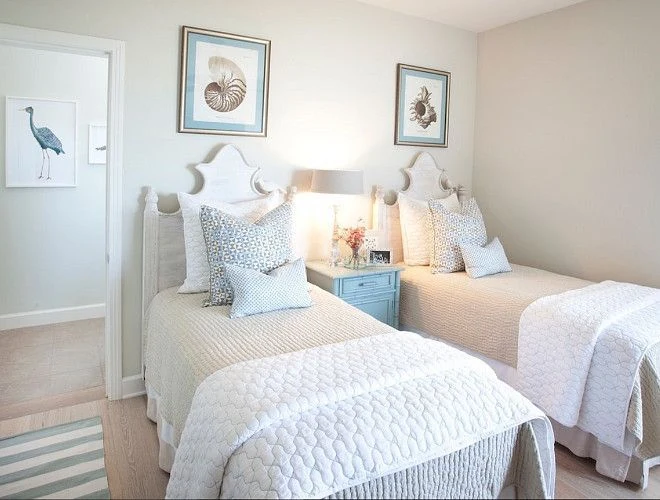
A shared table needs to work for both sleepers. Leave a usable patch on each side and check whether each person can reach the things they need. If the arrangement only works after removing the flowers and ornaments, keep those decorative pieces elsewhere. Matching bedding can provide the visual connection on its own.
For occasional visitors, the twin-room and bedside preparations consider belongings and individual bedding as well as the room’s appearance. Treat this photograph as a shared-surface idea; choose bed positions around your own doors, furniture, and access needs.
Choose a Bedroom Mirror for the View It Reflects
A shared table concentrates the bedside objects; a mirror can concentrate the wall’s detail. This round mirror sits above a table with a glowing lamp, books, and a cup. Its curved outline is easy to distinguish against the plain wall, beside a narrow decorative lettered plaque.
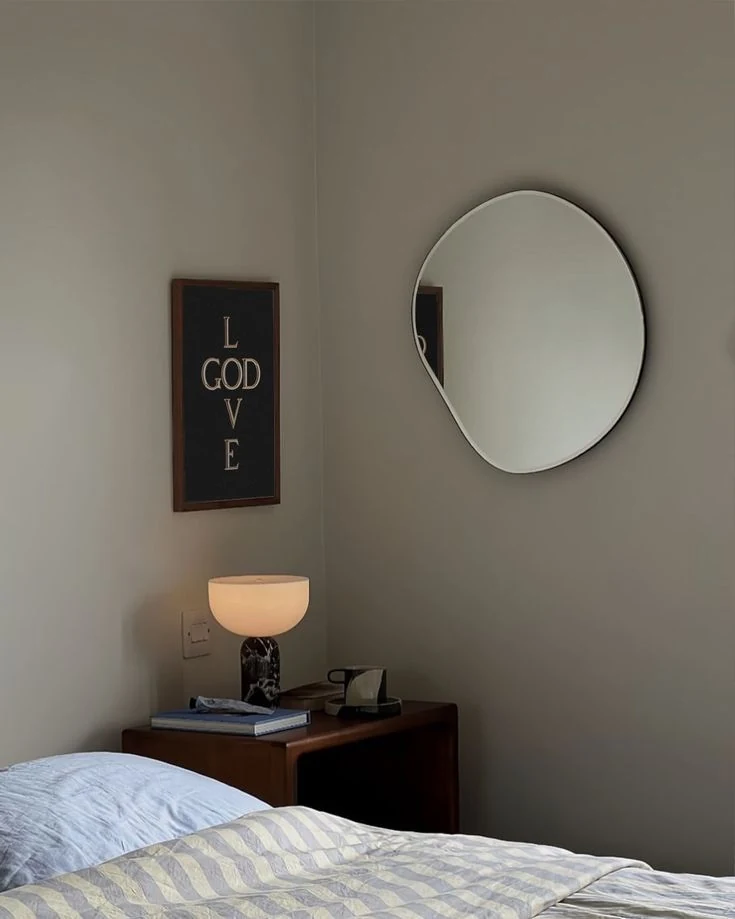
Look at the reflected view before deciding where a mirror belongs. You might enjoy seeing a quiet wall or a bright window from the doorway; a reflection of piled clothes adds another view of the pile. Choose the position for what you want to see, then leave nearby wall decor out if it distracts from that shape.
A mirror has depth on the wall as well as a shape from the front. Compare its outline with the lamp and table already there. We like the round shape here because it softens the corner’s straight edges, but a mirror isn’t required when a picture or an empty wall suits the bed better.
Let Pale Curtains Finish the Small Bedroom’s Color Scheme
The window can carry the last broad area of color without another object on the floor. Pale pink curtains fall beside white bedding in this corner, with a taupe wall and a small bedside lamp nearby. The folds give the window detail, while the plain bed leaves a larger uninterrupted light surface.
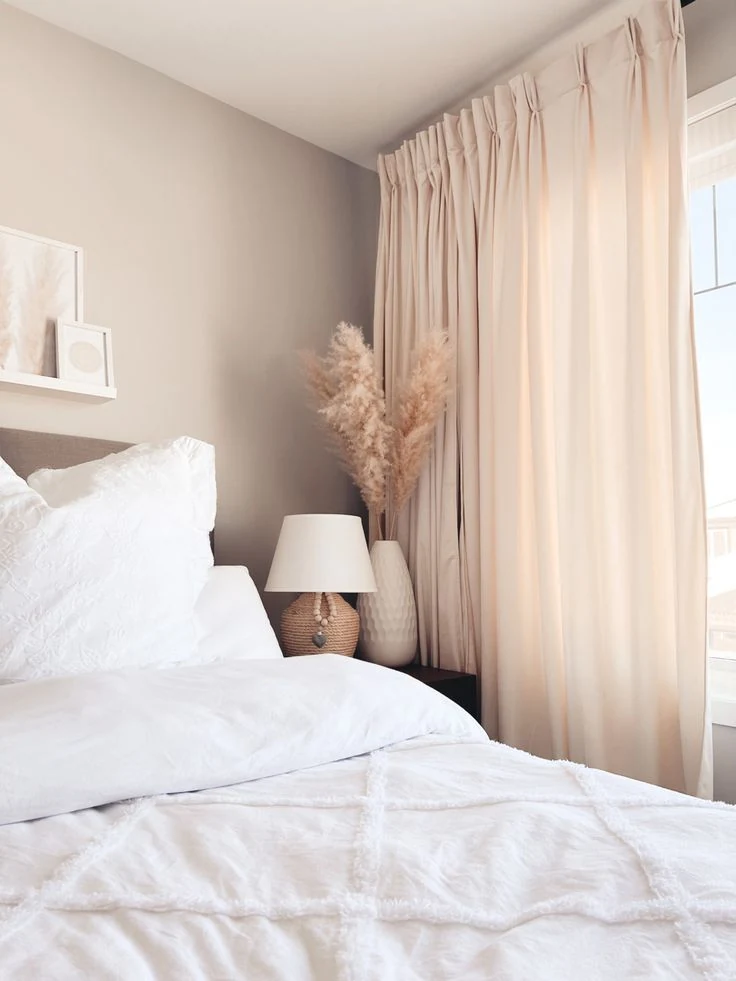
Compare a curtain sample with both the bedding and the wall. A subdued pink can give a white bed some color without introducing a strong new print. If the duvet is already patterned, choose a curtain color from its quieter areas and decide whether the window needs pattern at all.
Our bedroom window and bedding combinations include deeper panels and checked options when pale pink doesn’t suit the room. Choose privacy and light control from the product details separately. The light appearance of a curtain in a photograph doesn’t tell you how it performs after dark.
Before adding anything else, use the room for a few evenings. Notice whether the bedside surface stays useful, whether spare pillows have a home, and whether the window color still works with the bed. Keep the changes that make the room easier to live in, and leave the remaining floor space available. When the bed itself blocks a door or wardrobe, compare these small bedroom bed-placement scenarios; for belongings still without a home, the compact bedroom storage ideas begin with existing drawers and space beneath the bed.
For ideas that bring the whole room together, explore Bedroom Decor Ideas for a Room That Feels Put Together.