Small bedroom storage gets awkward when every new container needs another patch of floor. Start inside the dresser you have, use the space beneath the bed for less-used belongings, and let bedside furniture hold everyday things as well as a lamp. These examples compare those options with bed-end trunks and carts, keeping both stored belongings and usable floor space in view.
Sort the Bedroom Dresser Before Adding Furniture
A dresser that’s already in the room deserves a closer look before a second chest joins it. The open drawer in this green bedroom holds clothing, with more drawers below and above it. The partly open view leaves the overall sorting system out of sight; the existing storage is the detail worth considering first.
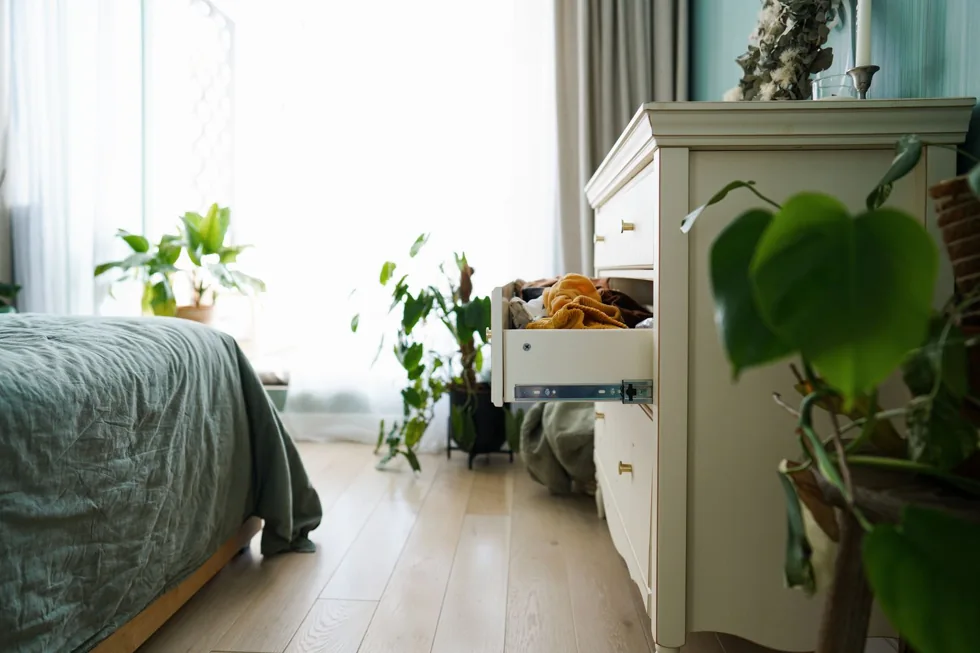
Separate the things you reach for together: sleepwear, everyday shirts, and small garments don’t all need the same space. Keep the groups you use in this room here, and reconsider belongings that have drifted in from elsewhere. Buying a larger cabinet won’t settle which drawer those objects belong in.
Small dividers offer a more focused change than a new piece of furniture. White honeycomb compartments separate small garments in the close-up below. The open tops make the groups visible, each contained within the edges of its own little cell. Compare that arrangement with your clothes and drawer size.
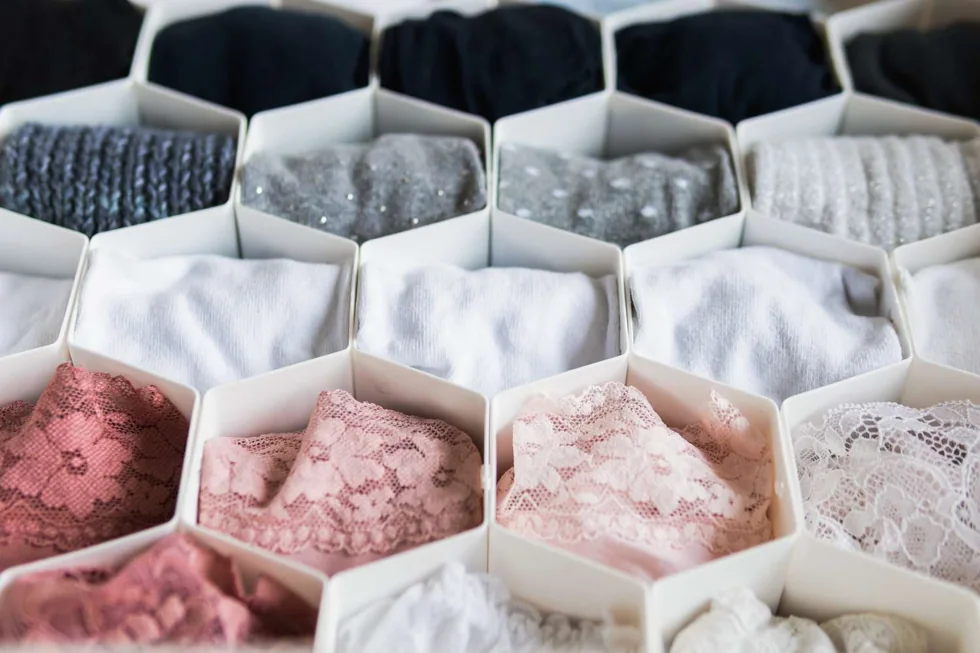
Compare an organizer with the drawer and the clothes that will actually go inside it. Wide, bulky garments ask for different spaces from socks or underwear. We’d leave a larger section undivided rather than force everything into identical little cells just because the insert has them.
If the dresser itself is hard to reach, sorting won’t solve that problem. Before filling another gap, compare the bed positions and opening-space examples with the cabinet you’re keeping.
Put Less-Used Belongings Beneath the Bed
Once the daily clothes have a place, consider what doesn’t need a dresser drawer. Spare covers and out-of-season clothing are candidates for low boxes beneath an existing bed. Here, shallow gray boxes occupy the gap below a pale bed frame, leaving their fronts visible along the side.
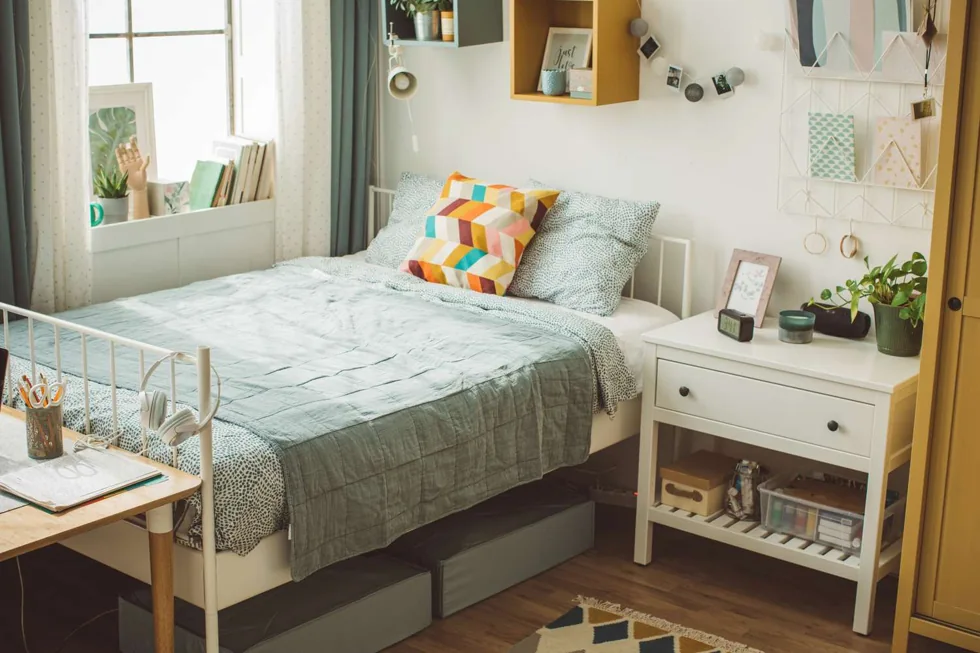
Check the whole route a box will take, including the frame’s lower edge and the place you’ll pull it out. A box fitting underneath doesn’t mean it can come out beside a nightstand. Keep the belongings you need most often near the accessible side rather than burying them behind another container.
A bed with its own drawers offers a different version of that storage. The upholstered frame below has a partly open drawer with a pale item inside. Its front follows the bed’s fabric outline when closed, so the storage becomes part of a piece already occupying the floor.
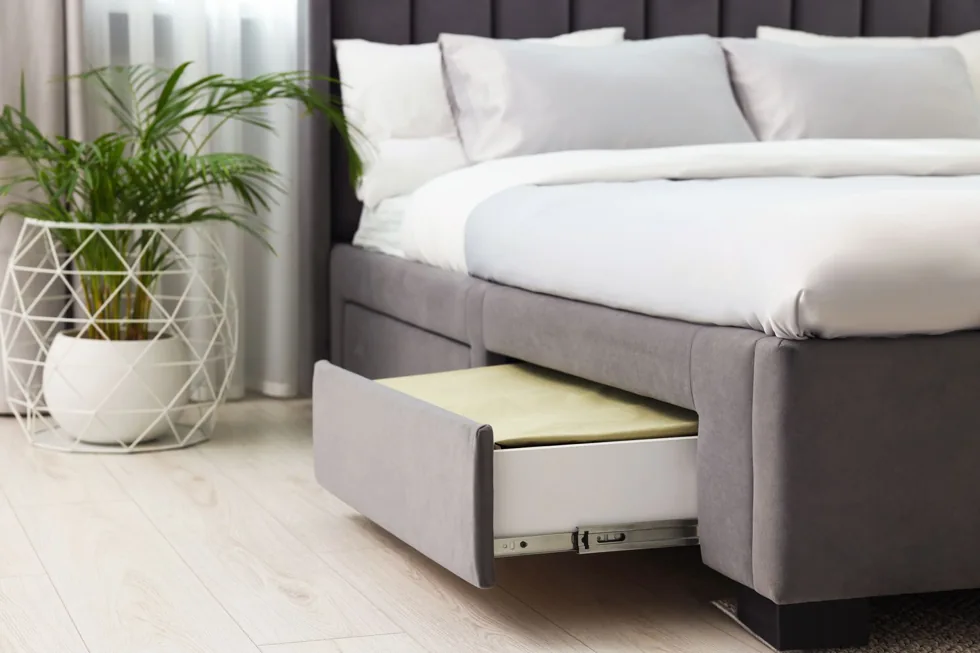
If you’re already replacing the bed, include its drawer movement in the choice. Compare the actual frame, drawer, and neighboring furniture together. A rug edge, bedside cabinet, or narrow approach may change how you use it. Use your own frame and drawer measurements for that comparison. Keep a usable bed you own if low removable boxes answer the need.
Give Spare Layers a Lidded Home at the Bed End
Under-bed storage isn’t the only place for spare layers when the foot of the bed has usable room. Two woven trunks sit below pale cushions in this example. Their lids are closed, so the useful detail is their position and contained shape, rather than any contents supposedly hidden inside.
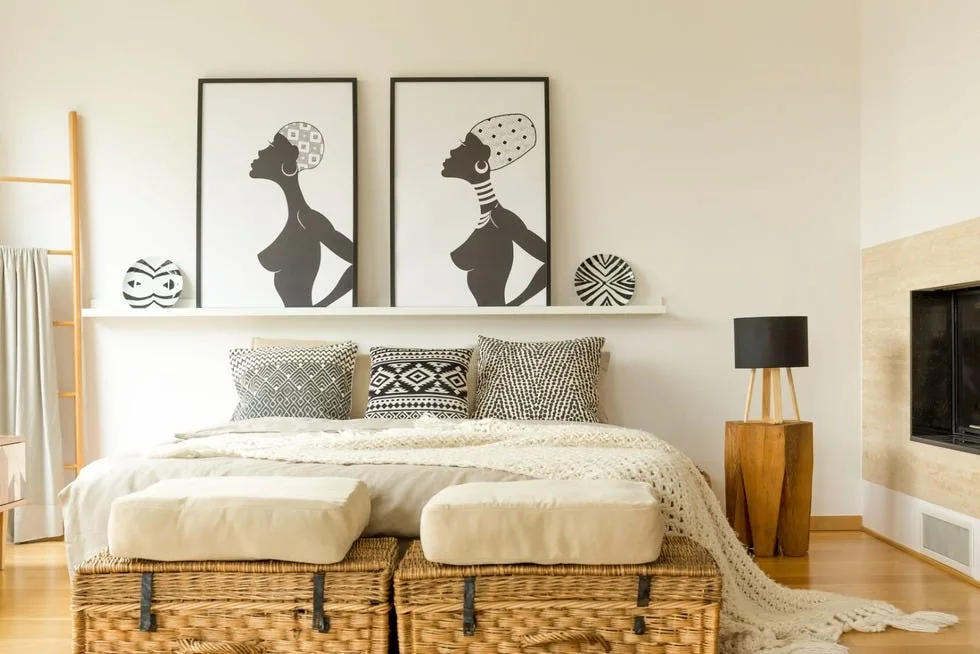
A lidded trunk is worth considering for an extra blanket that doesn’t belong on the made bed every day. Give it a defined job instead of letting it absorb anything with nowhere else to go. You shouldn’t have to empty a miscellaneous pile to find the layer you’re looking for.
Look beyond the closed box when deciding whether it belongs here. Can its lid open, and can you stand where you’ll take things out? Cushions on top add another thing to move. The styling alone doesn’t tell you whether a particular trunk is intended for sitting, so don’t choose its use from the cushion arrangement.
For a room that hosts visitors, the guest-bedroom preparations for spare bedding and luggage cover how to make those belongings easy for someone else to find. A clear explanation can be more useful than another decorative basket.
Let a Bedside Chest Replace a Table and Extra Dresser
A bed-end trunk handles occasional layers; clothing used every day may belong closer to the pillow. This room places a low three-drawer chest beside the bed, with a lamp on its top. The room shown is generous, but the furniture’s combined role is the detail to compare in a smaller bedroom.
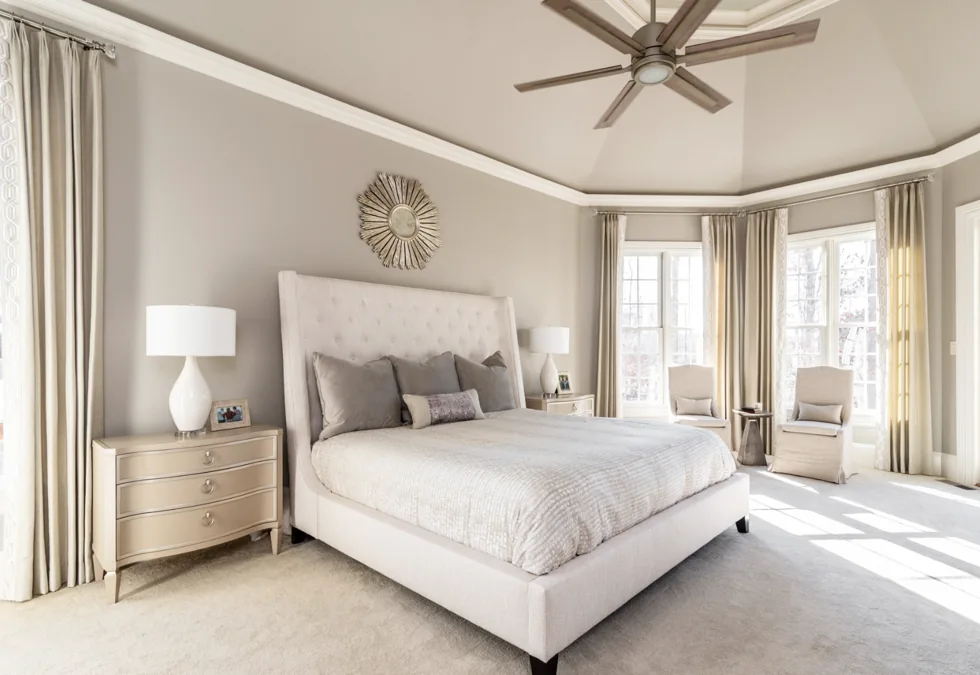
Consider a chest here as a replacement for a bedside table, rather than automatically adding it alongside one. The top still needs room for the things used at night. The drawers can take a specific clothing group that would otherwise require another unit elsewhere in the room.
Reach and opening space matter more than matching this chest’s appearance. Try the top from the bed, and check where you’d stand with a drawer open. A piece that looks balanced beside the headboard may still be too deep for your approach. Don’t turn a useful bedside spot into an obstacle for the sake of more drawers.
When you need only a smaller surface, the narrow shelves and compact nightstands in these bedrooms offer lighter furniture choices. Decide how much enclosed storage you’ll use before choosing the outline.
Pair an Open Bedside Basket with a Closed Drawer
If a chest asks too much of the bedside space, a smaller cabinet can divide visible and hidden storage. This white unit has an open shelf holding books and a woven basket above a closed drawer. The basket gives the little objects a shared boundary without closing the entire shelf.
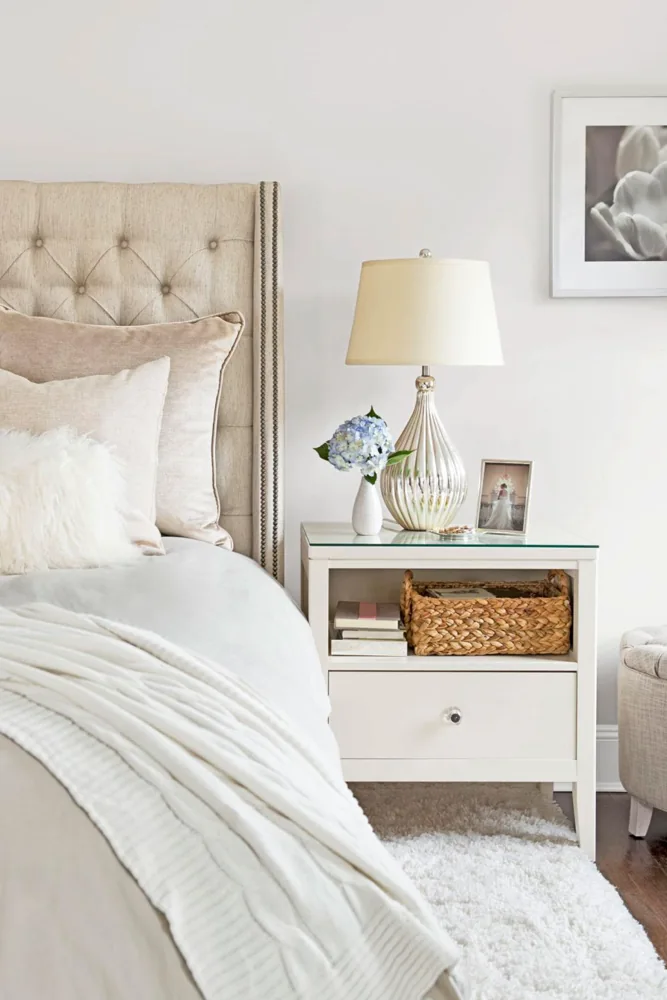
Choose what deserves the open position. A book you’re reading can stay easy to reach; loose cords or small packets may suit the drawer better. Give the basket a particular group, such as bedtime supplies, so you know what’s inside without searching through unrelated things.
Leave the basket easy to lift or slide out. Filling the gap around it with more objects defeats its usefulness when you need to take it out. We’d also keep the top less decorated than this example if a phone and water glass need the same place as the lamp.
The cabinet can carry texture while the bed remains plain. If the room needs a softer finish after the storage is settled, the bedcovers, throws and nearby rugs in these cozy bedrooms show ways to add that detail through fabric already close to the bed.
Use a Cart for a Bedside or Corner Storage Station
Open storage can also live on a cart when a solid cabinet feels too heavy in the corner. This wheeled unit has books on a middle shelf, folded textiles below, and a small basket alongside them. Its thin frame leaves the wall visible between the levels.
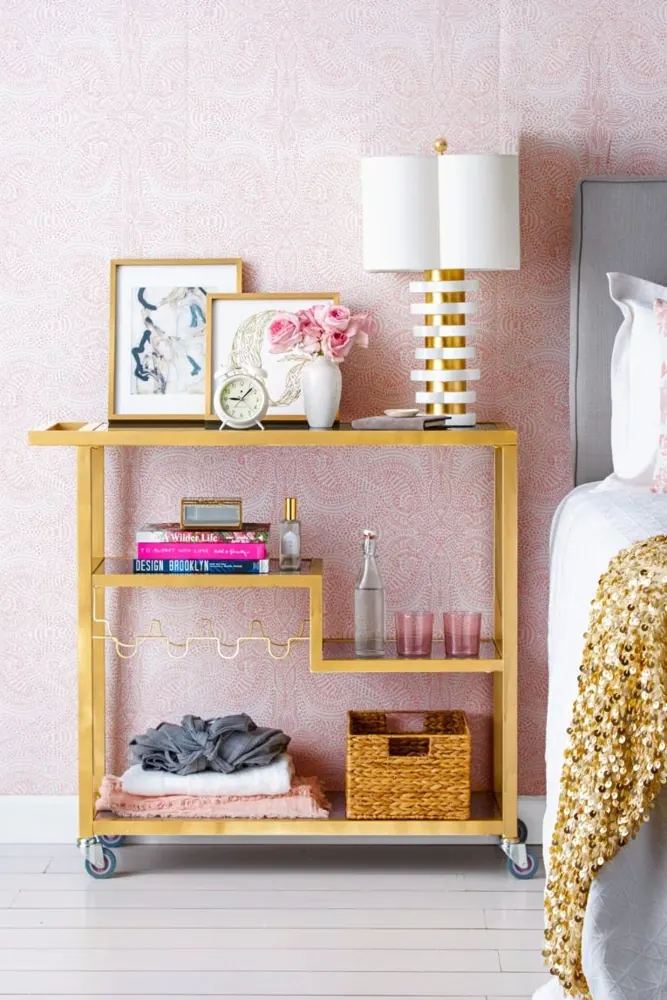
Borrow that arrangement selectively. The glasses and decorative objects belong to the styled scene; your bedside station may need a book, a small supplies basket, and nothing more. Keep the top for what you reach from bed, and give the lower shelves things you can comfortably retrieve from their position.
A cart needs a place to stay as well as somewhere it can move. Try the route beside the bed with it in its everyday position. If moving it only blocks the dresser or doorway, wheels haven’t solved the space problem. Choose a smaller piece or keep that corner open instead.
Choose Bedroom Storage by the Way It Opens
The last comparison is between using the storage and simply fitting it into the room. Open the dresser, pull out the bed box, lift the trunk lid, and reach for the bedside basket. Keep the pieces that let those ordinary actions work together, even if that means leaving a tempting gap empty.
Match the remaining need to one place: small clothing groups inside drawers, occasional layers below or beyond the bed, and bedtime objects beside it. You don’t need every option shown here. The useful addition is the one that gives a specific group a home without making another part of the bedroom harder to use.
Once those belongings are settled, ZM Home brings together room ideas for the colors and fabrics around the furniture you’re keeping.
For ideas that bring the whole room together, explore Bedroom Decor Ideas for a Room That Feels Put Together.