Bedroom Decor Ideas for a Room That Feels Put Together

Bedroom decor brings the bed, wall colors, fabrics, lighting, and everyday objects into one room scheme. Start with the bed and furniture you’re keeping, then choose which large surface will carry the color or pattern.
A plain duvet can leave room for patterned curtains; a detailed headboard may need little beside it. Settle awkward furniture positions before adding the smaller finishing pieces.
The choices below move from the bed and its position to walls, bedding, windows, lamps, and the belongings around them. The room examples offer visual ideas; compare colors and sizes with the things in your own bedroom before choosing a replacement.
On this page
- Start with the bed you’re keeping
- Separate styling from bed placement
- Choose wall color beside existing fabrics
- Build bedding layers you’ll use
- Connect curtains to the bed and walls
- Give lamps a clear bedside role
- Let the headboard set the wall detail
- Coordinate rugs with everyday storage
- Finish a guest bedroom for the person staying
Start Bedroom Decor with the Bed You’re Keeping
A bed frame already supplies part of the decorating scheme.
While a dark headboard gives pale pillows a clear outline, a cream upholstered frame sits closer to white bedding, so a textured pillow or deeper cover can make those pale layers easier to distinguish. Look at that relationship before choosing another accent color.
Here, charcoal upholstery surrounds white pillows, while a brown quilted cushion connects with the bedside cabinet and vase. The bed-end throw adds a small geometric pattern. The room gets several kinds of detail from pieces near the bed, even though the wall stays relatively plain.
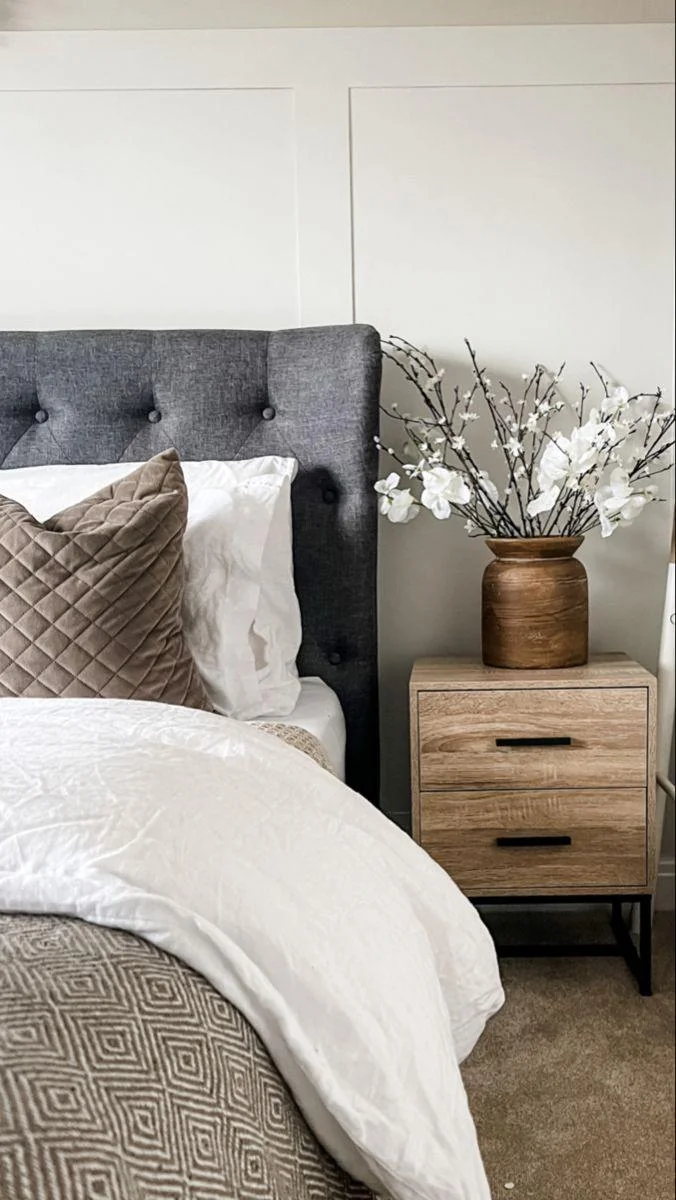
Try the broadest change with bedding you already own. Spread the plain cover fully, then put back the throw or cushion you’re considering. If the bed’s shape becomes easier to see with fewer layers, leave some out. Buying a matching set isn’t essential to making the existing furniture feel considered.
Keep the dresser in that view, too. A large brown cabinet contributes more color than a small decorative object, and it can give a brown cushion a reason to belong. We’d choose a small repeat from a piece worth keeping before introducing another color that needs its own companions.
The neutral bedroom combinations compare charcoal frames, pale upholstery, and white bedding when the bed itself is the piece setting your color choices.
For the rooms beyond the bedroom, the home decor guide follows the same starting point: keep useful furniture, then compare color, fabric, lighting, and the surfaces used every day. Choose the bedroom’s details within that wider view of your home.
Separate Small Bedroom Styling from Bed Placement
Keeping a bed also means working with the floor space its frame occupies. If reaching the wardrobe is awkward, compare the furniture positions before changing the duvet. If the room works well but feels visually crowded, editing the fabrics and tabletop objects is a more focused place to begin.
The bed in this example follows a coral side wall, with a window beyond its side and a tall mirror on the neighboring wall. The coral repeats in the pillows and a narrow bedcover band. Borrow that color connection separately from the furniture position; your door and storage openings may call for another arrangement.
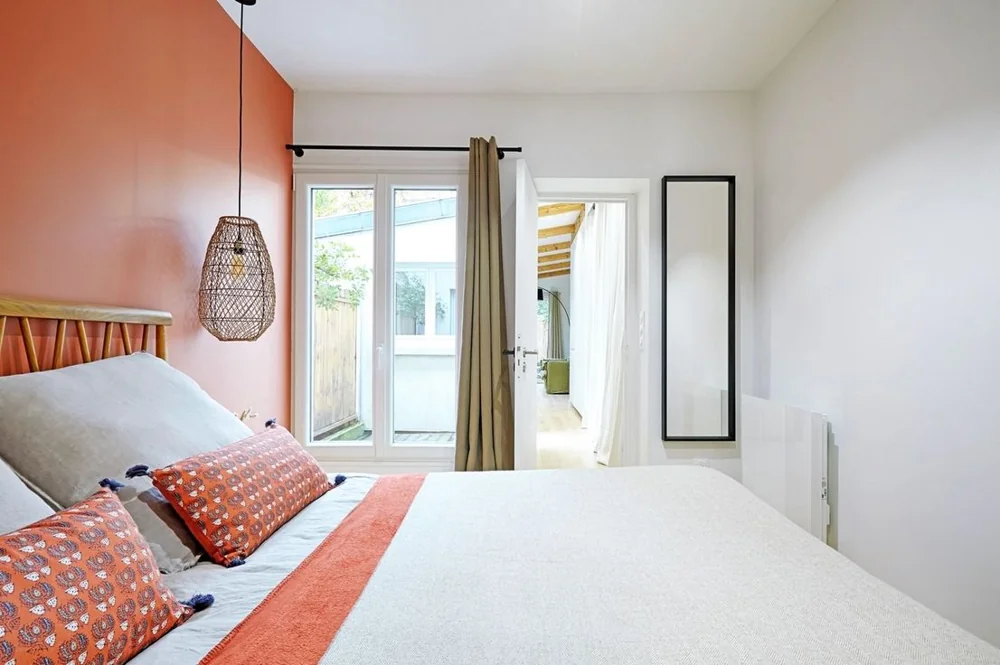
Test the actions that feel difficult: opening a drawer, reaching the window, and standing beside the bed to change the covers. Include the furniture frame and an open drawer in the comparison. A piece that fits when closed can still take over the space needed to use its neighbor.
When the conflict comes from furniture placement, the small bedroom layout comparisons explore bed positions beside windows, wardrobes, and sloping ceilings. Settle that question first. Then a compact bedside surface and a simpler bed can finish the space that remains.
Choose Bedroom Wall Color Beside Existing Fabrics
Once the large pieces have a usable position, choose wall color with the bedding and curtains you plan to keep. A patterned duvet may already contain a quieter color suitable for a broad wall. With plain white bedding, the wall can take a more distinct color while the bed stays light.
Pale blue walls surround white bedding in this room, with cream curtains and small yellow lamps. Blue occupies a broad background, white covers the bed, and yellow appears in smaller areas. The colors have different amounts of space, which keeps the yellow from taking over the scheme.
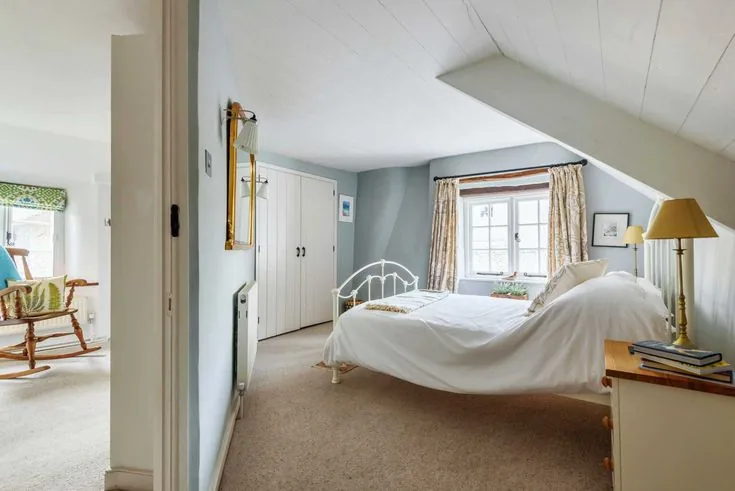
Compare samples beside the existing furniture as well as each other. Hold the curtain sample upright, spread part of the duvet, and look at the paint sample near both. A photograph can suggest a combination; the actual samples show what you’re choosing for the room.
For specific starting points, these bedroom wall and bedding palettes include pale blue and white, gray with dusty pink, and peach with rust. Choose the relationship you like before looking for an exact shade. The pictured colors don’t identify a paint brand or formula.
Build Bedroom Bedding Layers You’ll Use
The wall establishes a background; bedding gives the scheme a part you can change more easily. Start with the covers and sleeping pillows the bed needs. Add a throw for a deeper color, a visibly different surface, or an extra layer you actually use, then judge whether a decorative cushion adds anything distinct.
Caramel-and-white checks sit behind smaller pale checks on this bed. The colors stay close, while the change in pattern size keeps the pillows separate. A plain cream duvet with one checked pillow would borrow part of that idea without repeating every patterned layer.
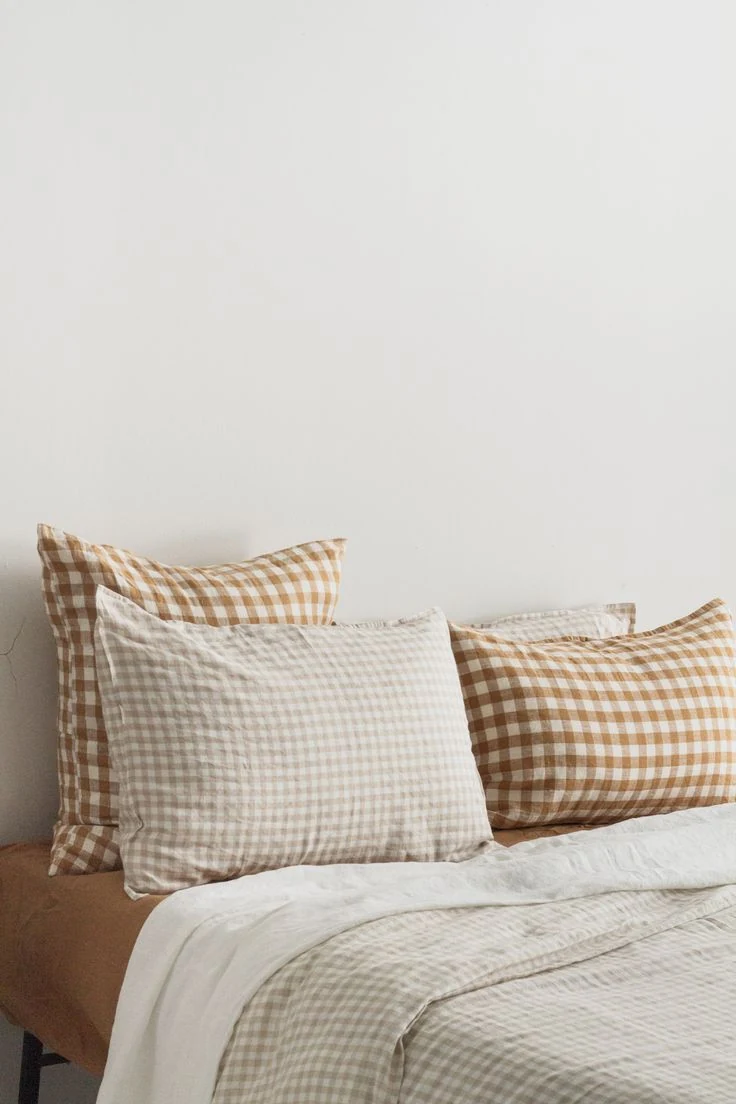
Texture is another choice when several prints feel too busy. A raised-looking weave beside a smoother pillow can give pale bedding some definition. You don’t have to introduce another pattern.
Compare what’s already visible in the headboard: tufting, woven-looking lines, or an ornate frame may supply enough detail for a simpler cover.
Give removable layers somewhere to go at night. A throw that stays in use can sit across the foot; cushions taken off every evening need a clear home. If the only landing place is the floor, fewer cushions may suit the room better. A broad plain duvet can be a finished choice.
For a softer finish, the cozy bedroom bedding examples compare textured throws, floral covers, and simpler beds with fewer added layers.
Connect Bedroom Curtains to the Bed and Walls
Bedding occupies the lower part of the room, while curtains can introduce a broad vertical area of color. Compare the window with the bed before choosing a print. Pale panels can continue light bedding; a deeper plain curtain can give a pale headboard a stronger background.
White sheers and fuller beige outer panels make separate layers in this example. The bed repeats their light colors, leaving the curtain folds as much of the window’s detail. The outer panels occupy a substantial part of the view even while open, so their color deserves the same attention as the duvet.
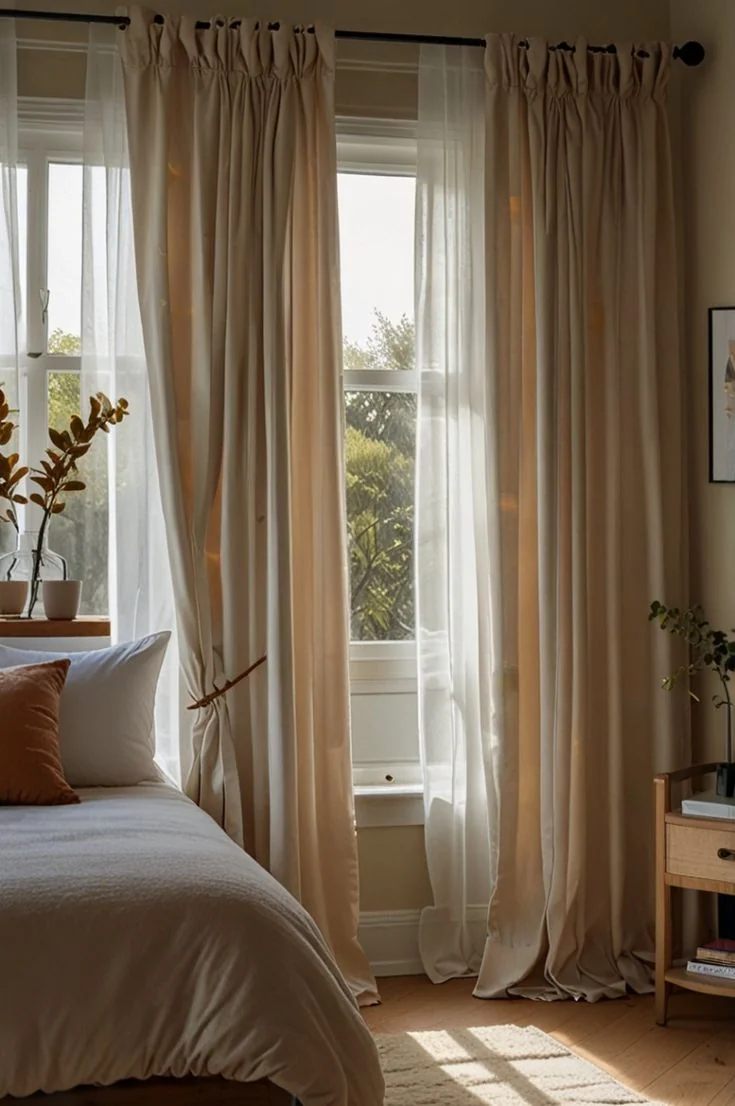
If wallpaper or bedding already carries a detailed floral print, try a plain curtain sample in one of its subdued colors. A small check offers another direction when a shared color connects the prints and their patterns differ clearly in scale. Keep the choice beside the actual wall, where both areas will be visible together.
Compare open and closed curtains because each position changes how much fabric enters the scheme. Then check the product details for the privacy and light control you need. The bedroom curtain combinations show those visual pairings, from pale layers to deeper blues and mixed patterns.
Give Bedroom Lamps a Clear Bedside Role
Curtains and wall color shape the larger background; a lamp adds a more concentrated bedside outline. Choose its job along with its appearance. A light used beside a book needs to work from that reading position, while a lamp across the room may mainly accompany a chair or give that corner a glow.
The tall pale lamp here rises from a small chest beside the bed. Although its slender stem leaves some of the cabinet top visible, the shade makes a wider shape above it, so judging the lamp by its base alone would miss the space it occupies beside the bed. The lamp’s base and shade therefore ask different things of the available space.
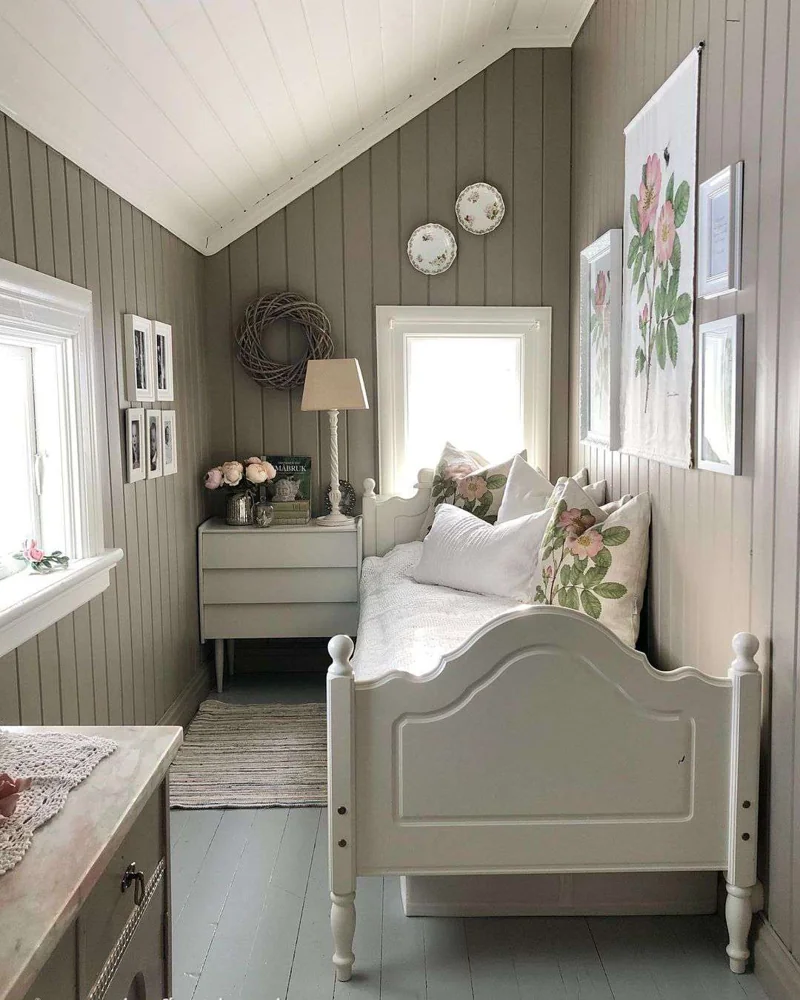
With a table lamp you own, try the switch and light from the place you’ll use it. Look at the book, the shade, and the remaining tabletop together. A narrow base can leave room for a glass, yet a projecting shade may still feel crowded near the pillows.
Lamp finishes can connect with smaller details already present. A dark base might echo a curtain rod; a pale shade may sit quietly beside patterned bedding. We’d keep the surrounding objects simple when the lamp itself has a strong shape, leaving the bedside useful for the things brought there at night.
Compare bedside reading lamps and background lights if the missing piece is a usable reading source or a light elsewhere in the room.
Let the Bedroom Headboard Set the Wall Detail
Bedside lamps add outlines around the bed, so include them when deciding what belongs above the headboard. A curved or buttoned headboard may already give the wall a clear center. A quieter frame leaves more room for artwork, a patterned wall, or a group of pictures to carry the detail.
In this arrangement, pale frames connect pictures with different subjects, while tan shapes relate to the curved woven-looking headboard and pillows. The artwork extends beyond the bed’s outline. Borrow the repeated colors or frame finish first, then choose how many pictures suit your own wall.
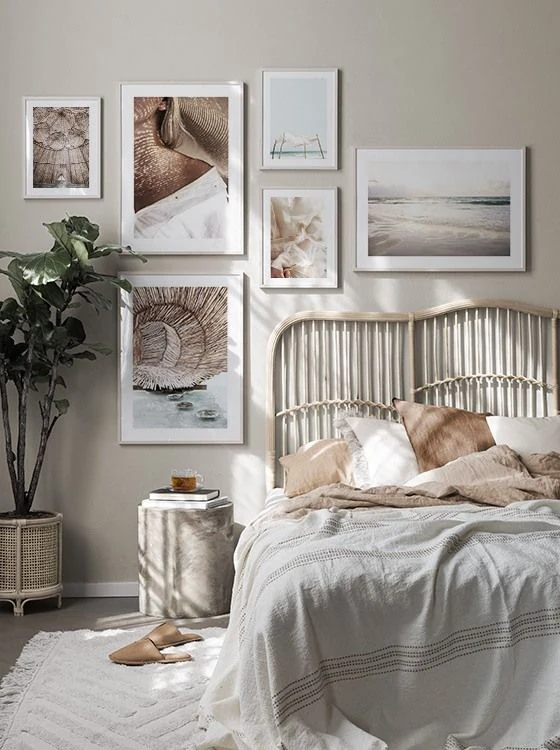
Use a picture you already like as a starting point for a small fabric accent. A tan area might connect with a pillow, or a gray shape with a throw. The picture can keep its own subject; the surrounding bedding needs only a small connection to it.
Before adding another object, view the wall from the doorway with the bed made and the lamps in place. If the frames, headboard, and shades each demand attention, simplify one area. Keep the feature you enjoy seeing most and give it a quieter neighbor, such as a plain pillow or an open section of wall.
When the wall needs more of the detail, these bedroom accent wall arrangements compare framed art above a low panel with broader patterns behind the bed.
Coordinate Bedroom Rugs with Everyday Storage
The floor around the bed has to accommodate belongings as well as complete the color scheme. Choose a rug by the area that will remain visible beyond the bedcover. A broad pale field gives furniture a shared background, while a narrow runner puts pattern along a smaller exposed strip.
Include storage movement in that choice. An under-bed box needs a route out; a cabinet drawer needs opening space. Compare the rug edge with those actions using your own furniture, so a pleasing floor arrangement also works when the room is in use.
The bedside cabinet offers another way to balance visible and hidden things. Here, books and a woven basket occupy an open shelf above a closed drawer. A basket gives small objects a common boundary, while the drawer offers a separate place for the loose things you’d prefer to put away.
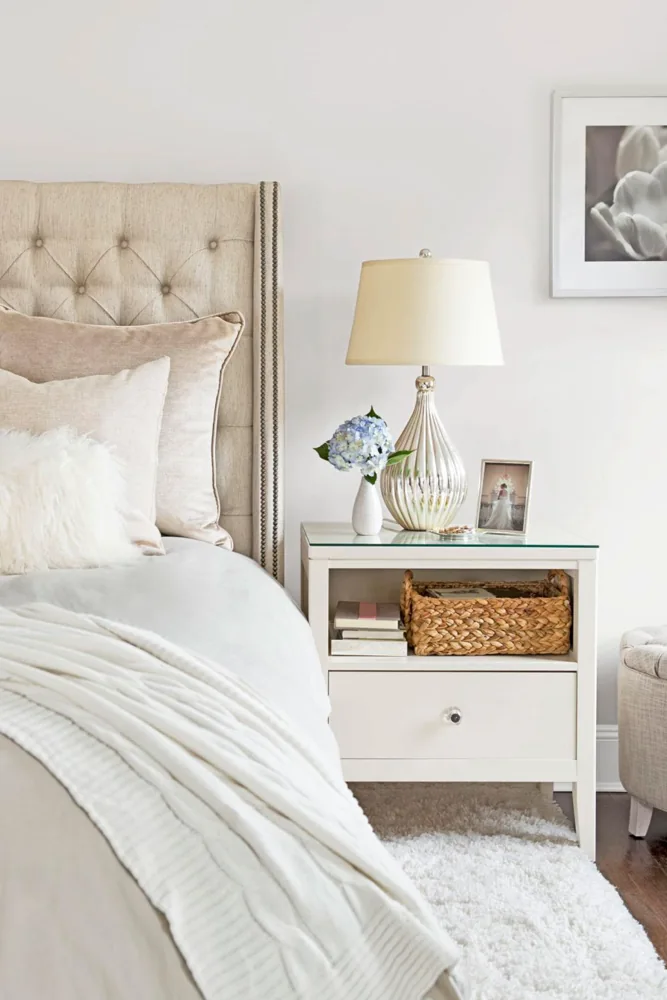
Choose which belongings deserve each position before adding another container. A current book can stay accessible; occasional spare layers may belong below the bed.
These storage options for a small bedroom compare the furniture and opening actions in more detail. Leave the top available for everyday use as you finish the styling.
Finish a Guest Bedroom for the Person Staying
A guest bedroom gives those everyday spaces a temporary new user. Keep the coordinated colors and fabrics, then make room for the belongings a visitor brings. A clear bedside surface, an obvious place for a bag, and spare bedding they can find make the finished room easier to settle into.
Look at decorative objects through that use. A vase on the bedside table may occupy the spot needed for a phone and glasses. Display cushions need somewhere to go when the bed is opened. Keep a few details that give the room character, and clear the surfaces the guest will use.
An office that doubles as a guest room may already have a useful desktop. Put household paperwork away and leave a section free for a travel pouch or laptop. For two beds, check both sleeping spots separately: each person needs room for their own things, even when a central lamp or table is shared.
The guest bedroom preparations cover luggage, bedside essentials, twin beds, and spare layers. Use that final check after making the visual choices. The room can keep a plain white bed, colorful pillows, or a patterned curtain while still leaving the next person a clear place to unpack.
Explore a related room
All ideas in this guide
- 8 Neutral Bedroom Decor Ideas with Soft Color and Texture
- Guest Bedroom Ideas: Twin Beds, Lighting, and Luggage
- 8 Bedroom Curtain Ideas for a Finished, Layered Look
- Boho Bedroom Ideas with Color, Woven Texture, and Soft Layers
- Small Bedroom Ideas for Bedding, Bedside Tables, and Curtains
- Cozy Bedroom Ideas for Soft Bedding and Warm Bedside Light
- Bedroom Paint Colors: Blue, Pink, and White Bedding Pairings
- Bedroom Accent Wall Ideas: Floral, Slatted, and Abstract
- Small Bedroom Layout Ideas for Awkward Rooms
- Bedroom Lighting Ideas: Bedside Lamps and Soft Layers
- Small Bedroom Storage Ideas: Beds, Baskets and Drawers
- 8 Bedroom Rug Ideas for Color and Placement