Choosing a bedroom rug means deciding how much floor color and pattern you want around the bed. Use a broad rug beneath the bed to connect it with the surrounding furniture, or give a smaller area its own pattern with a separate runner. These eight bedroom rug ideas compare those placements alongside pale textures, darker motifs, and a border that picks up the bedding.
Start by looking at the rug area your bedcover leaves exposed. A pattern hidden under the mattress won’t have the same effect as a clearly visible edge. The photographs show color relationships and placement ideas; measure your own bed frame and floor before choosing a size.
1. Pair a Pale Patterned Rug with a Warm Wood Bed
A pale pink-and-gray rug spreads beneath this wood-toned bed and remains visible across the foot. The rust throw is much stronger in color than the rug, while the woven-looking headboard and round pouf bring larger patches of tan into the room. The floor pattern adds detail without becoming another bold block beside the throw.
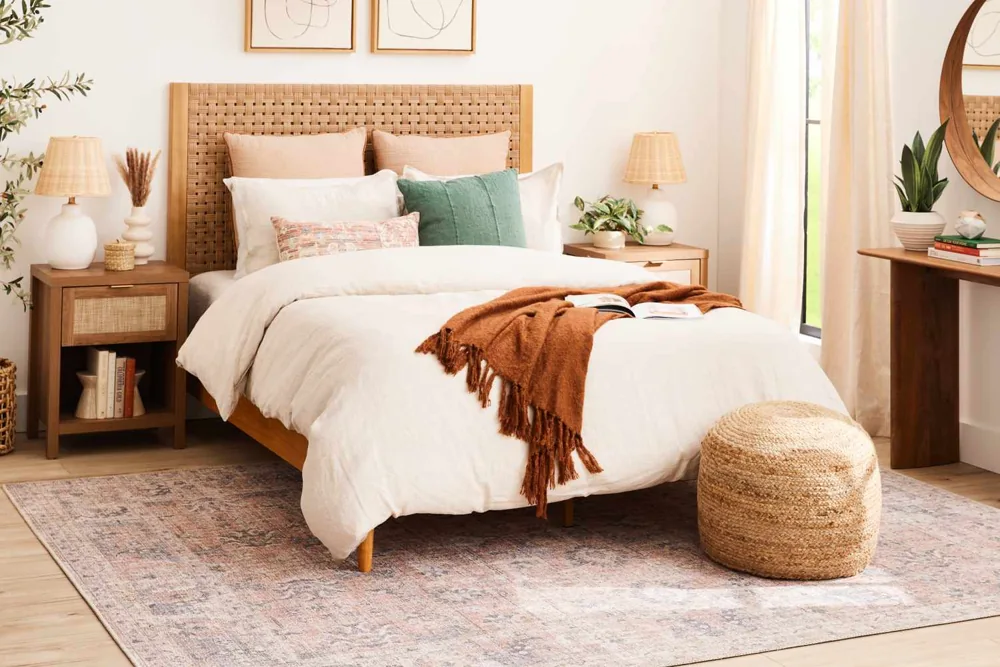
Try this balance when you like your wood furniture and want to keep its outline clear. A rug with a faded-looking pattern can introduce pink or gray beneath white bedding without requiring matching pillows. Compare the rug’s light background with the wood, too: the background occupies more of the visible floor than any small motif.
You don’t need to bring every accent down to the floor. The green pillow stays a separate note here. For other ways to keep pale layers distinct, our neutral bedroom color and texture examples compare the bedding and headboard themselves.
2. Place a Dark Bed-End Bench on a Broad Pale Rug
A broad pale rug can also give darker furniture a shared background. Here, the rug extends beyond the bed and beneath a dark upholstered bench at its foot. A strip of exposed wood floor outlines that pale area, so the bench belongs visually with the bed even though its dark upholstery stands out.
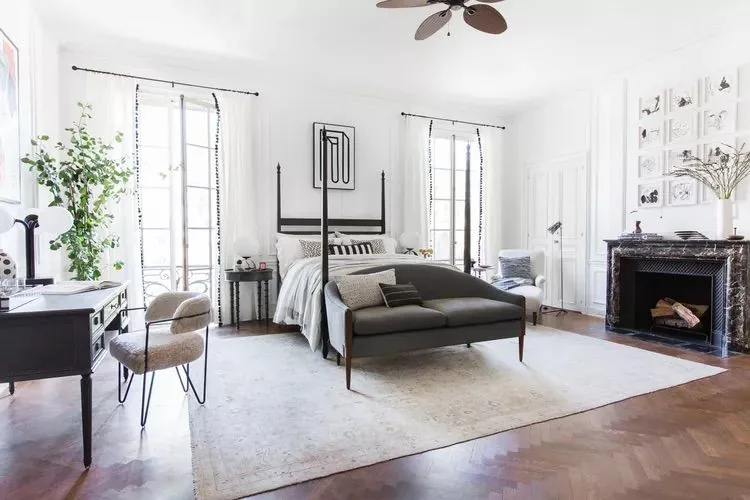
Consider the furniture already at the foot when comparing rug outlines. If the rug stops behind that piece, the exposed floor creates a different division. Neither arrangement needs to copy this room’s proportions; the useful choice is whether you want the bench and bed sitting within the same pale field.
The photograph doesn’t make a bench essential. If yours would leave the bedroom awkward to use, keep the foot area open and let the rug supply the visual extension. Our small bedroom layout comparisons put the bed, storage openings, and entrance route ahead of decorative furniture.
3. Show a Strong Rug Pattern Below White Bedding
Where the pale rug lets a bench stand out, a stronger pattern can make the floor itself the feature. This white bed sits above a rug with large dark motifs visible across its foot. The white cover separates that graphic area from the plants, hanging details, and small upholstered stools nearby.
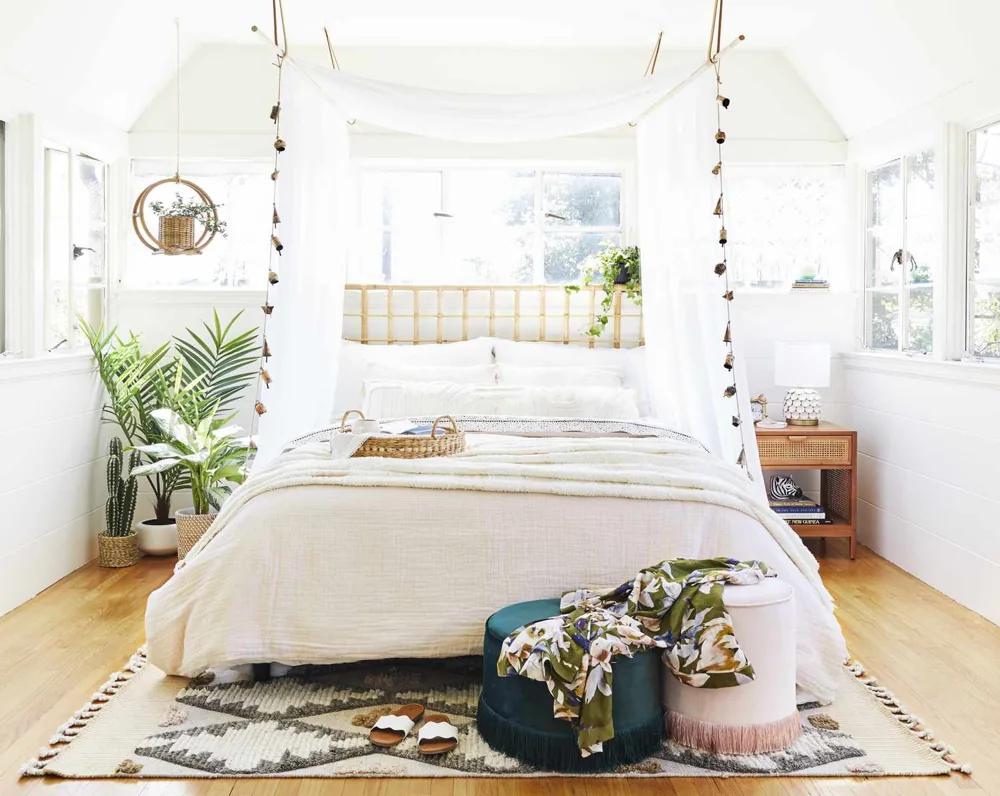
Check the part of a patterned rug that will remain uncovered. A large motif can read clearly in that strip; a design whose main detail disappears under the bed gives a different result. Look beyond the full rug picture when deciding whether you like the pattern in your room.
Plain bedding doesn’t have to mean a plain room. Keeping the cover white leaves room for the rug’s dark shapes, and a small accent can repeat one of those colors elsewhere. A white bed above a multicolored rug opens our boho bedroom pattern and texture examples, if you’d like to take the floor color further.
4. Give Pink Bedding a Quieter Pale Rug
A strong floor pattern isn’t the only companion for colored bedding. In this pink room, a pale rug lies beneath the bed, with a visibly fluffy area beside it. Rust-pink pillows and a deeper throw stand out against the lighter floor, while the patterned bedcover carries most of the small repeated detail.
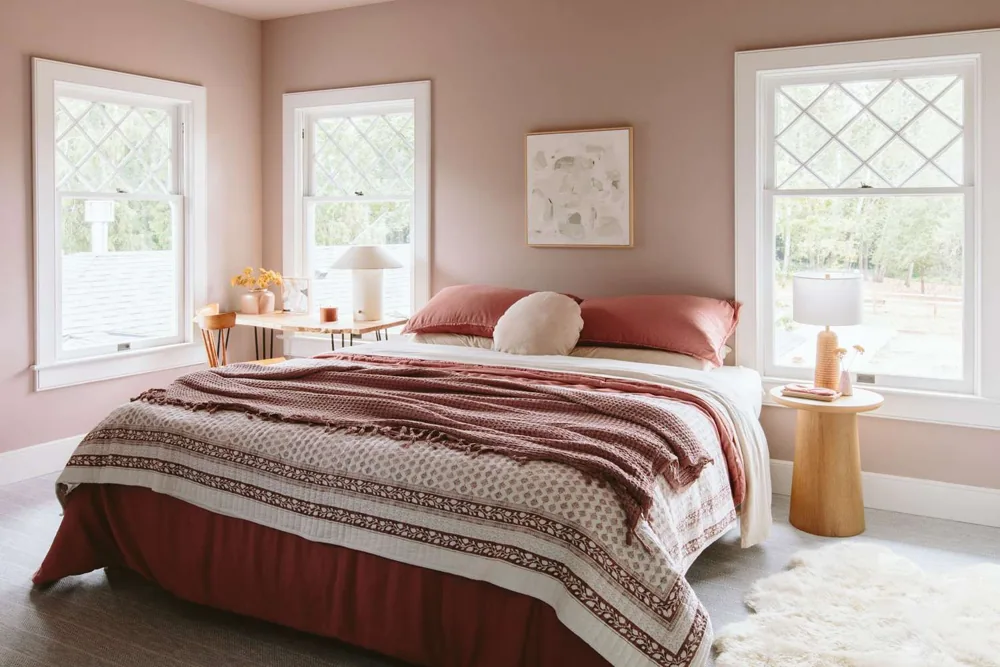
Use the bedding’s level of detail to judge how much pattern the floor needs. If the bed already combines a printed cover and a textured throw, a quieter rug can be enough. A second dense print would change this room’s gentle color balance, even if both textiles contained pink.
The fluffy-looking surface is a visual cue rather than a fiber description. You can’t establish how a rug feels or how to clean it from this image. Keep those buying decisions separate from the pale color relationship shown here.
5. Place a Narrow Rug Along One Bedside
For a smaller patch of pattern, a separate bedside runner gives the floor a defined strip. A dark patterned runner lies along the visible side of this rust-colored bed, with gray floorboards between its top edge and the bedside cabinet. The runner’s darker border makes its outline easy to distinguish from the boards.
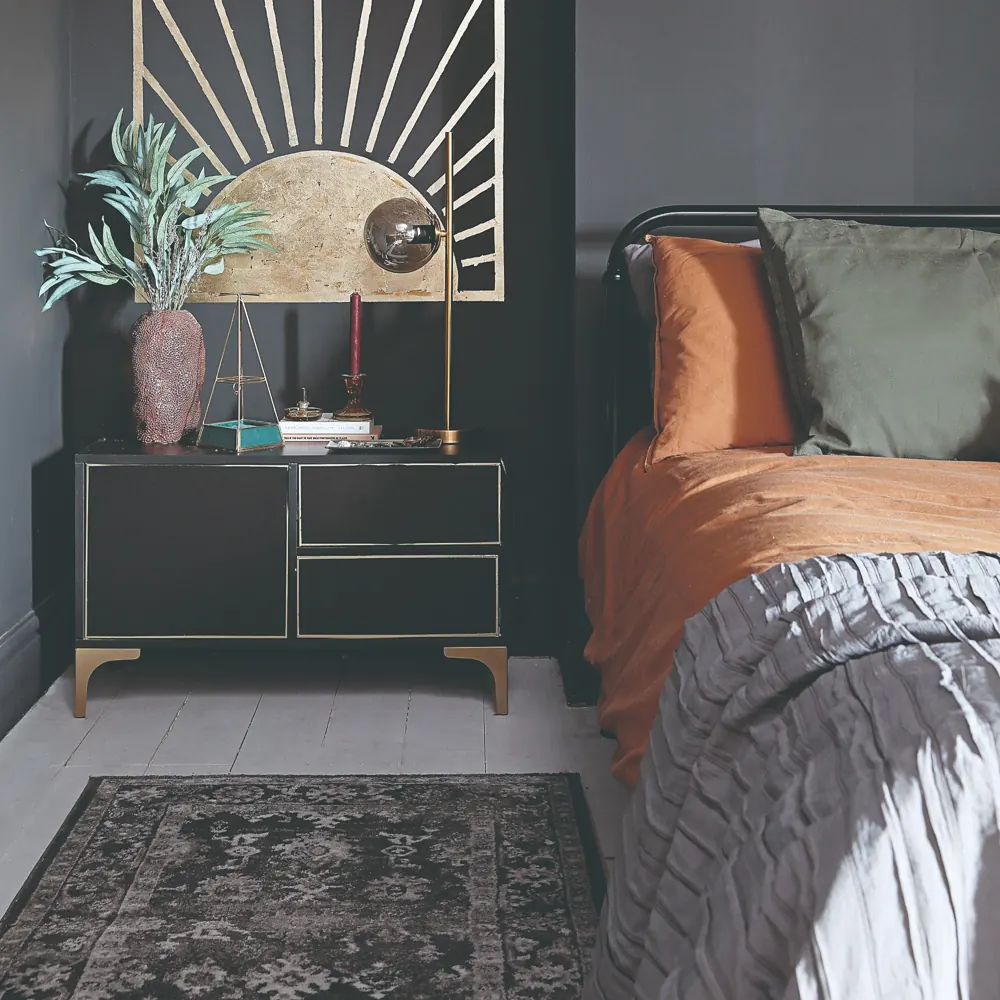
Choose this direction when you want to decorate the exposed bedside area rather than cover a broader rectangle beneath the bed. The photograph shows one runner on one side; it doesn’t establish a matching arrangement on the other side. The placement to borrow is the visible strip beside the mattress.
Look at where the bedcover falls before settling on that strip. A cover draped farther down could hide more of the runner’s inside edge. You’d be choosing the pattern you can actually see beside your bedding, rather than relying on the rug’s full outline.
6. Put Color in the Area Near the Bed’s Foot
A runner can also occupy a different part of the sleeping area. Here, a colorful narrow rug sits near the visible foot corner of a white bed, with a wooden chair standing over part of it. Red, yellow, and dark blue motifs give the otherwise pale corner a concentrated patch of color.
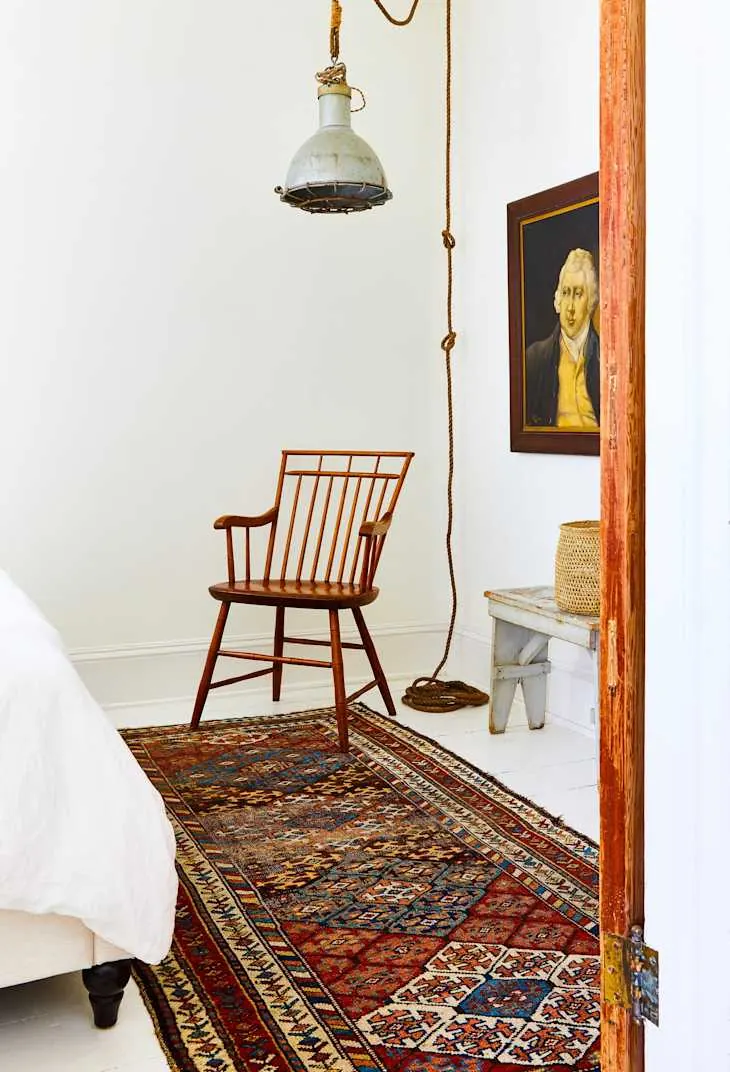
This view includes only a bed corner, so it can’t tell you whether the runner is centered across the full bed. Borrow the smaller idea: color can sit near the foot without filling the entire floor beneath the mattress. A separate rug gives that patch its own boundary.
Let the visible pattern guide nearby accents if you’d like a connection to the bedding. A plain pillow in one of its muted colors would be enough; you don’t need to repeat the whole motif. Keep the chair only if that corner already has a useful place for it.
7. Add Raised-Looking Texture to a White Bedroom
Color can stay quiet when the rug’s surface carries the detail. Beside this white bed, pale bands and raised-looking lines cross the rug, with fringe along the window side. The bedside block has a much sharper dark-veined pattern, giving the pale textiles a more defined neighbor.
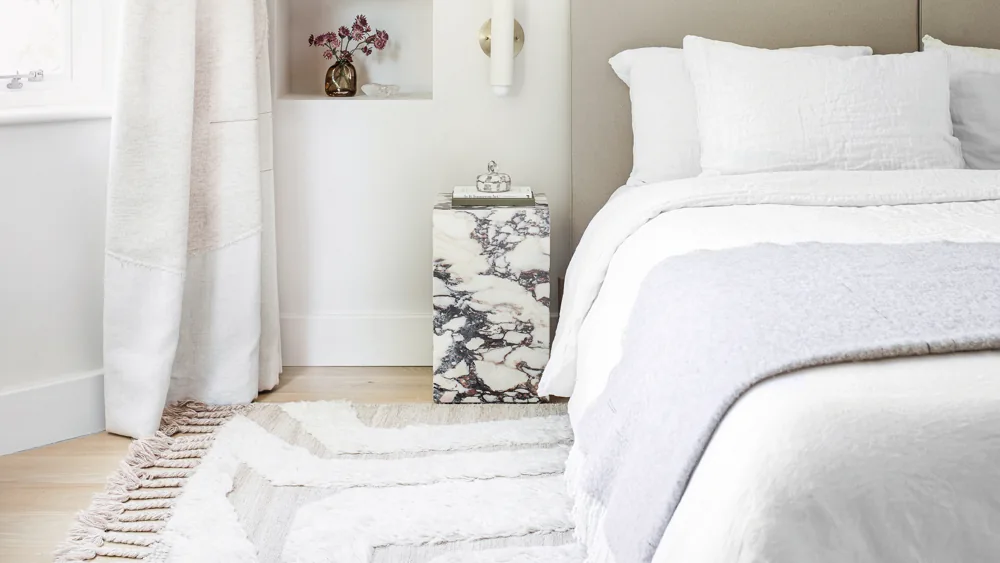
Compare texture and color separately. If a dark motif feels too strong beside white bedding, a pale rug with visible ridges can still interrupt a broad plain floor. The effect depends on the surface you can see, not a claim about the rug’s material or construction.
A bedcover can make the same distinction above the mattress. These cozy bedding and bedside layers show where a loose throw or a textured pillow adds detail, which can help you decide how much of that work to give the rug.
8. Echo Pink Bedding with a Rug Border
A colored border offers a more contained connection than an all-over print. This tan rug has pink lines and a scalloped edge beneath a blue metal bed. Pink bedding, small patterned lampshades, and the deeper curtain continue the color above it, while the rug’s broad tan middle leaves the floor comparatively quiet.
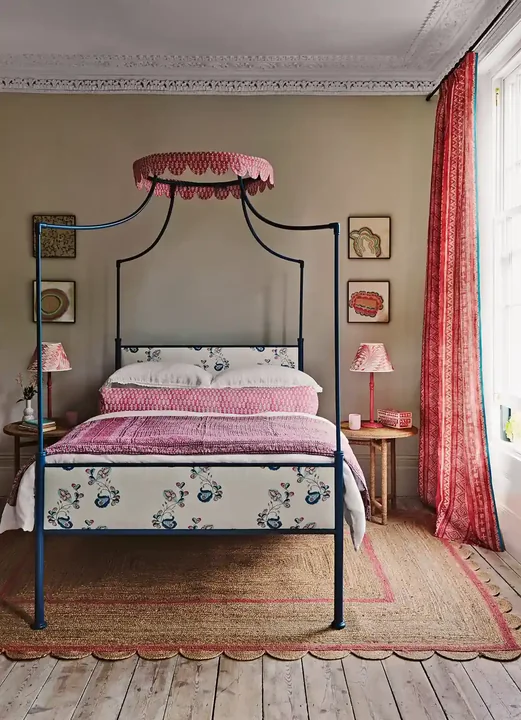
The border matters most where it remains visible beyond the bed. Before choosing a similar design, compare its outlined area with the part your frame and cover will hide. A border that disappears beneath the furniture won’t give the same frame around the sleeping area.
We’d keep the rest of the rug quiet with bedding this detailed. Matching a pink accent is enough; an exact match between every fabric isn’t necessary. The blue frame still gets its own clear outline against the tan floor area.
Choose the rug role first: a broad background under the bed, a strip beside it, or a separate patch near its foot. Then decide whether the exposed area needs color, pattern, texture, or a simple border. Keep a photo of your existing bedding nearby when browsing ZM Home’s room ideas, so the floor choice stays connected to the room you already have.
For ideas that bring the whole room together, explore Bedroom Decor Ideas for a Room That Feels Put Together.