Choosing living room colors gets easier when the wall, sofa, and rug are considered together. Try pale pink with muted green for a gentle mix, blue-gray with pink for stronger contrast, or terracotta with cream when you want a warm wall to lead. The rooms below show where each color goes, including smaller accents that connect the larger surfaces.
A photograph can suggest a combination, but it can’t identify the right paint for your room. Use these palettes to narrow the choices around furniture you’re keeping, then compare physical samples at home.
Pale Pink Living Room Walls with a Muted Green Sofa
Pale pink spreads across the wall behind this green sofa, while a pink pattern continues the color beneath it in the rug. The sofa has a clear outline against the wall even though both colors look fairly muted.
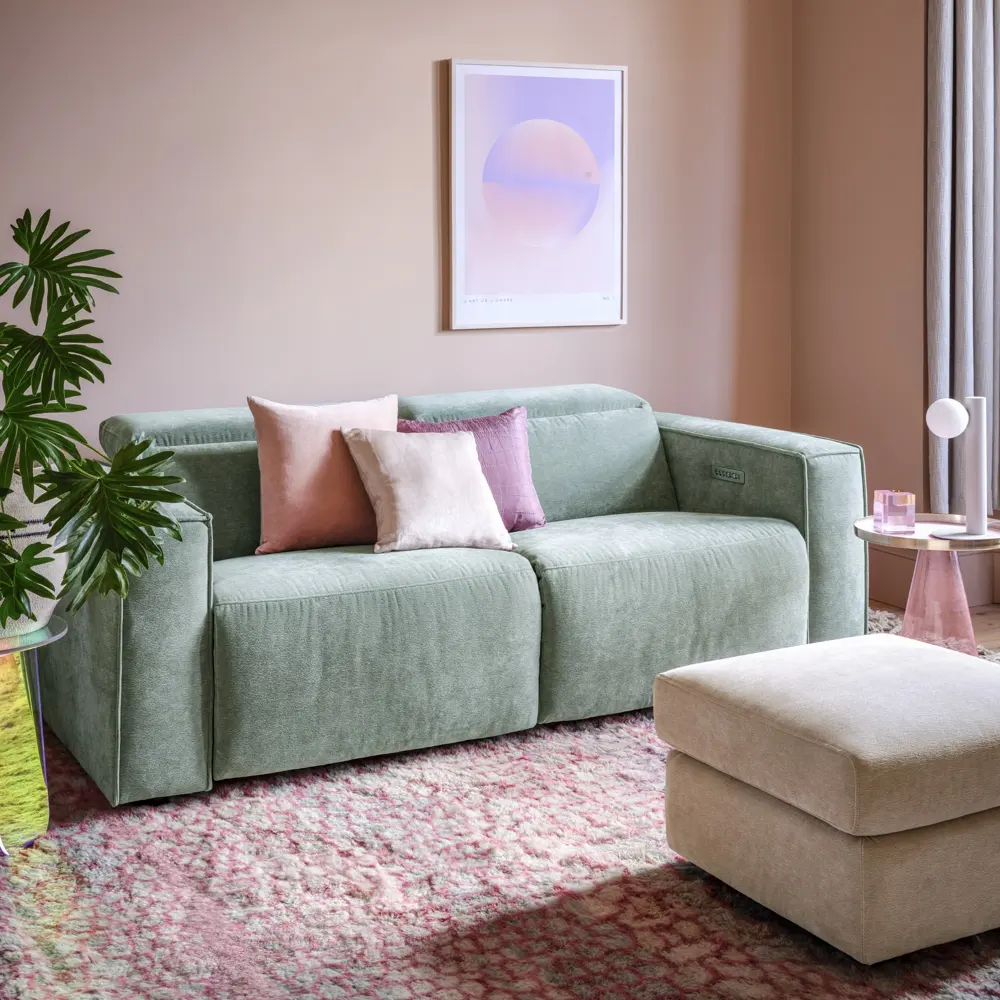
The pink cushions make the wall color visible on the seat as well. A pale ottoman interrupts the colored surfaces in front, leaving a lighter patch between the sofa and the patterned floor.
We’d borrow the repeated pink before adding a new accent. If you’re keeping a green sofa, a pink cushion offers a small way to compare the pairing; the wall and rug don’t have to change at the same time.
Green upholstery varies from light sage to deep olive; the green couch decorating examples follow those shades through pale backgrounds, patterned rugs, and warmer pillows.
Dark Blue-Gray Living Room Walls with a Pink Sofa
Pink can also belong on the largest piece of furniture, with a much darker wall behind it. Here, the blue-gray backdrop surrounds the pink sofa, and a pale rug creates a separate light area below the seat.
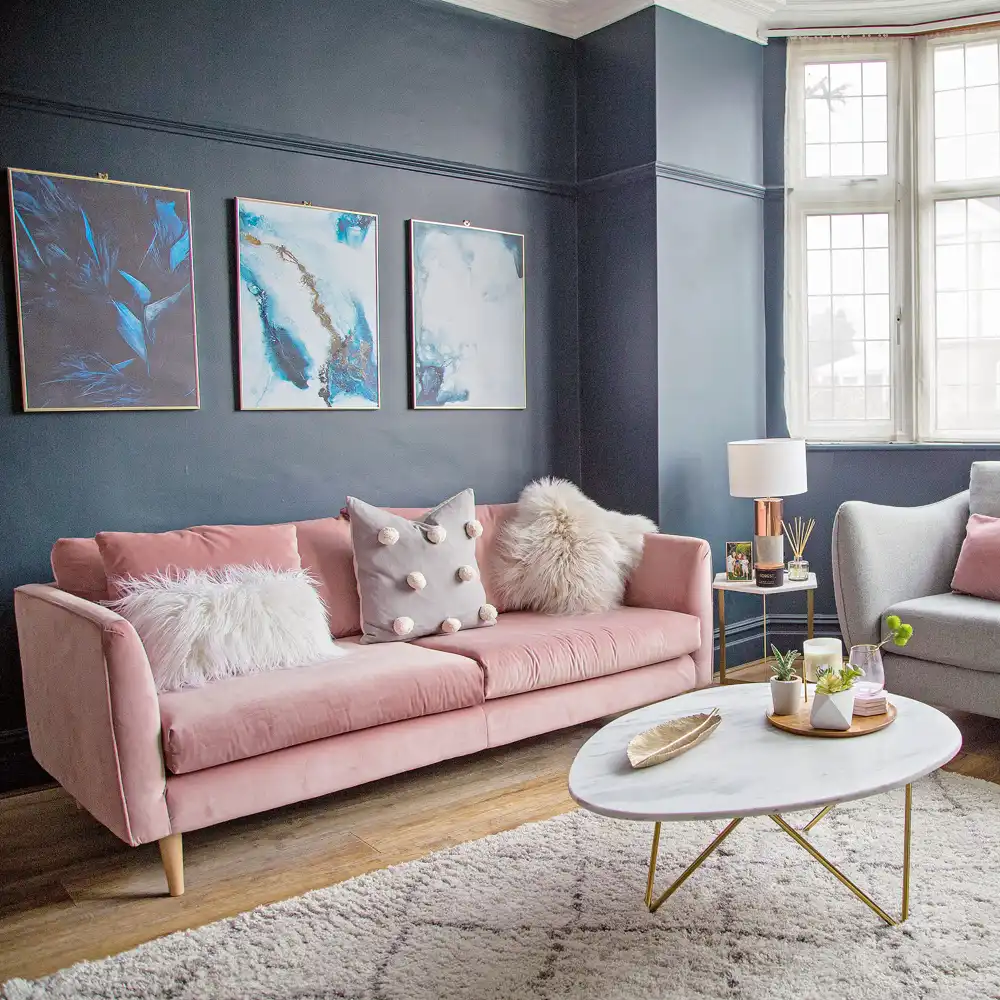
The cream cushions connect the sofa to that rug, while the rug’s dark lines add a little of the wall’s depth to the floor.
If a pink sofa is already your starting point, compare the proposed wall color with the rug as well as the upholstery. We’d keep the rug pale in this combination; a second large dark surface would change the balance that makes this example appealing.
Warm Living Room Colors: Terracotta or Yellow
Warm wall colors can take very different roles: terracotta surrounds pale seating in the first room, while yellow meets a strong blue sofa in the second.
Terracotta Walls and Cream Seating
Terracotta covers the paneled walls around this curved cream sofa, and the dark floor gives the pale seat a distinct lower edge. The warmth comes from a broad background rather than a scattering of small orange accessories.
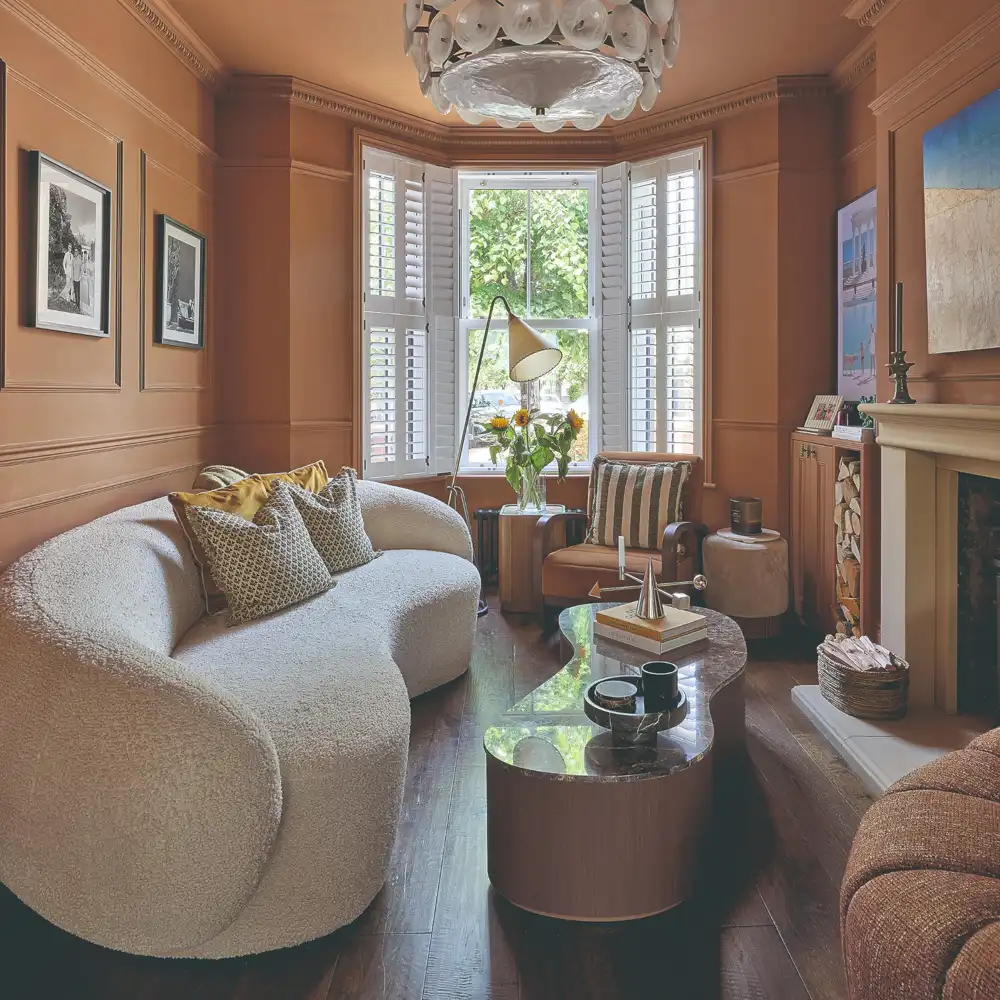
The cushions carry finer patterns within the cream seating area. We’d let those smaller marks supply detail and leave some plain upholstery showing, especially when the wall already has visible panels and framed pictures.
A rug isn’t needed to explain this photograph’s palette: the clear relationship is between terracotta walls, cream upholstery, and a deeper floor. If you want a rug in your own version, compare a sample alongside those existing surfaces instead of assuming a particular color from the picture.
Yellow Overhead and a Blue Sofa
Yellow offers a bolder warm background, and this room carries it across the ceiling above a blue sectional. The blue also appears on the floor at the left, while the multicolored rug introduces smaller areas of yellow, blue, and other colors under the seating.
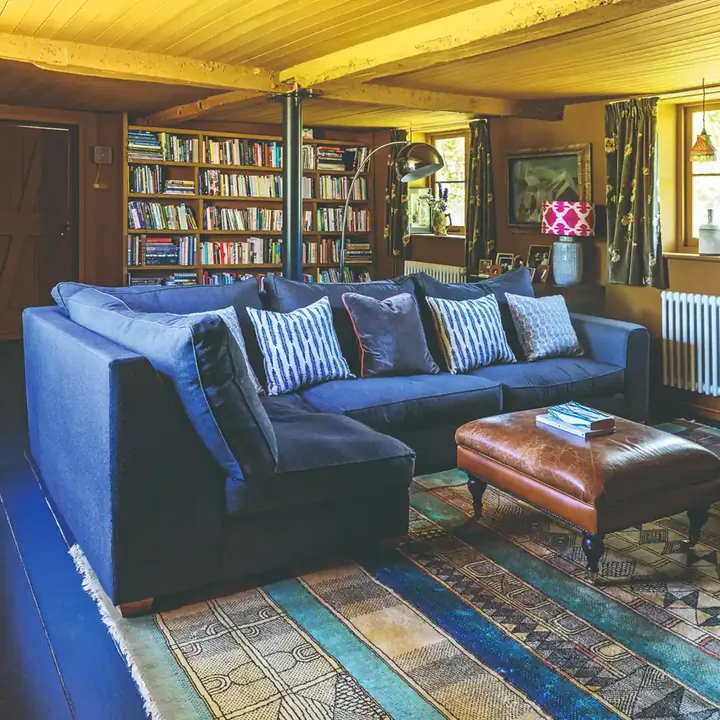
A brown ottoman occupies the center without adding another bright solid color. We’d keep that pause if borrowing the yellow-and-blue pairing; the books, cushions, and rug already contribute plenty of variation.
For warmth that comes from smaller changes, throws and repeated accents in cozy living rooms offer examples around existing seating.
Turquoise Living Room Walls Around a Gray Sofa
The warm colors above occupy large surfaces; with a gray sofa, a turquoise wall can carry the main color while a coral cushion provides a smaller warm accent. Here, the shelves continue the wall’s blue color behind the pale gray seat.
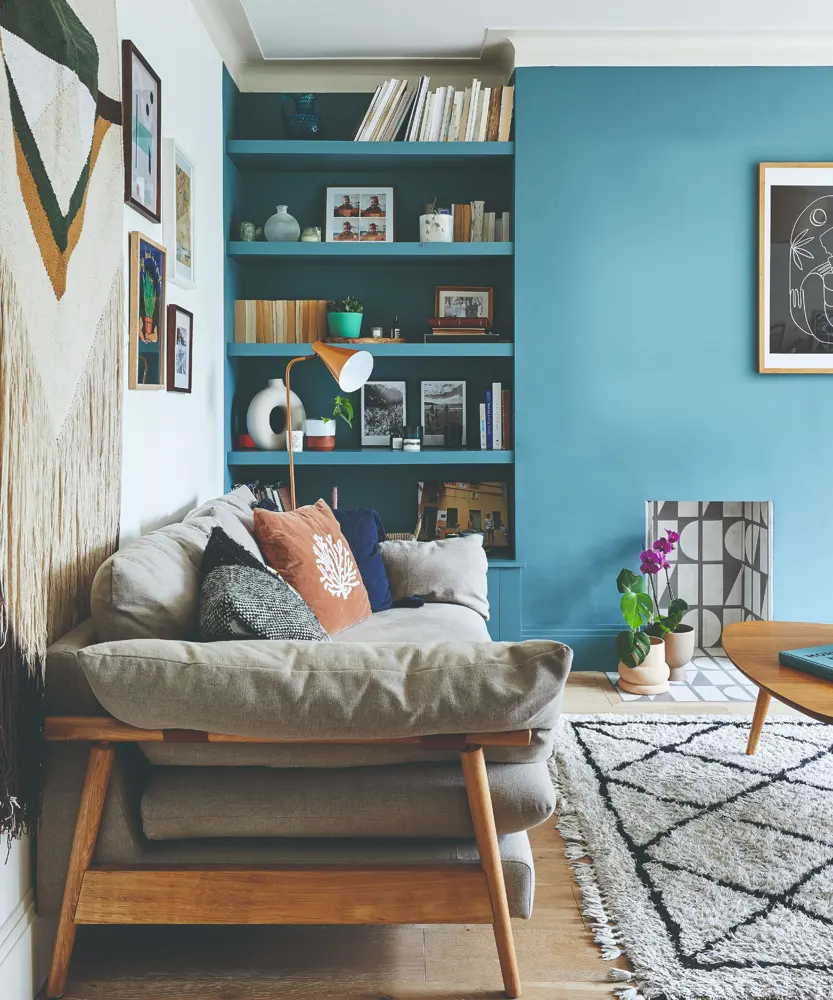
Black lines on the cream rug add definition beneath the quieter upholstery. The rug doesn’t repeat the turquoise, showing another option when you’d prefer the main color to stay above floor level.
We’d begin with a coral or faded orange cushion if the blue wall and gray sofa are already in place. Keep the rug sample nearby while comparing it: a strong new pattern could compete with the rug’s existing lines, even when the colors seem right.
Muted Blue Living Room Walls Behind a Rust Sofa
A rust sofa gives the warm accent much more space than the coral cushion does. Against this muted blue wall, the rust upholstery becomes the strongest warm patch, with a pale rug separating it from the darker floor.
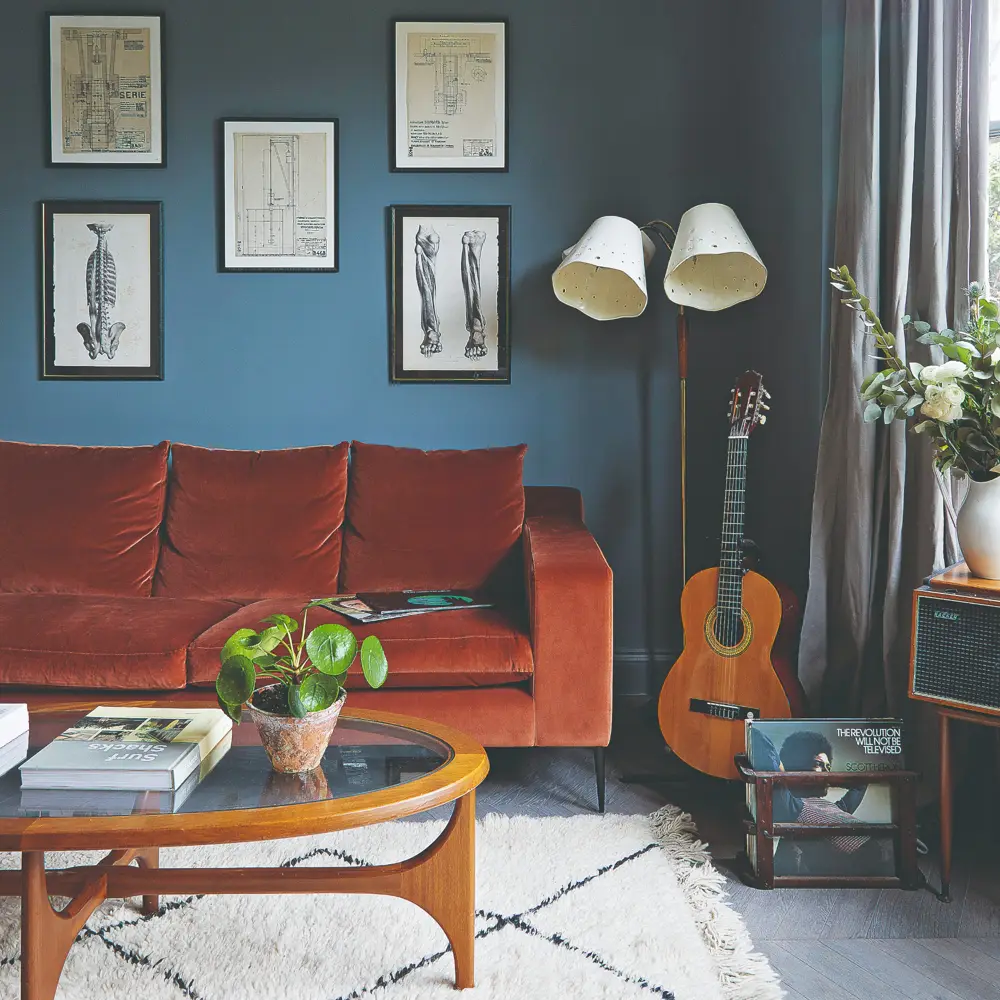
The pale picture backgrounds and lampshades repeat some of the rug’s lightness higher up the wall.
If you’re keeping rust seating, compare a muted blue sample before trying a more vivid blue. We’d start there because this room gives the sofa more of the color intensity, while the wall remains a quieter companion. The exact paint shade still needs a sample beside your own fabric.
Pale Blue Living Room Walls with White Seating and Pastel Cushions
Pale blue changes the wall-to-sofa relationship again, creating a colored background for white upholstery. Pink, blue, and yellow cushions bring smaller patches of color across the seat, with white remaining visible between them.
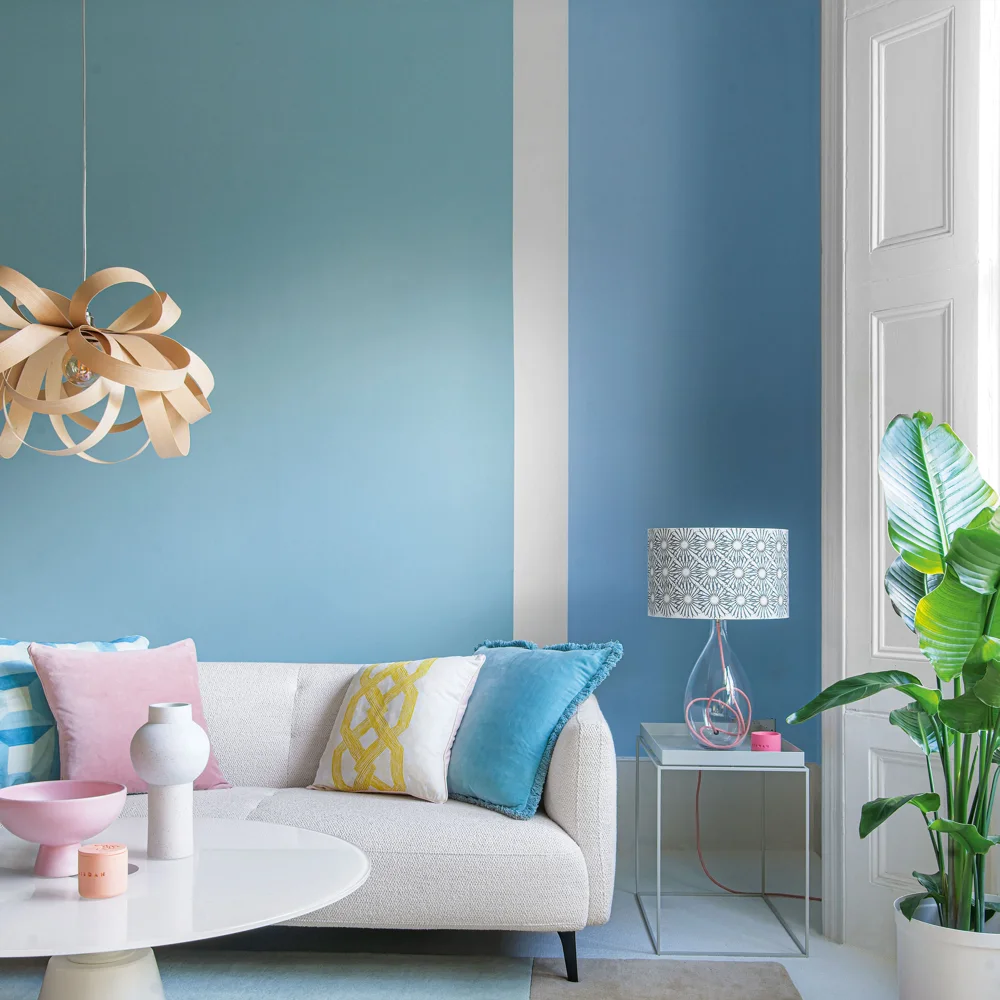
The blue cushions echo the wall, while the yellow pattern and pink cushion keep the seating from becoming entirely blue and white.
We’d keep that mix selective. If the wall is already pale blue, try a blue cushion alongside a pink or yellow one and look at the grouping from the doorway. You can judge the larger patches together more easily there than with fabric held close to your face.
When the window needs a color connection too, these living room curtain combinations show repeated hues and patterns beside furnished seating areas.
Olive Living Room Walls with Green Seating and Yellow Cushions
Related greens offer a closer wall-to-sofa pairing than pale blue and white. In this room, olive walls sit behind a green sofa, with yellow cushions making a visible break across the seat and a pale rug lightening the floor area.
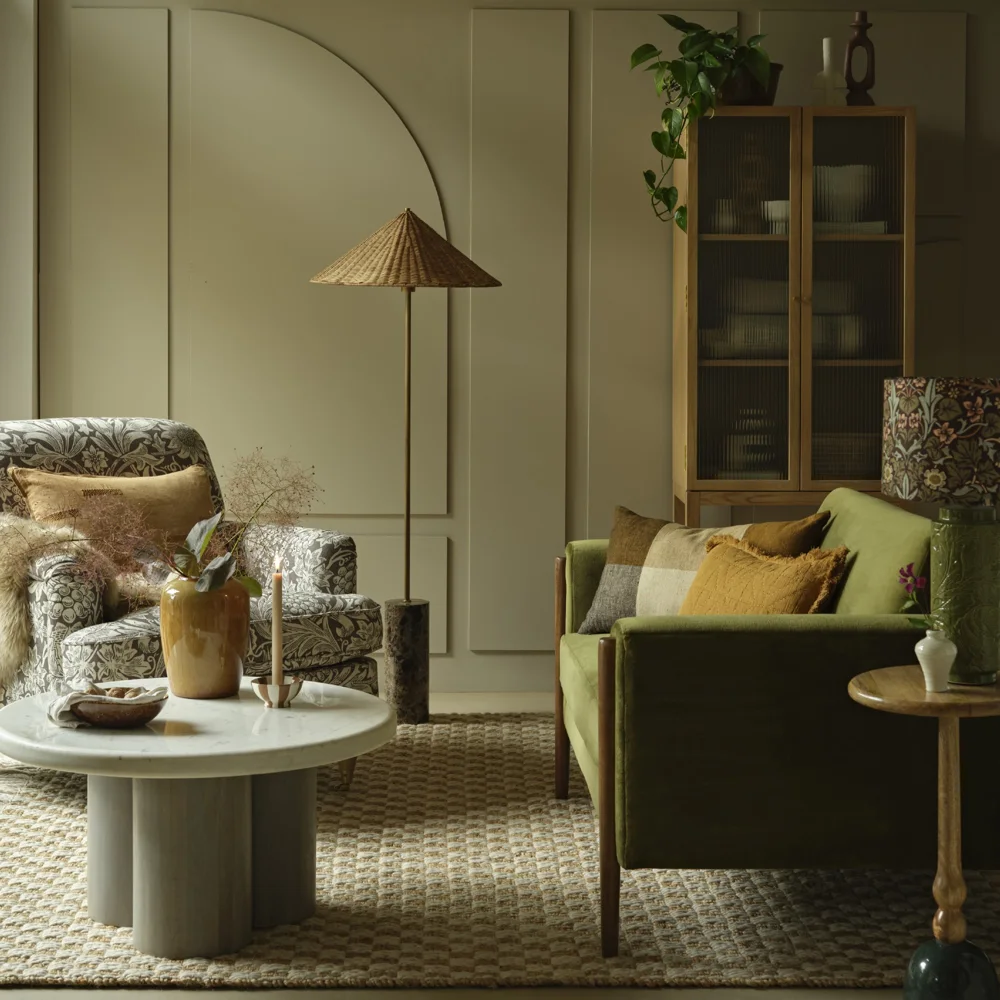
The patterned armchair adds smaller green and pale shapes beside the larger solid areas. Its pattern gives the seating group variety without introducing a bright new hue.
We’d compare a yellow cushion with your existing green before looking for another green accessory. If the sofa is hard to distinguish from the wall, a lighter or warmer cushion can mark the seating while preserving the close color relationship you like.
For cream, sand, greige, and taupe as the main palette, the neutral living room guide goes further into subtle differences between walls, upholstery, and flooring.
Choose Living Room Paint Colors Beside Your Furniture
The most useful palette is one that accommodates the sofa, rug, or floor you plan to keep. Use the table to choose a direction, then compare the actual wall sample beside that fixed piece.
| Wall color direction | Sofa pairing | Rug or cushion connection |
|---|---|---|
| Pale pink | Muted green | Pink rug pattern and cushions |
| Dark blue-gray | Pink | Pale rug and cream cushions |
| Terracotta | Cream | Small cushion patterns; compare any rug separately |
| Yellow | Blue | Multicolored rug and a brown central piece |
| Turquoise | Gray | Coral cushion and a pale rug with dark lines |
| Muted blue | Rust | Pale rug, pictures, and lampshades |
| Pale blue | White | Blue, pink, and yellow cushions |
| Olive | Green | Yellow cushions and a pale rug |
Start with the surface you can’t easily change. If the rug stays, take its colors into the paint comparison; if the sofa stays, include a cushion or fabric sample alongside the proposed wall color. Keep the floor visible too, since it will remain a large part of the finished view.
Don’t choose from a screen alone. Look at the samples in the room during the day and under your evening lamps, then keep the combination whose differences still appeal to you. For more rooms to compare, ZM Home gathers decorating ideas for living rooms and bedrooms.
For ideas that bring the whole room together, explore Living Room Decor Ideas for the Room You Already Have.