Bedroom paint colors need to work beside the bed you already have. Pale blue pairs with white bedding and cream curtains; pink can pick up a bedding pattern or repeat in a pillow; gray gives dusty pink a quieter background. Start with the largest fabric color you’re keeping, then choose whether the walls should echo it or provide a clear contrast. These eight palettes show both approaches.
The color names describe what is visible in each example. They aren’t exact paint matches: lighting and screens can change how a shade appears. We’d use the combinations to narrow a shortlist, then judge actual paint and fabric samples together in the room.
Pale Blue Walls with White Bedding and Cream Curtains
For a pale bed you want to keep, blue walls give white a colored background without turning the duvet into the room’s strongest feature. Here, pale blue surrounds the white bed, with cream curtains at the window and yellow lamps beside it. The white ceiling and closet doors add larger light areas above and beside the bedding.
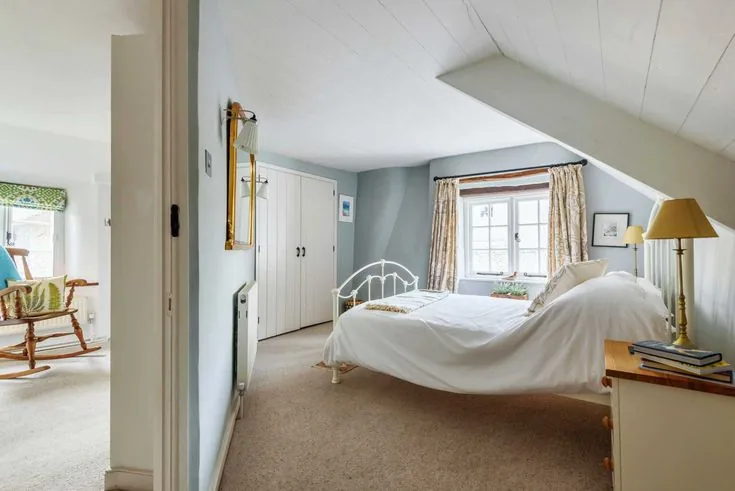
The yellow appears in small, separate patches. We’d keep that difference in scale: a blue wall, a broad white bed, then a lamp or pillow in a warmer color. Matching yellow curtains would give the yellow a much larger role than it has here, so leave the window pale if the lamps are the detail you like.
Cream curtains also offer a less crisp edge than bright white panels. If your room already has beige carpet or a pale brown bedside table, those warmer areas can remain part of the combination. Our neutral bedding examples show other ways to distinguish white covers from pale furniture.
Pale Pink Walls with Detailed Bedding
Pink offers another light background, but the bed can take on more pattern than in the blue-and-white room. A pale pink wall sits behind this white bed frame and a duvet covered in fine, multicolored motifs. A tall brown cabinet supplies a darker area at the side, while the white trim keeps the wall’s edges distinct.
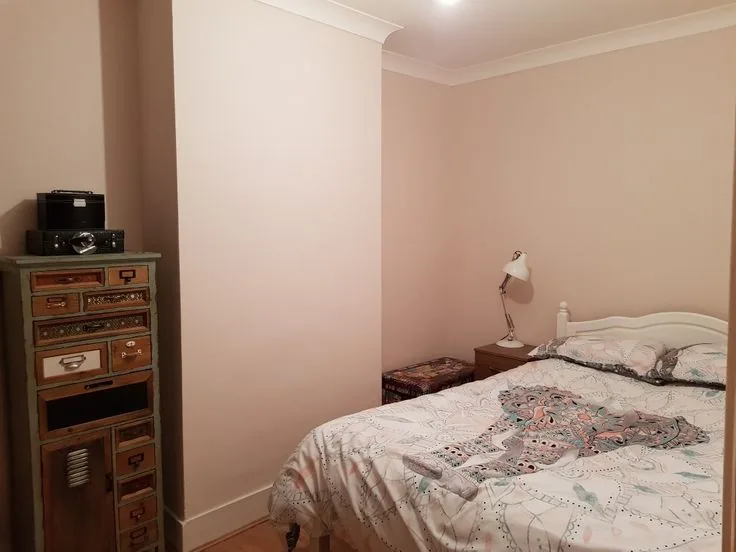
The wall picks up the impression of the bedding’s softer pink areas without copying its many small shapes. That’s the relationship we’d borrow when a favorite duvet is already busy. A plain wall lets the pattern remain legible; adding an equally detailed curtain would give the eye another print to follow.
Keep the cabinet’s deeper brown in the comparison, too. The room doesn’t depend on all-white furniture. For bedding with broader stripes or stronger graphics, the colorful beds in our boho bedroom guide offer a different starting point for choosing a plain wall color.
Pink Walls with Pale Bedding and a Gray-Green Cabinet
If the patterned pink bed feels too detailed, keep the wall color and simplify the larger fabric area. In this room, pink walls meet pale bedding, pink pillows, and cream curtains. A gray-green cabinet stands beneath a white display shelf, bringing a separate muted color into the corner.
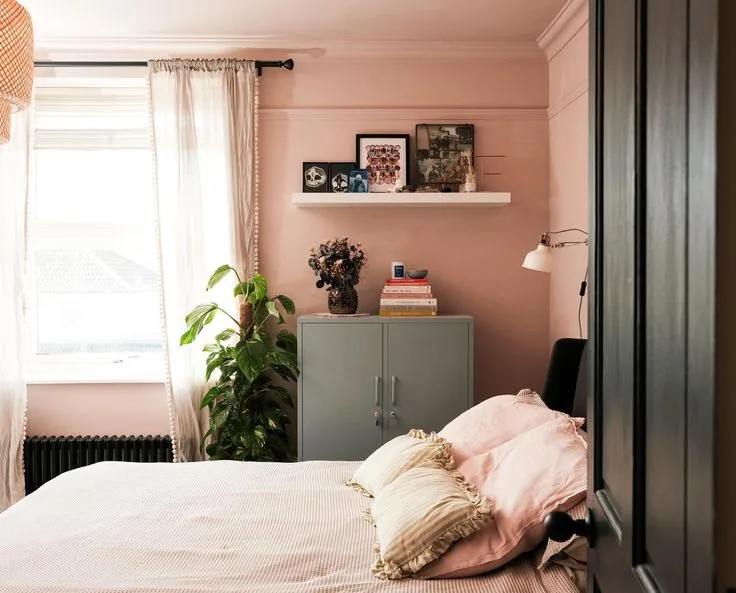
Pink repeats near the head of the bed rather than covering every textile. The pale duvet and curtain leave wider breaks around it. We’d choose this version when the wall is the color you want to enjoy most, especially if the room already has pictures, books, or plants adding smaller details.
The cabinet is a useful reminder to include existing furniture in the palette. A green-gray piece doesn’t have to be repainted pink to belong here. Compare its color with the wall and pillow together; the contrast may be the part that keeps a pink room interesting.
Gray Walls with Dusty Pink Bedding
A gray wall reverses that balance: pink moves onto the bed, and the wall becomes the quieter surrounding color. Dusty pink covers sit below dark gray pillows in this example. A dark chair and the black edge of a framed picture repeat deeper notes beside the bed.
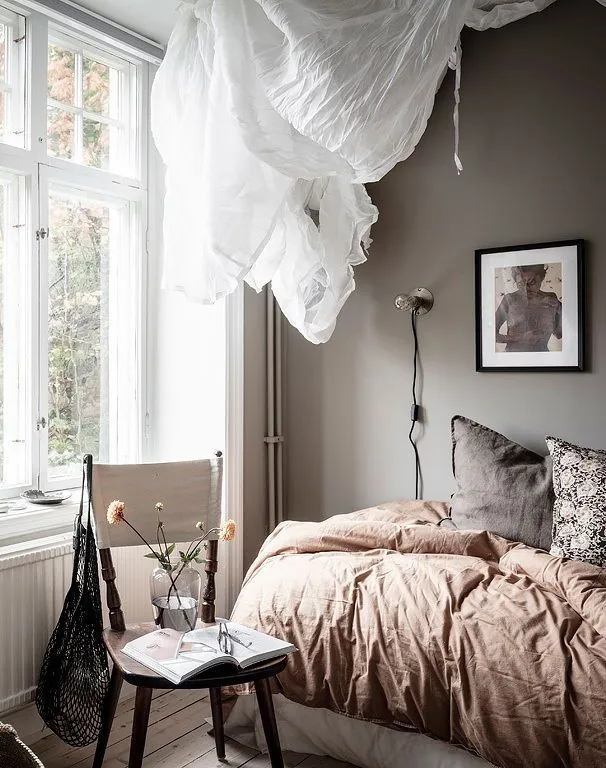
The pillows are deeper than the wall, so the bed has an outline even though the main colors are subdued. We’d retain that variation if using a pink duvet against gray. Making the wall, pillows, and cover equally pale would create a much softer separation between them.
The white fabric gathered near the window adds a brighter area beside the gray. For window color choices you can compare with a pink bed, see the pale, taupe, and deeper bedroom curtain schemes. Choose the fabric’s privacy and light control from its product details separately.
Peach Walls with Rust Bedding and Cream Details
Gray separates the wall from a warmer bed; peach brings them closer. Peach-colored walls surround rust-colored bedding here, with cream pillows, a pale throw, and a light curtain between the warmer areas. Brown tones appear in the hanging shade and the bedside details.
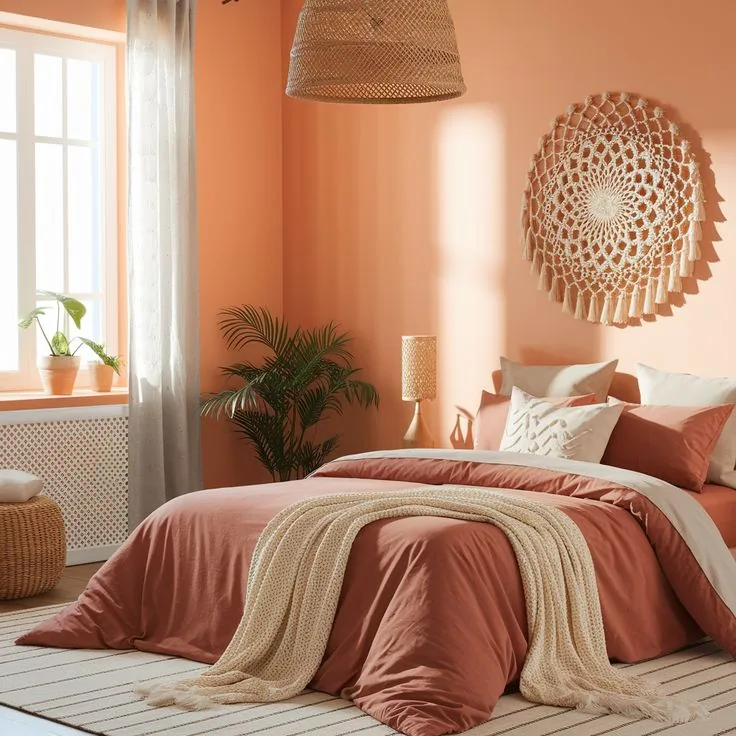
The bedding looks deeper than the wall, which gives this closely related palette some definition. The cream throw makes another visible break across the duvet. We’d keep that pale layer if the wall and cover start to merge when viewed from the doorway.
Borrow the color arrangement without needing every decorative piece. Peach, rust, and cream already establish the relationship; the round wall hanging adds a shape, rather than a new color essential to the scheme. If your furniture is brown, compare it alongside these warm colors before deciding that it needs a different finish.
White Walls with Lavender Bedding
White gives colored bedding more independence than the peach scheme. Lavender covers and pillows provide the main fabric color in this room, against white walls and a white lamp shade. Pale curtains sit beside the window, and a small open bedside unit adds brown lines near the bed.
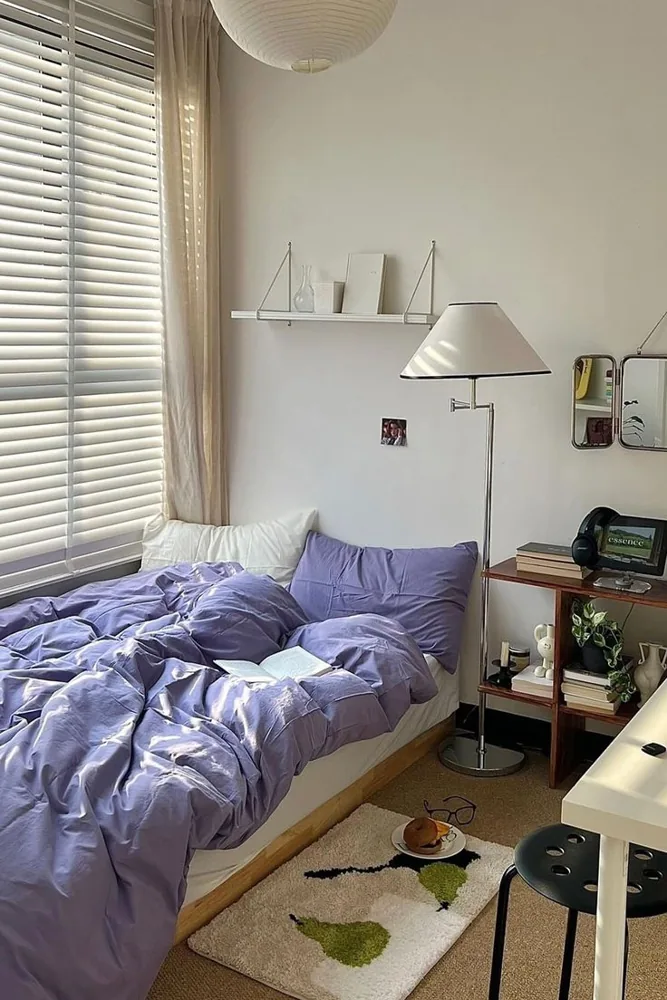
The room’s other objects don’t all repeat lavender. A small rug introduces green, and the furniture brings in separate brown and black details. We’d leave those secondary colors alone when the lavender bed already gives the room enough of a clear center.
This is a useful direction when you enjoy changing bedding colors: the white wall can stay while the largest textile changes. When preparing for an overnight visit, consider the practical guest-room arrangements for lamps, belongings, and spare bedding alongside that decorating choice. A coordinated palette still needs a usable bedside spot.
Yellow Walls with Vivid Blue Bedding
For a stronger wall-and-bed contrast, yellow and vivid blue make their separate areas clear. Yellow covers the visible upper walls and ceiling in this example, while deep blue pillows and a blue cover sit below. A low brown bedside surface provides a smaller warm-colored line beside the bed.
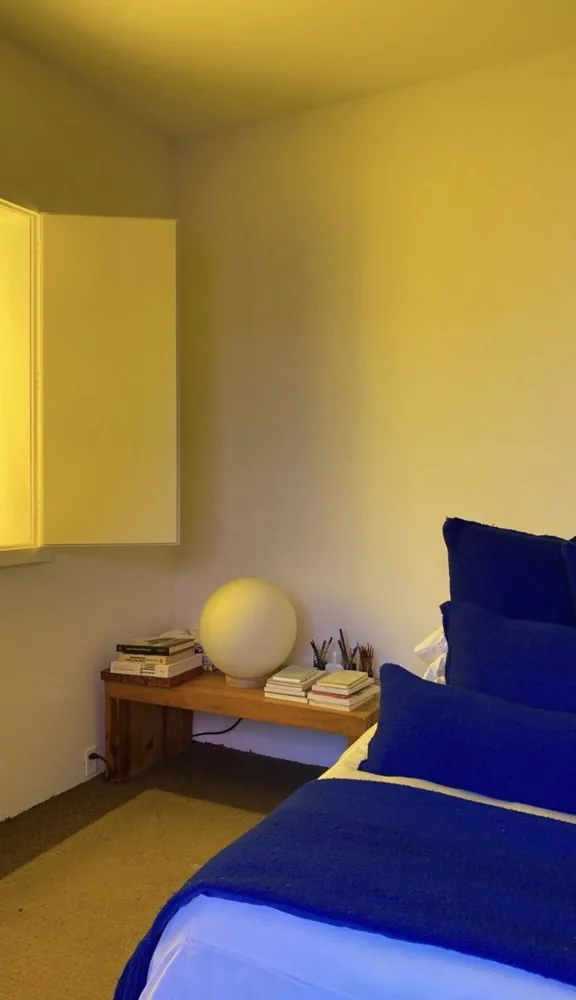
The blue isn’t a tiny accent. It occupies enough of the bed to stand against the broad yellow area, with a paler blue layer visible at the foot. We’d choose this pairing for the contrast itself, rather than expecting it to behave like the pale blue-and-white room at the beginning.
If you like both colors but want less yellow, a pale wall with blue bedding and a yellow pillow is a smaller version to consider. Keep the existing bedside furniture in view while comparing them. Its brown surface can supply a quieter pause between strong fabric and wall colors.
Muted Gray-Green Walls with Pale Bedding and Dark Furniture
Strong contrast can also come from furniture against a subdued wall. A muted gray-green wall sits behind pale bedding and a dark bed frame here, beside a large brown bookcase. The dark furniture occupies much of the view, while the light bedding makes the sleeping area easy to pick out.
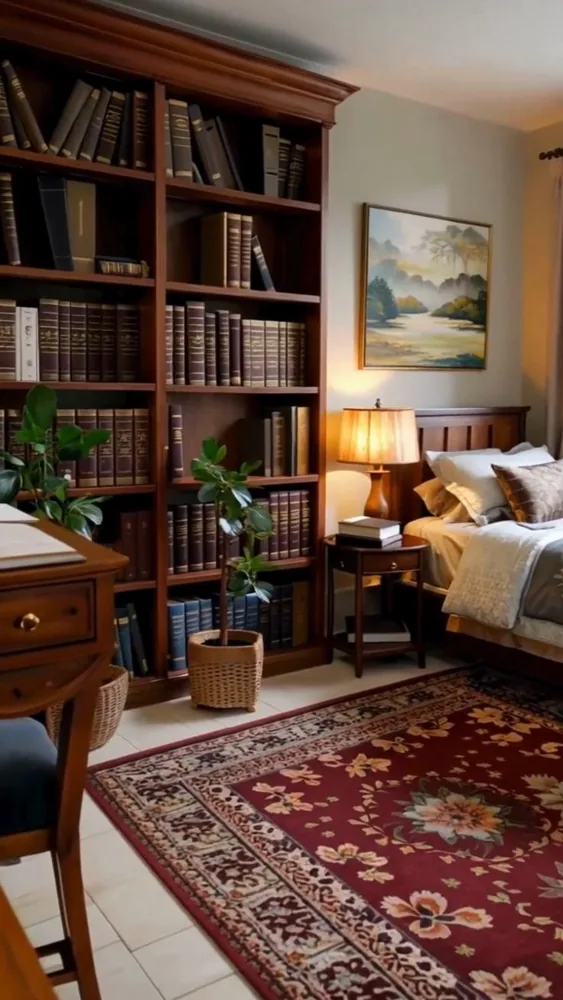
The wall’s low-key color leaves room for the book spines, patterned rug, and framed picture. We’d keep the duvet relatively plain in a room with this much visible furniture and display. A strong bedding print would create another detailed area alongside the shelves.
Choose the wall color with the largest dark piece still in place. A brown bookcase or bed frame is already a substantial part of the palette, even if it isn’t something you’re planning to replace. Here, pale bedding supplies a bigger change in light and dark than another small decorative object would.
Before settling on a palette, put the bedding, curtain, and paint samples beside the furniture you’re keeping. Decide which area deserves the strongest color: the wall, the bed, or an existing cabinet. Leave the other large areas quieter if they distract from that choice. For rooms beyond the bedroom, explore the ZM Home room guides.
For ideas that bring the whole room together, explore Bedroom Decor Ideas for a Room That Feels Put Together.