A mid-century modern living room can come together around a clean-lined sofa, visible wood, and a bright color given room to stand out. Start with the furniture outline, repeat a related wood tone nearby, then choose whether the sofa, a chair, or the artwork will carry the strongest accent. These examples focus on those decisions, from an orange wood-frame sofa to a quiet tan seating area.
Look at the pieces you already own before planning a replacement. A plain sofa may need a more distinct table or chair; a colorful sofa may need a calmer companion. The useful detail is how the shapes meet, rather than how many retro-looking objects fit into the room.
Give an Orange Sofa a Warm Wood Setting
An orange sofa makes a clear starting point because its upholstery is already the largest bright surface in this seating group. The exposed wooden frame connects it to the rectangular coffee table and the cabinet behind. A pale wall and rug leave those warm colors easy to see.
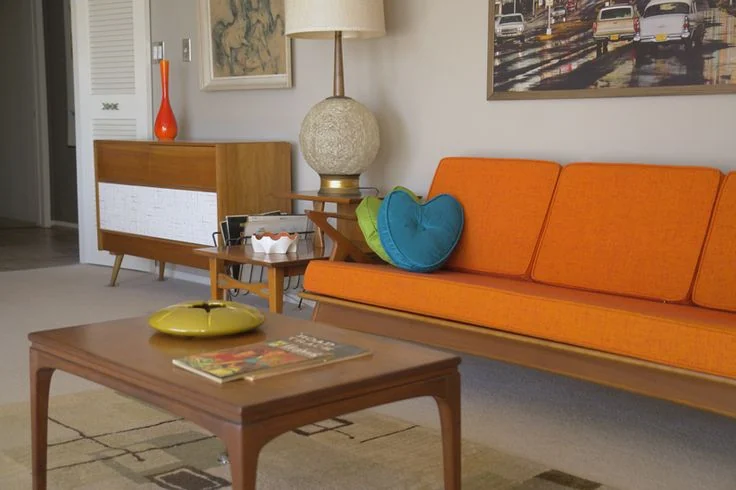
The cabinet includes a white front panel, so the wood doesn’t become one uninterrupted brown band. That break is useful to borrow. If your sofa has a visible frame, compare its color with the table you plan to keep, then include a pale surface where the grouping needs a pause.
Wood tones don’t have to be identical for us to like them together. We’d look for a related warmth and let the different shapes remain distinct: a broad cabinet, an open table frame, and the narrow edge below the seat. For a quieter version of that relationship, the cream seating and wood-table examples compare warm brown details with pale upholstery.
Let a Curved Wooden Sofa Shell Supply the Living Room Detail
The orange room uses several wood surfaces; a sofa with a broad wooden shell can make that material the main detail on its own. This dark blue sofa curves around the back and sides, with the wood continuing below the upholstery. The blue seat stays plain enough for that outline to register.
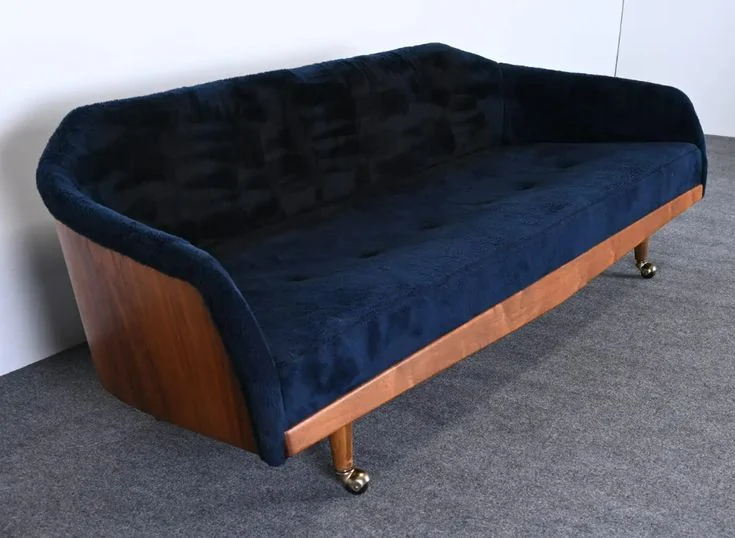
Treat this as a furniture detail rather than a complete room scheme. The side view shows how much of the shell would be hidden if another bulky piece stood beside it. We’d leave the curved end visible from a usual approach to the seat, then choose nearby furniture with a simpler outline.
A straight-sided table could provide that simpler companion. You don’t need another curve at every edge. Compare the shell with the sofa’s surroundings from the doorway, where a distinct side or back can contribute as much as the cushions facing into the room.
Keep the Legs Visible Beneath a Colorful Living Room Sofa
A wooden shell emphasizes the sofa’s sides, while exposed legs draw attention to the space beneath it. Here, the teal sofa has mustard-colored cushions above a visible wooden base and legs. A round table stands nearby, leaving patches of the patterned rug visible around its feet.
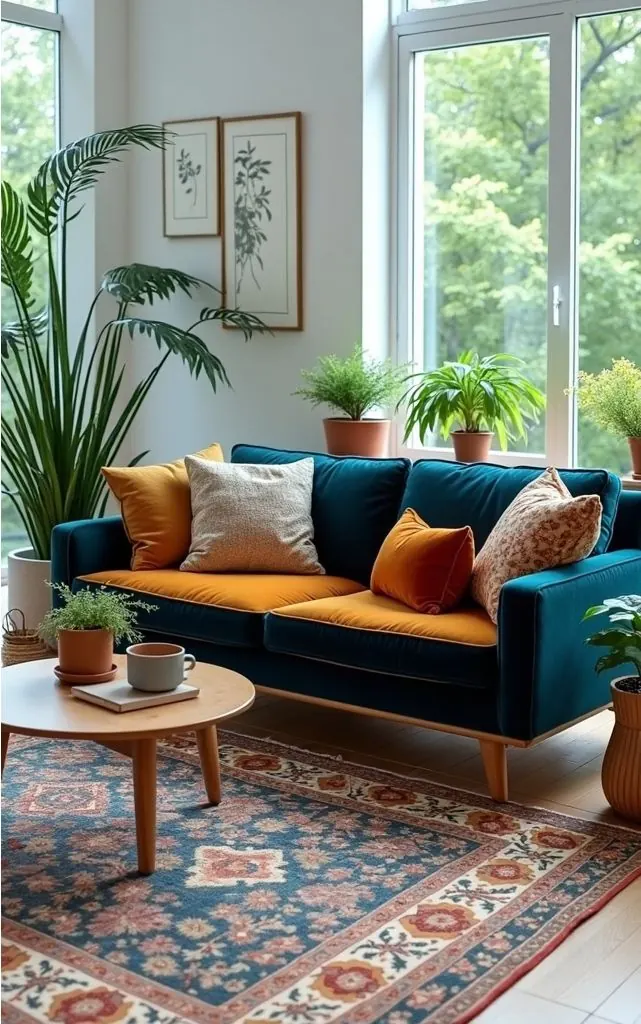
The rug and plants make this a fuller composition, but the furniture doesn’t disappear into them. We’d borrow the visible base first. Let a throw rest on the seat or arm without covering the lower outline, and keep loose objects from collecting beneath the table where its shape should remain readable.
If you’re adding a chair, compare its whole frame rather than its feet alone. An open back and arms can leave a different amount of the room visible from a broad upholstered back. The open chair frames in these small living rooms show that distinction beside pale sofas and windows.
Put a Smaller Color Accent in a Curved-Arm Living Room Chair
A colorful sofa commits a large area to the accent; a chair gives the color a smaller home. This rust-and-cream armchair pairs wavy upholstery with curved wooden arms. The plain arm surfaces give the eye a firmer line beside the busy fabric.
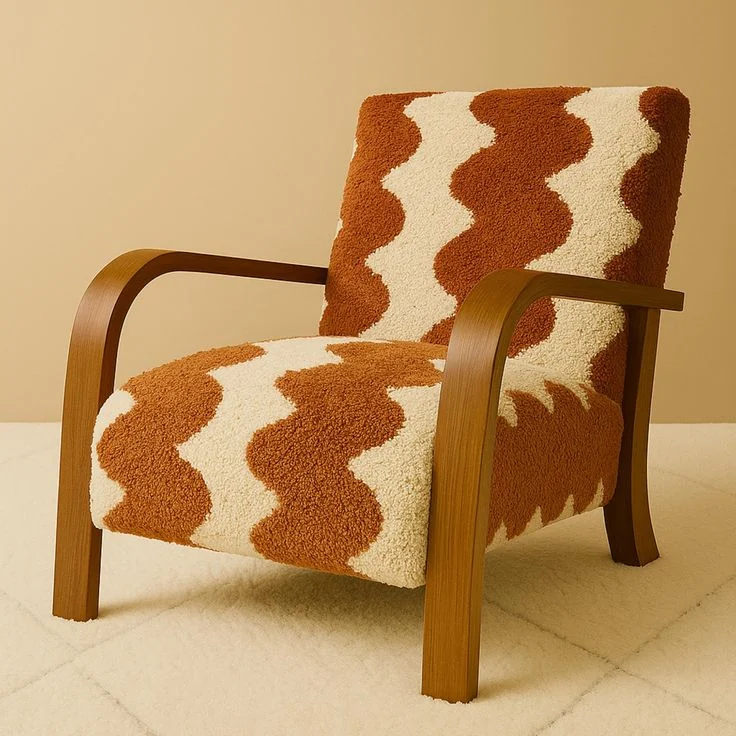
We’d consider a chair like this beside a sofa with plain upholstery. The pattern already has movement, so another strong print on the nearest cushion may distract from the curve you wanted to introduce. Try the chair with a plain cushion on the neighboring sofa before deciding whether the room needs more pattern.
The detail image doesn’t establish the chair’s size or how comfortable it is. Use it to compare the color area and arm shape with your own seating. If the sofa is already orange or teal, a quieter chair may leave a clearer relationship between the two seats.
Echo a Yellow Sofa in Geometric Living Room Artwork
After choosing which seat carries the color, look above it for a smaller repeat. In this room, yellow upholstery sits below artwork containing warm yellow-orange shapes, dark blue, and pale areas. The dark shelving frames the brighter central group.
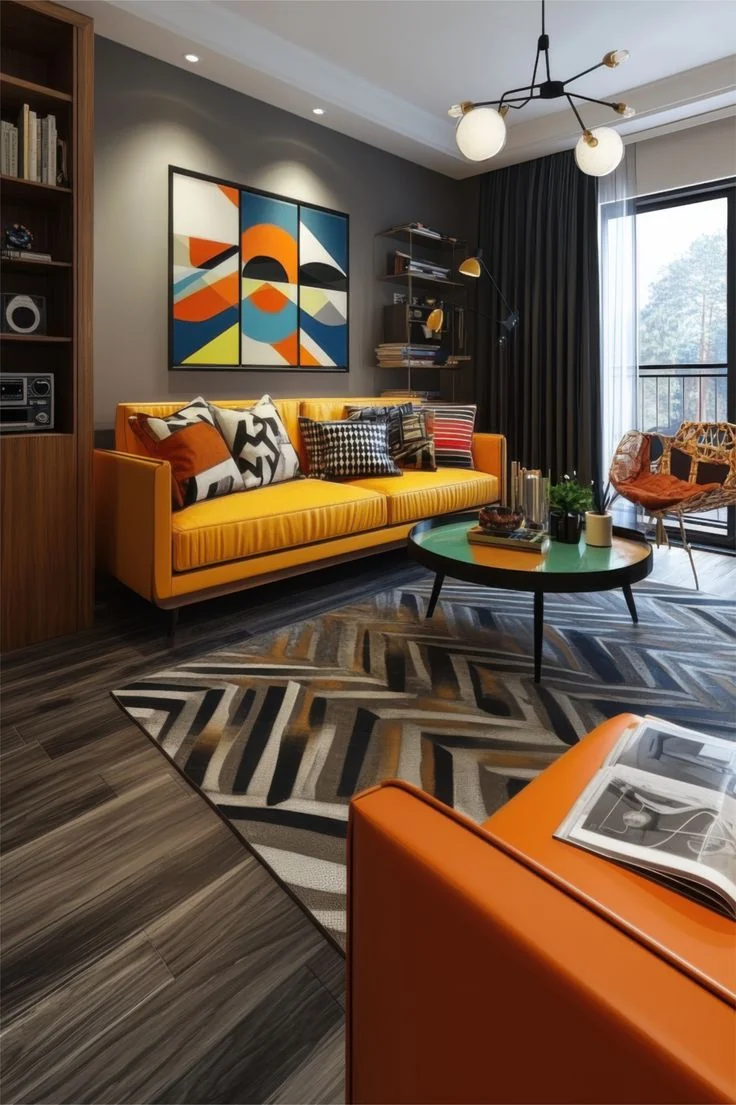
The artwork doesn’t copy the sofa’s shape. Its blocks and curves give the wall a different rhythm while bringing some of the seat’s warmth higher into view. We’d use that color connection before introducing a new bright accent on a neighboring wall.
There’s already considerable pattern here in the cushions and floor. You can borrow the sofa-to-art relationship with a plainer rug if you’d prefer less going on below the table. For other ways to organize the wall, the gallery, mirror, and ledge arrangements compare the outline of the whole display with the seating beneath it.
Compare Rectangular and Oval Living Room Coffee Tables
Once the seating and wall have their main shapes, the coffee table can either continue the straight lines or introduce a curve. The plain rectangular table below has a thin top and four slim legs. Its uncluttered outline is the detail to compare with a sofa that already has a pronounced wooden frame.
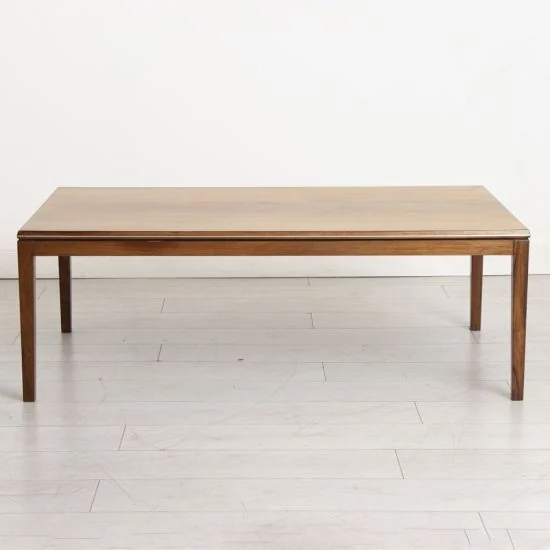
With a rectangular table, leave some of the top exposed so its long edge remains visible. A tray can gather small objects, but filling the whole surface would hide the plain shape that attracted you. Compare the table’s wood color with the sofa frame and cabinet in the same view.
An oval tabletop changes that relationship. This wood-grain table has a rounded perimeter above black tapered legs, giving a straight sofa a softer shape in front of it. The dark legs provide a thin outline beneath the broader brown surface.
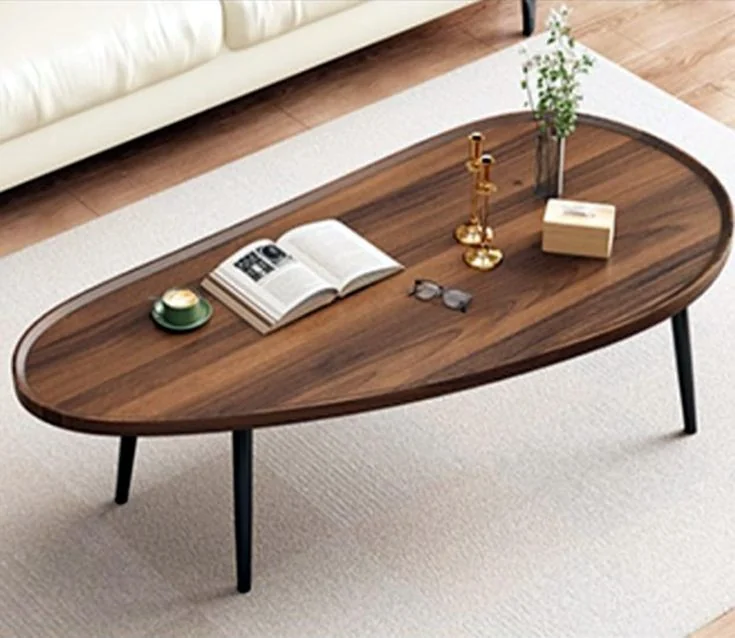
The detail views offer shape references, so choose the size from your room. Mark the proposed footprint on the floor and walk past it before committing to a table. A rounded edge may be the look you prefer, but the picture can’t tell you whether that particular table leaves enough space beside your seating.
Finish a Low Living Room Sofa with a Quiet Rug and a Taller Accent
The table choice becomes easier when you judge it beside the sofa rather than on its own. In this room, a tan sofa and a low wooden coffee table share the foreground. A pale rug with fine lines gives both pieces a quieter base, while yellow curtains and a tall lamp carry detail above the seat.
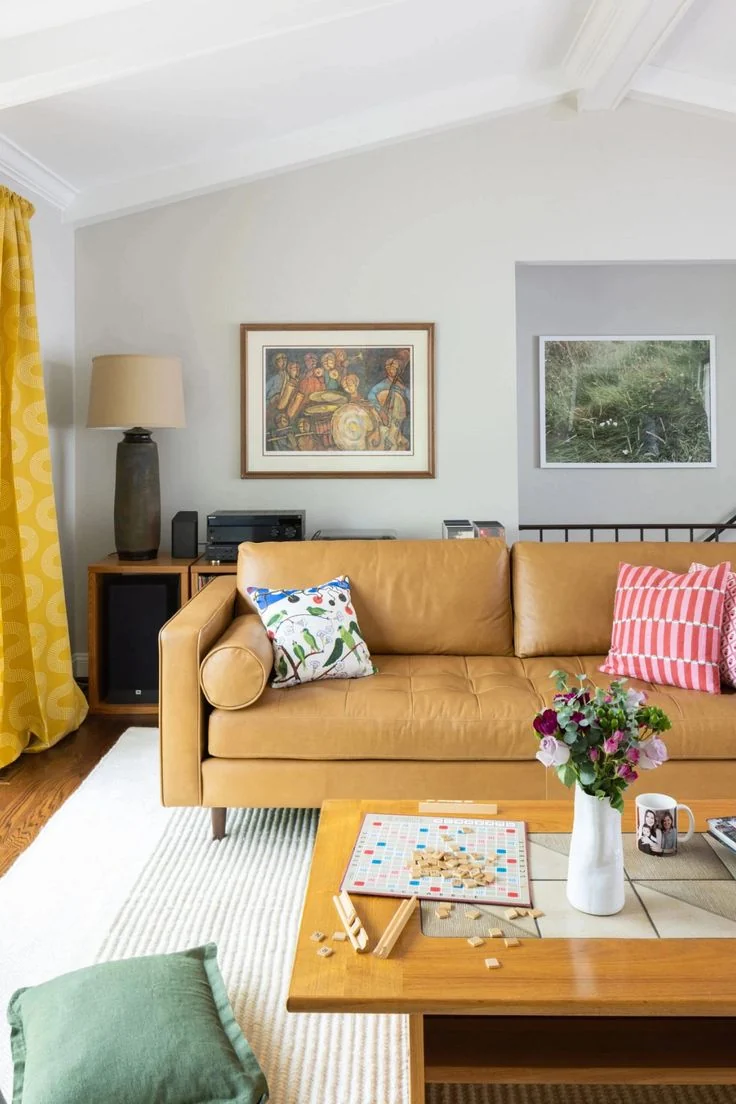
The cushions still bring color and pattern. We wouldn’t remove every soft detail to make the furniture lines visible; we’d keep enough plain upholstery showing for the tan sofa to remain a distinct block. The low table’s broad top can then share the foreground without needing another vivid color.
Look at your lamp from the seat as well as across the room. Its height can accompany low furniture, but the light still needs to reach the place you use. These sofa-side and reading-chair lamp arrangements focus on that practical part of the pairing.
Choose the Furniture Relationship Your Room Needs
Start with the piece you’re keeping. If it’s a bright sofa, compare a related wood table and a calmer rug. If it’s a plain sofa, consider a chair with a distinct arm shape or artwork that repeats a color already in the room. When several pieces have strong outlines, let a simpler neighbor separate them.
Before buying, look across the seating group and name the detail you want to keep visible: the sofa’s wooden side, its exposed legs, the chair’s curved arms, or the table’s rounded edge. Move a small accessory or fold back a throw if that detail’s hidden. You may already have the shape the room needs.
The room guides at ZM Home offer other combinations to compare with furniture you’re keeping.
For ideas that bring the whole room together, explore Living Room Decor Ideas for the Room You Already Have.