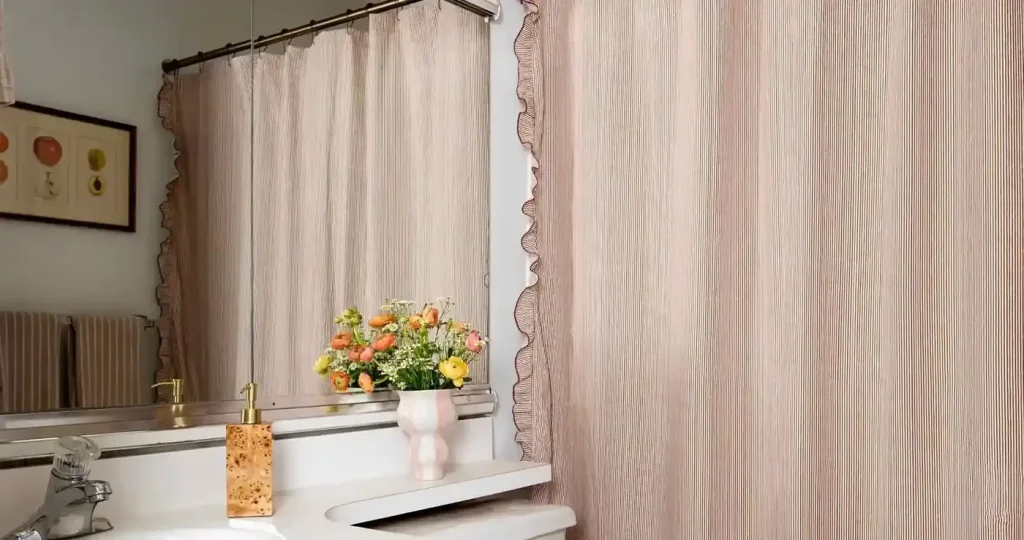
Bathroom decor ideas are easier to choose when you treat the existing tile and fixtures as the starting point. Pull a color into the shower curtain, repeat it in a towel or rug, and gather small accessories into a few clear groups. The examples below show how to make those choices without changing the room’s layout.
Let the existing bathroom colors narrow the choices
Before choosing an accessory, look at the largest surfaces already in the bathroom: the floor, walls, vanity, and shower enclosure. Decide which color you’d like the textiles to pick up. A small accent in a patterned tile might be enough; you don’t have to match the whole floor.
In the pink bathroom below, the patterned curtain, coral hand towel, and folded striped towel share a similar color family. The white vanity gives those patterns a plain surface to sit against. The towels vary in design, yet their colors connect them to the larger curtain.
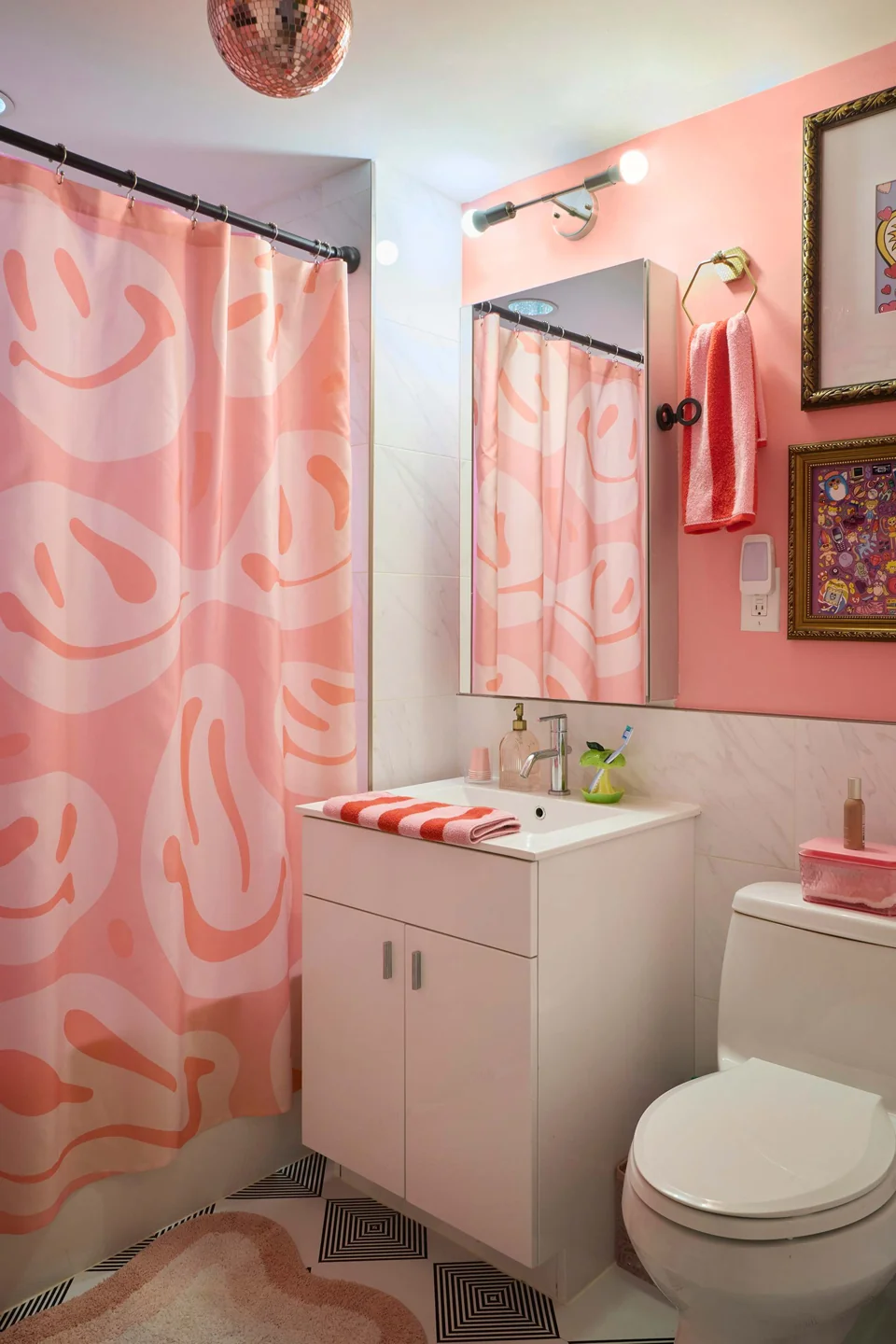
Try this with what you already own: put your towels beside the curtain and see which color appears in both. Keep that connection visible. If every item introduces another color, set some aside and compare the smaller group. You can still have a colorful bathroom without asking every accessory to stand out.
If you’re refreshing rooms beyond the bathroom, ZM Home has more decorating ideas to explore.
Let a patterned curtain lead the bathroom decor
Once you’ve chosen a color direction, decide how much pattern the shower curtain should carry. A curtain covers a large part of the view, so compare its print with the floor before adding smaller patterned pieces. Judging the fabric alone leaves out much of the room.
The botanical curtain here sits beside small black and white floor tiles and a white pedestal sink. Its larger leaves and flowers look different from the tiny shapes on the floor. For a similar mix, we’d keep towels simple so they don’t introduce another pattern of equal weight.
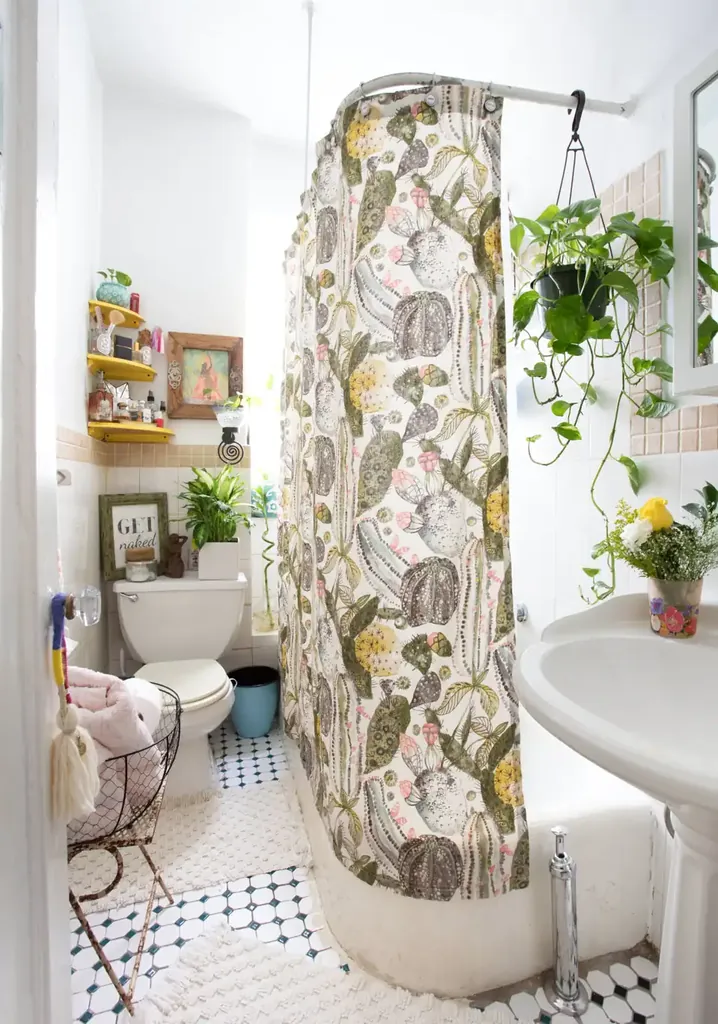
If you prefer a quieter room, choose a curtain with more plain background showing between the motifs. With a shower door instead of a curtain, you can put that color emphasis into towels. There’s no need to add a textile where the room doesn’t call for one.
Connect bathroom towels with the vanity accessories
With the curtain settled, towels can pick up a color from elsewhere in the bathroom. Look beyond the shower area: a container, a picture, or a detail near the sink may offer a starting point. A towel doesn’t need the exact same print to make that connection.
The blue and white towel below echoes the blue and white containers beside the dark vanity. The towel’s small pattern adds another scale without introducing a separate color scheme. Notice that the vanity stays dark and plain; the color link comes from the movable pieces around it.
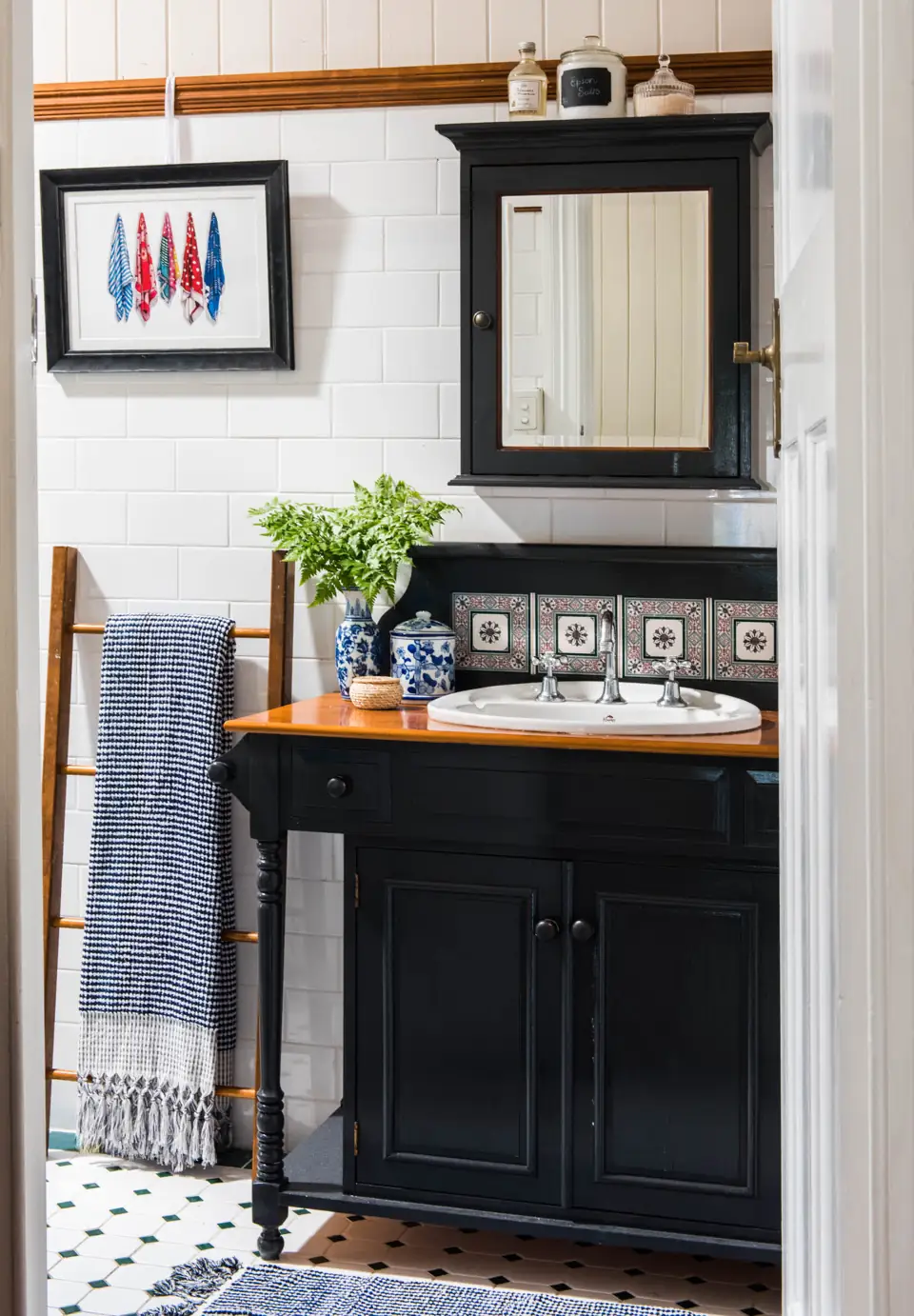
Use the towel position you already have as part of the arrangement. If a hand towel hangs near the sink, consider how it looks alongside the soap bottle and containers. You don’t need a matching set across the entire room to make that small area feel considered.
Balance a striped bathroom curtain with a quieter rug
Towels carry color around eye level; the rug brings the floor into the same composition. When the curtain has broad stripes or a large print, compare it with a plainer rug. A narrow line can add detail without repeating the curtain at the same scale.
In this bathroom, coral, white, and gray stripes run across the curtain, while dark lines break up a cream rug in front of the vanity. The rug has its own pattern, but it occupies less of the view. The white cabinetry gives both textiles a shared background.
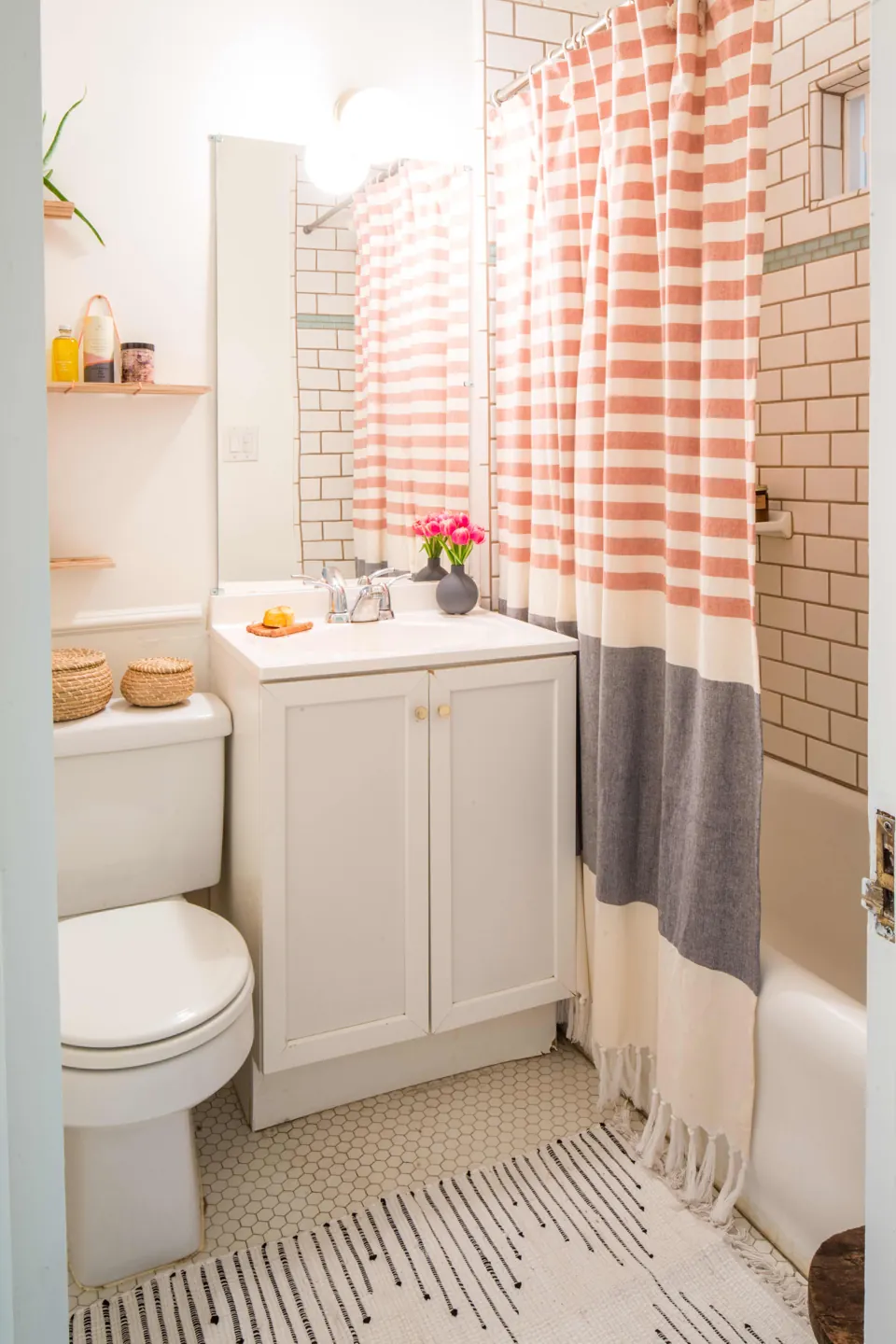
If the floor is already the room’s strongest pattern, a solid textile may be the choice you prefer. Judge the colors together, then check the product’s stated care and intended use before choosing it for your bathroom. The photograph shows a color arrangement, not a performance test of the rug.
Give a small bathroom tray a specific job
After the textiles, turn to the objects sitting on bathroom surfaces. A tray can give a loose group a visible boundary, but decide what belongs in that group before choosing the tray. A tissue box and an accent need a different arrangement from bottles used at the sink.
The example below uses a narrow wood-toned tray on a toilet tank, with a white tissue box, a plant, and a small clock inside it. The tray’s edge makes those separate objects read as a group. Treat that visual idea as the reference, then choose a suitable surface in your own room.
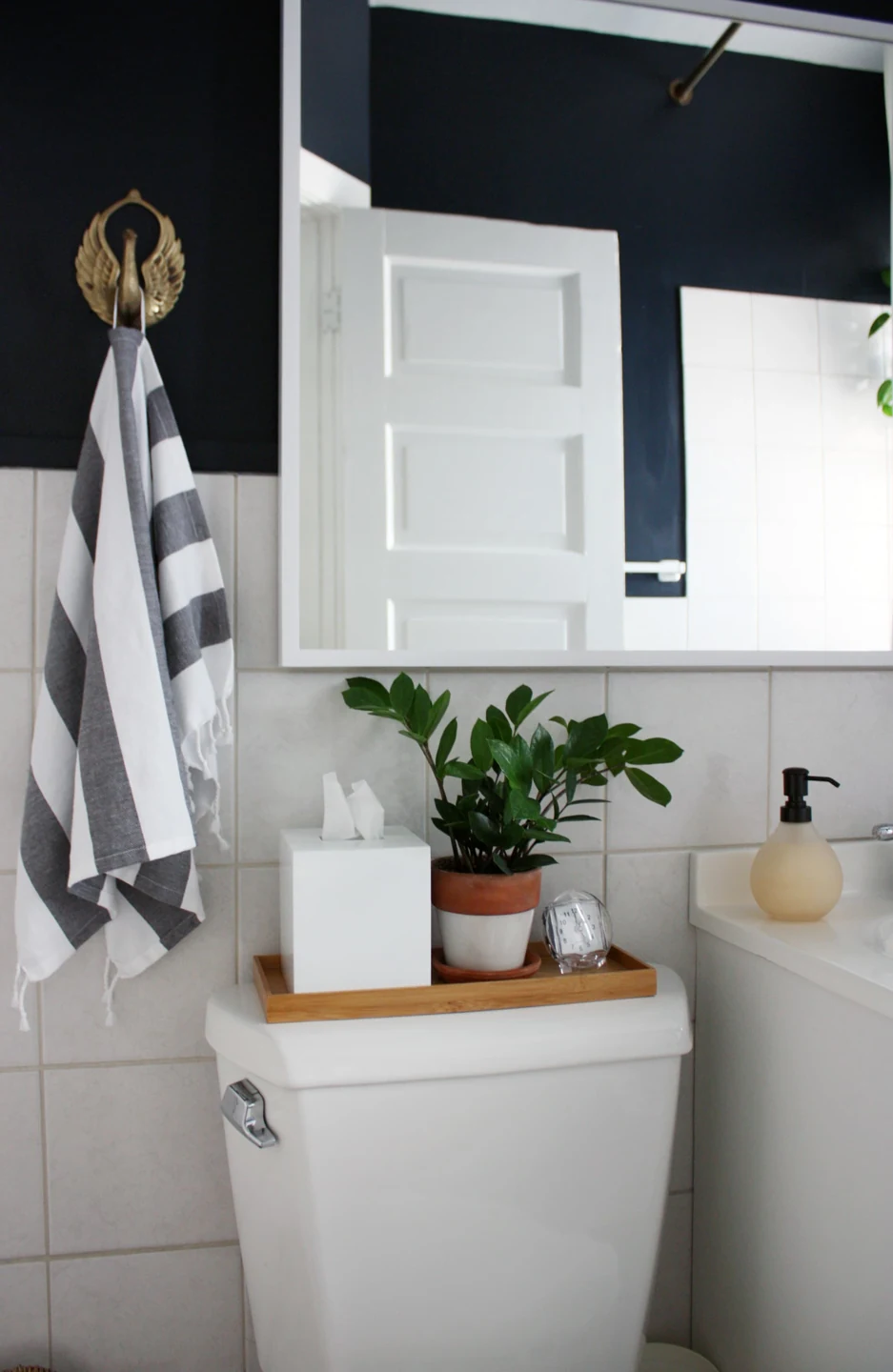
At a vanity, begin with the items you reach for there. Leave space to use the sink and move the items individually. If the tray makes that awkward, a smaller group without a tray may suit the surface better. An organizer should earn its place through the arrangement it holds.
Repeat container colors without filling every bathroom shelf
The tray’s boundary can also come from color when accessories sit across separate shelves. Repeating a container color gives the eye something to follow even when the objects have different shapes. You can make that choice with a few pieces rather than replacing every bottle in the bathroom.
Green vessels repeat across the white shelves below, including bottles and a lidded jar. Some shelf space remains visible around them, while a white vase and a small flower sit lower down. The jar’s contents aren’t visible; the useful decorating detail is its relationship to the other green shapes.
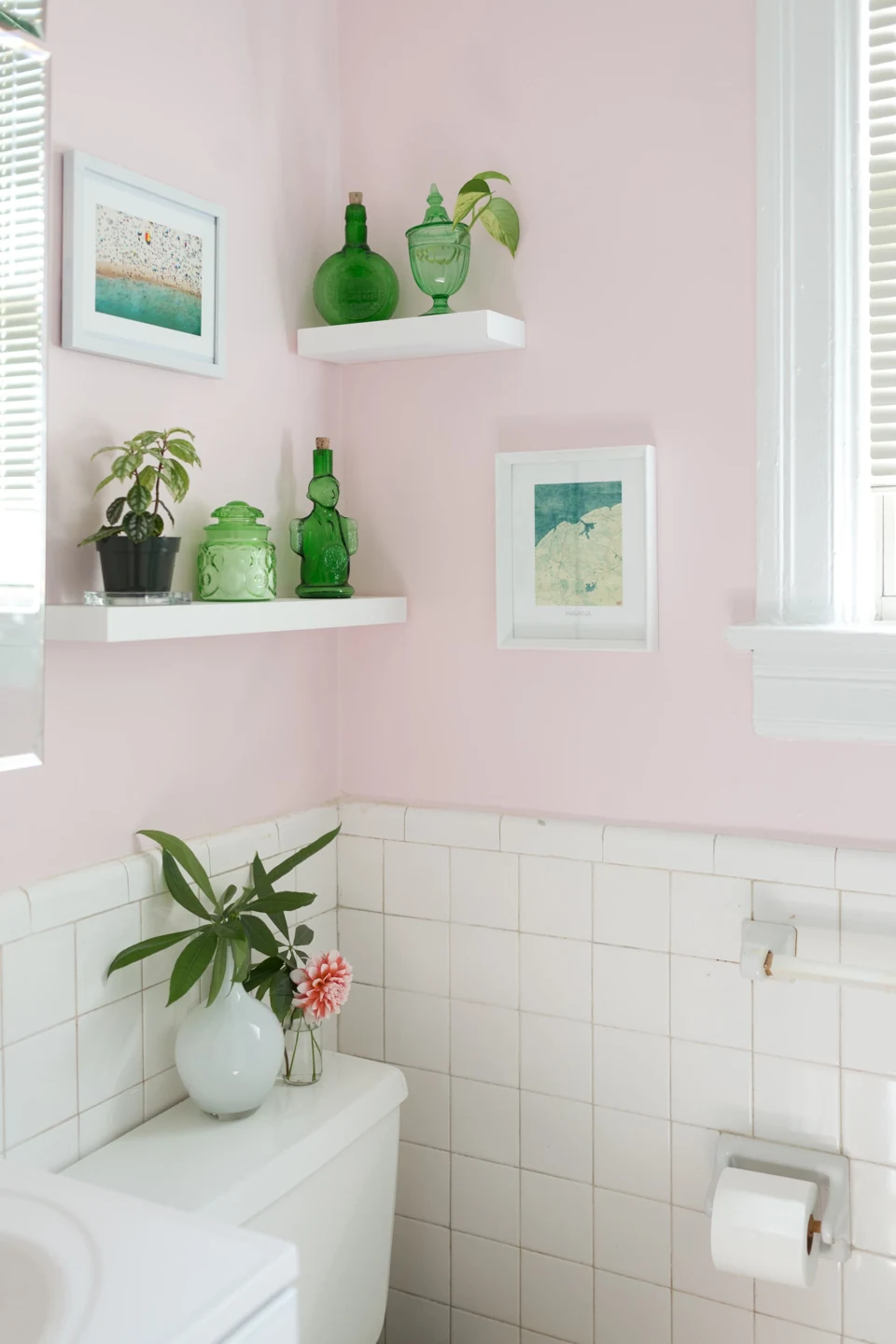
For your own arrangement, separate display pieces from containers that need to do a daily job. Choose the useful container for its contents first, then consider whether its color belongs with the pieces nearby. A decorative jar doesn’t have to become storage just because it’s sitting in a bathroom.
Use existing baskets to group loose bathroom items
Color can connect containers, while baskets can bring several small pieces into a more defined group. Start with the storage space your bathroom already has. Brushes and bottles may look less scattered when they share a basket instead of standing separately along a ledge.
Here, two open woven baskets hold small items above a mirrored cabinet. Near the sink, the arrangement is smaller: a bottle and a flower vase occupy the ledge. The contrast is useful when deciding what should stay near the sink and what belongs in existing storage elsewhere.
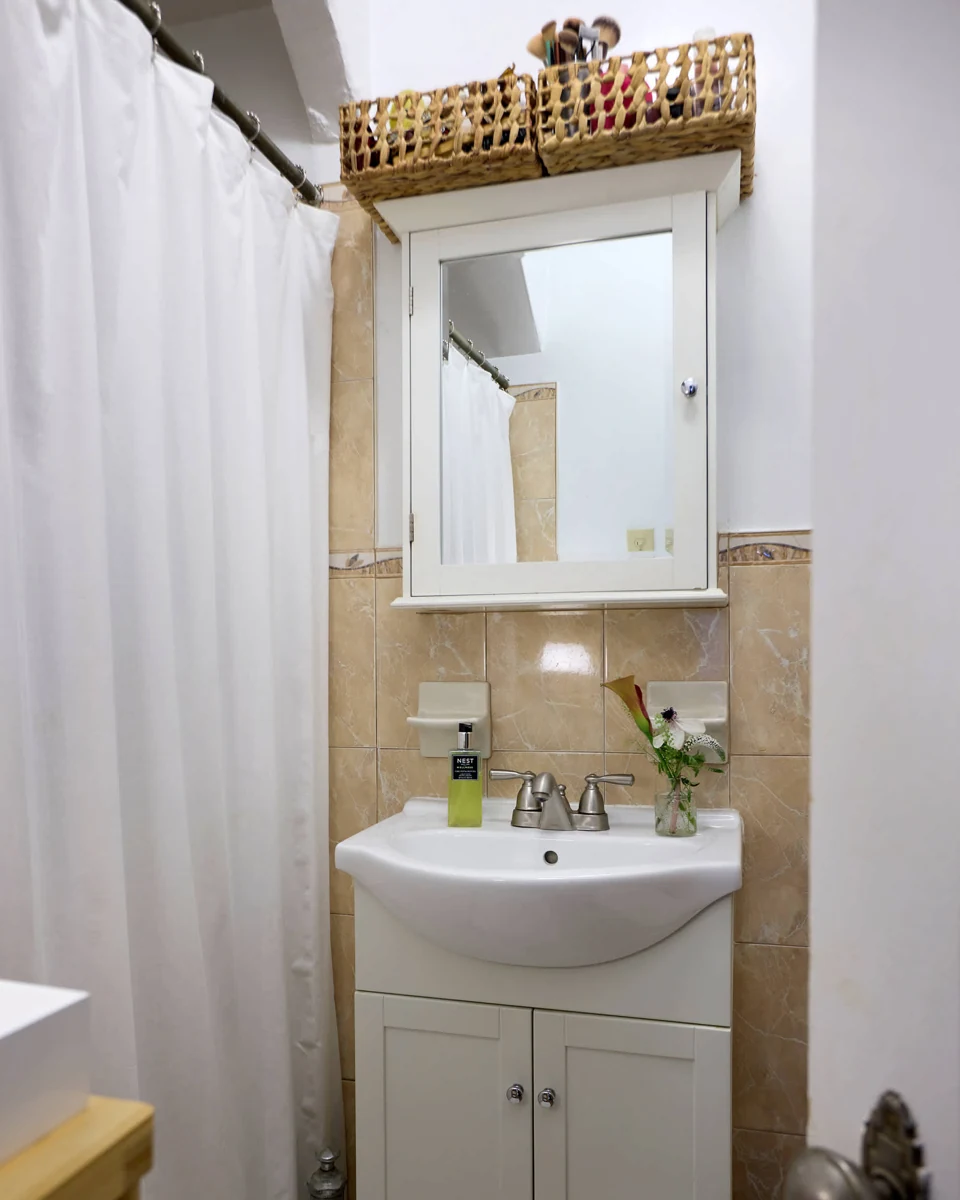
Before adding another basket, sort out what the group is meant to hold. Keep its purpose clear enough that you can tell where an item belongs. You might prefer separate containers for grooming pieces and spare toiletries; the decorating benefit comes from keeping the groups distinct rather than adding more containers around them.
Finish a narrow bathroom shelf with a small arrangement
Once everyday items have a place, decide whether the remaining surface needs decoration. A narrow shelf may call for very little. Look at the full view, including the mirror and window, before adding another object to fill an empty patch.
The shelf below holds a glass vessel with green leaves and a small candle. The pair leaves much of the narrow ledge visible, and the mirror brings the surrounding room into the view. We’d stop with that small arrangement rather than continue the display along the entire shelf.
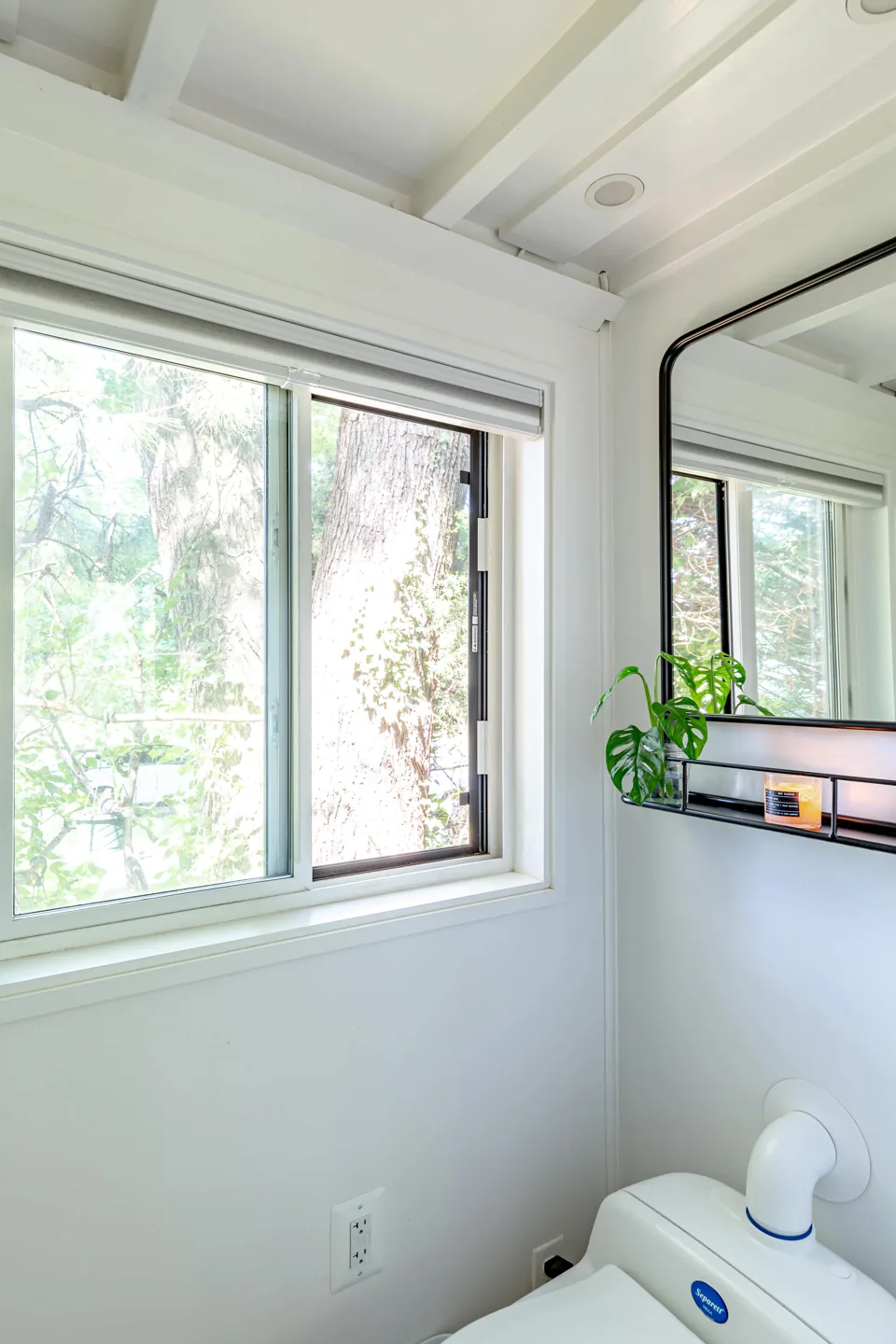
Try removing an accent before adding a new one. If the towel, curtain, and daily-use pieces already give the room enough color, the open space may be the finishing choice.
For ideas that bring the whole room together, explore Home Decor Ideas for Rooms You Use Every Day.