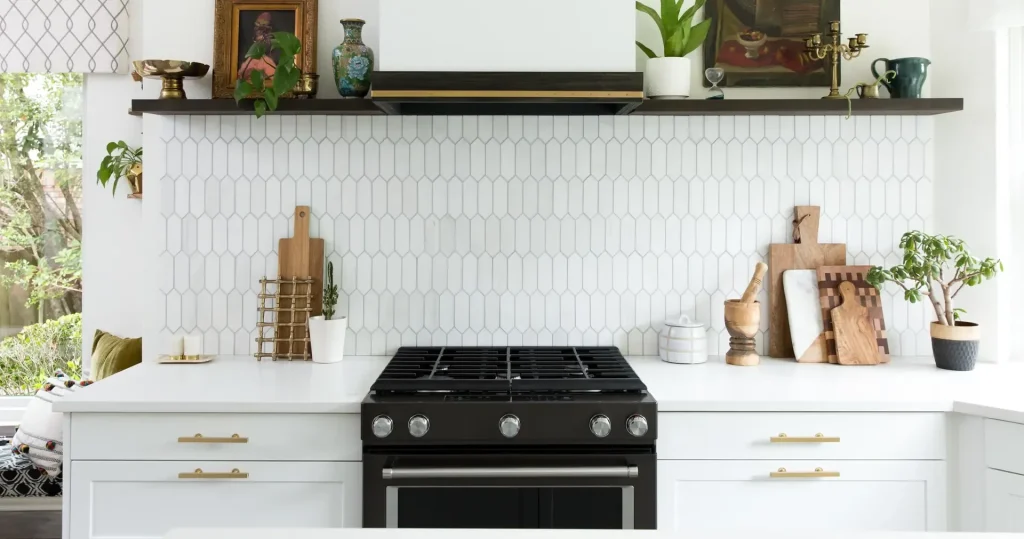
Kitchen counters need room for cooking as well as the things you enjoy seeing. For a decorated counter that still works, keep the preparation area open and gather the pieces you leave out into small groups near the back. A utensil crock, a tray of mugs, or a fruit bowl can give the space a focal point without asking every stretch of countertop to hold a display.
Choose among the ideas below according to what you actually reach for. A kitchen with a coffee station may have no room for a separate flower arrangement, and an island used for meals can look finished with a single bowl.
Decide Which Counter Space Must Stay Open
Before choosing accessories, picture where you put the cutting board, unload groceries, or set down a dish. Those working areas should shape the decoration. We’d leave the main preparation surface uninterrupted and place decorative groups where they won’t have to be moved before each ordinary task.
The clear area needs to suit your own board and routine; a photograph can’t supply that measurement. Set your usual items down before deciding what else fits. If the vase occupies the only useful place for a mixing bowl, move the vase elsewhere rather than squeezing the work around it.
The island in the fruit-bowl example later on is a useful reminder: a kitchen can have objects along the perimeter and still keep its central surface mostly open. The choices below are alternatives for different areas, rather than a shopping list for the whole room.
Give Countertop Mugs a Defined Place on a Tray
Once the working space is reserved, a tray can give smaller daily pieces a clear boundary. In this kitchen, colorful mugs sit on a tray by the window, with a French press farther back. The front of the counter remains visible instead of being dotted with separate cups.
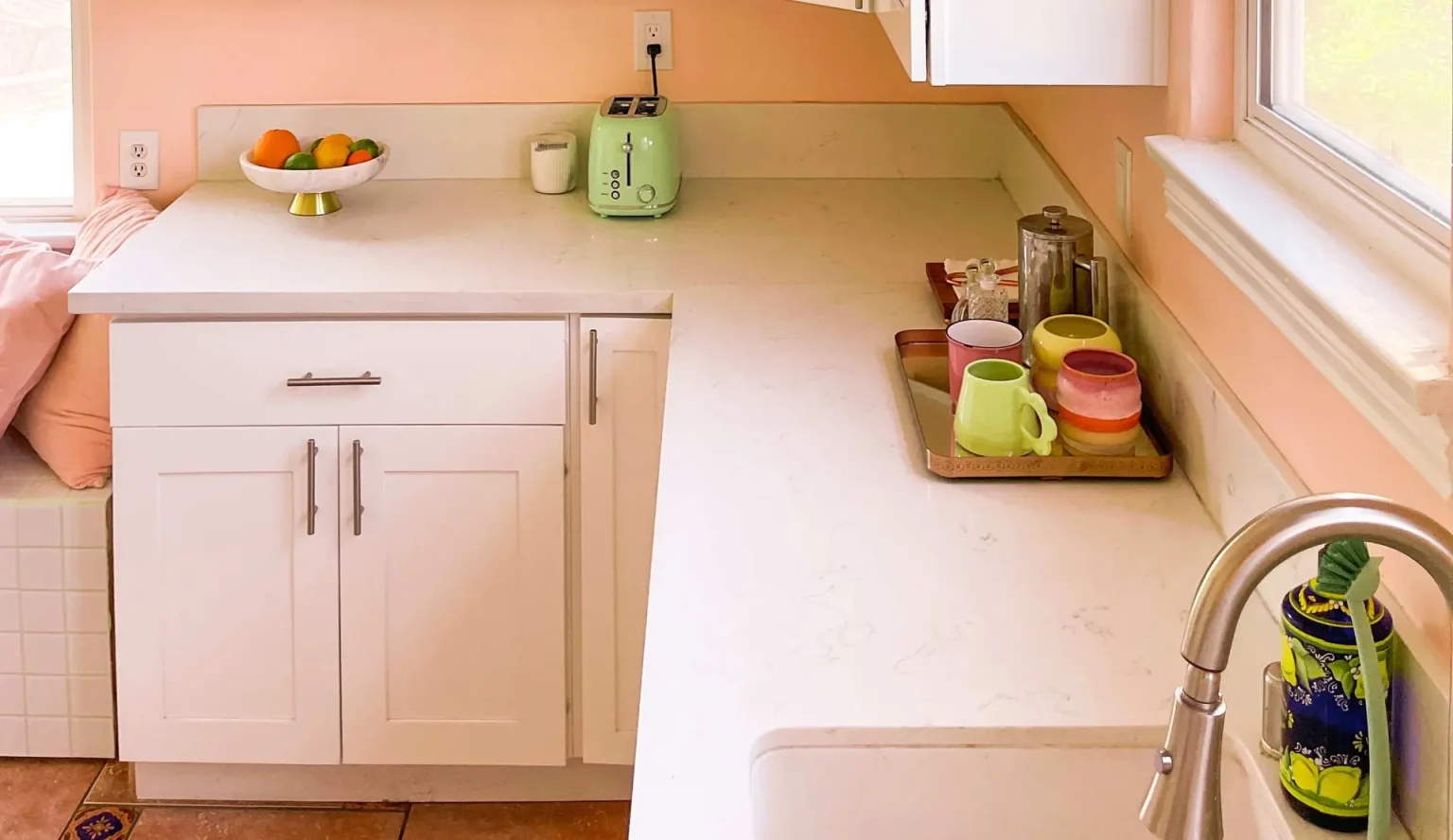
We’d start with the cups that earn their place through use. Let their colors supply the decoration before adding an ornament beside them. A tray with extra empty space doesn’t need another object just to make the arrangement look full.
Choose a tray you can lift comfortably with its intended contents, and leave somewhere to set it if the counter becomes a serving area. Keeping the group movable is more useful here than creating a display that can only be admired in place.
For a kitchen visible from the seating area, compare the mug colors with the larger colors beyond it. Our living room color combinations show repeated hues across walls, furniture, and smaller accents, giving you a palette to consider from the kitchen too.
Let a Utensil Crock Do the Decorating
A tray suits small pieces that belong together; a crock gives taller cooking tools a shared outline. The white container below gathers wooden spoons, a whisk, and a black ladle. Their different shapes create detail above a simple base.
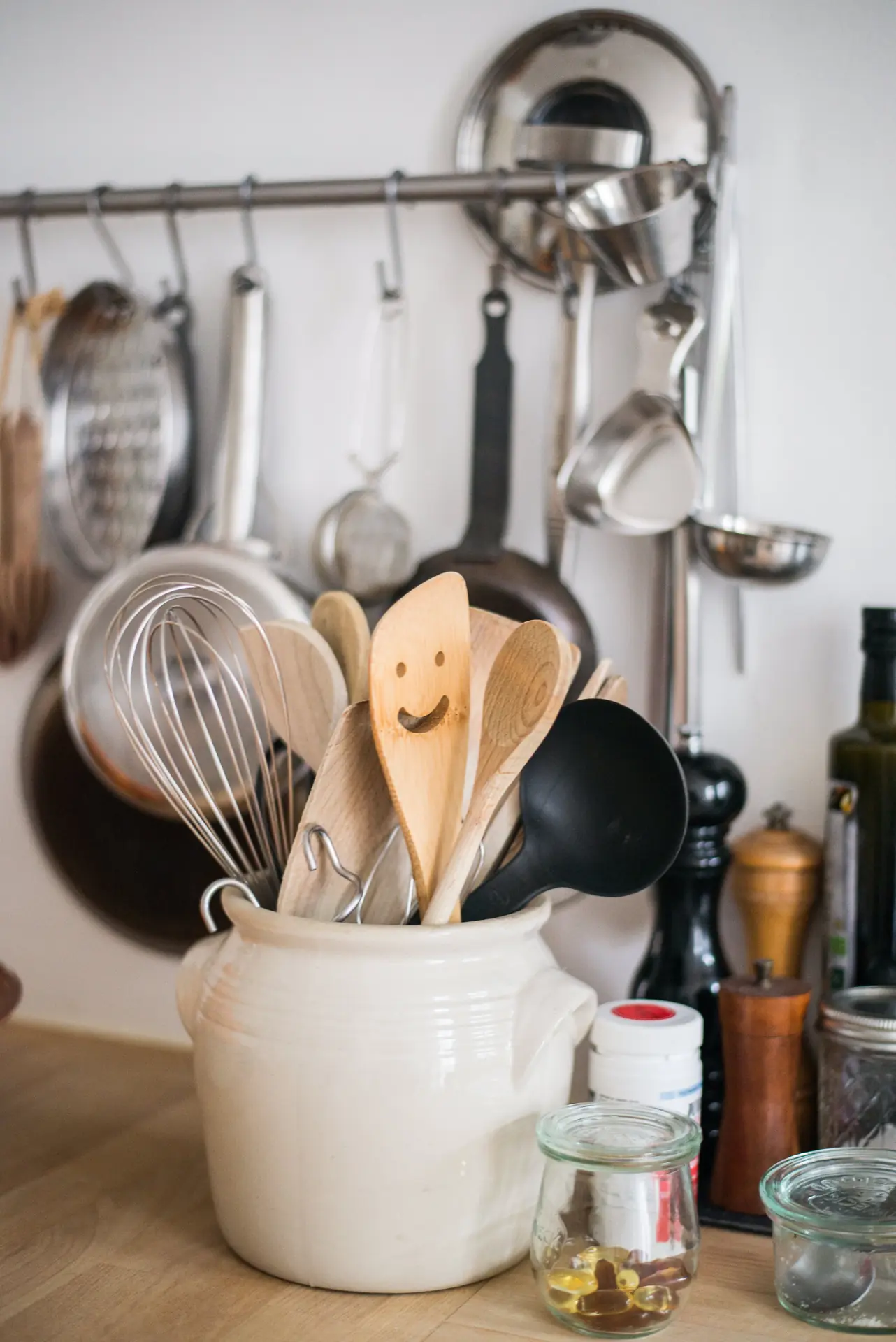
For this approach, we’d keep the tools you reach for and put duplicates away. Check whether you can take out the spoon you want without pulling the whole bundle with it. A crowded crock may look abundant while making the everyday action awkward.
A plain container also gives you a quieter choice when nearby tiles, appliance finishes, or hanging cookware already add detail. You don’t need to match every tool handle. The visible mix is part of this example’s appeal.
Make a Fruit Bowl the Kitchen Island’s Main Accent
Where the crock concentrates tall shapes, a fruit bowl can provide a lower, broader focal point. Here, a black bowl of green apples sits on a mostly clear white island. The open surface around the bowl is a large part of the composition.
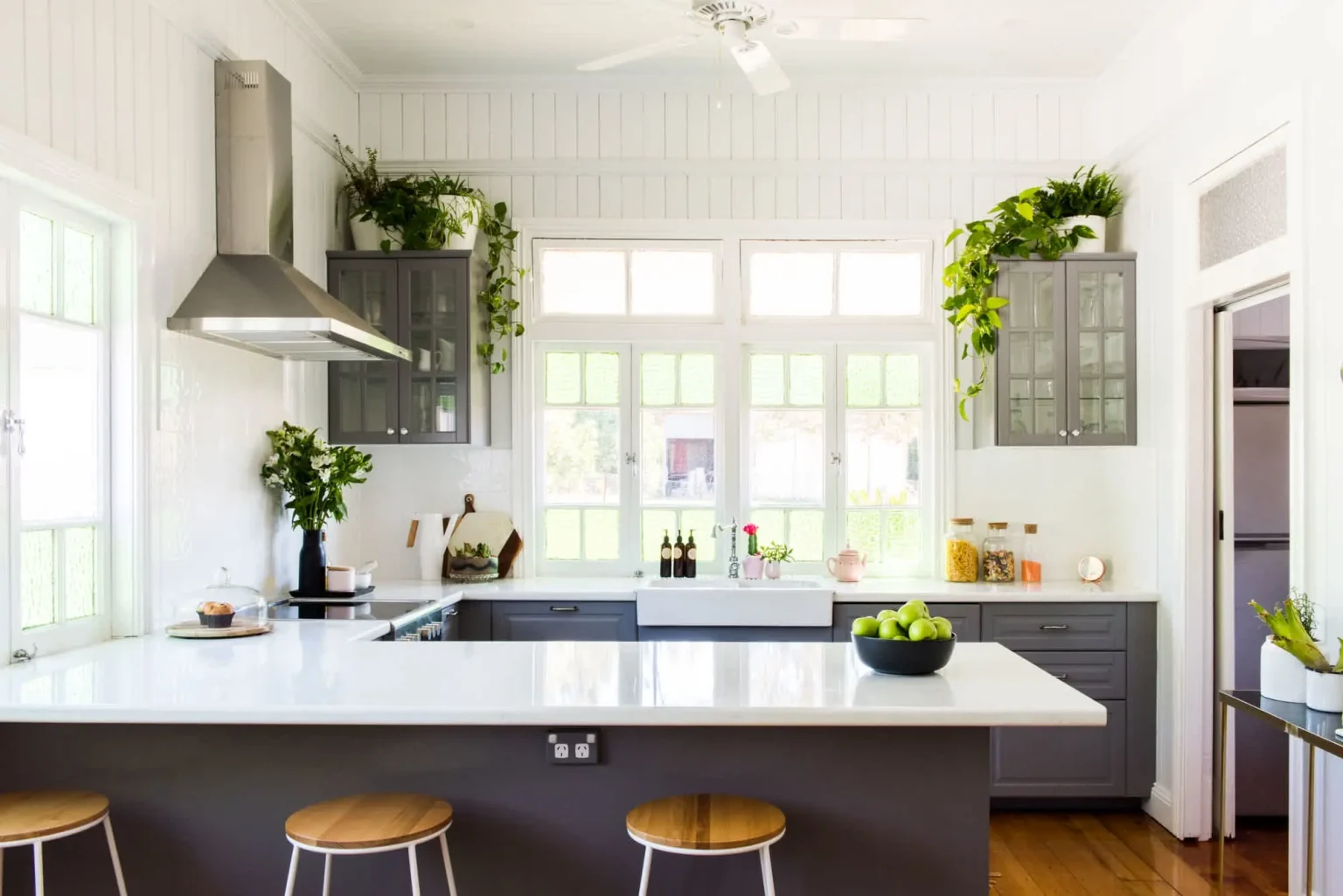
Choose a bowl for fruit you already keep rather than buying decorative filler to complete the scene. If the island regularly becomes a homework desk or meal table, decide where the bowl goes during those activities. A beautiful centerpiece is easier to live with when moving it doesn’t start another rearrangement.
The dark bowl makes a clear outline against the pale surface. A quieter room could use a bowl close to the counter’s color instead; the shape and fruit would then provide more of the contrast.
Add Kitchen Counter Color with a Movable Vase
If a bowl already handles the practical display, flowers are an optional change of mood. Orange flowers in a clear vase share this counter with a yellow bowl. The color is concentrated in a small area, with open countertop visible in front.
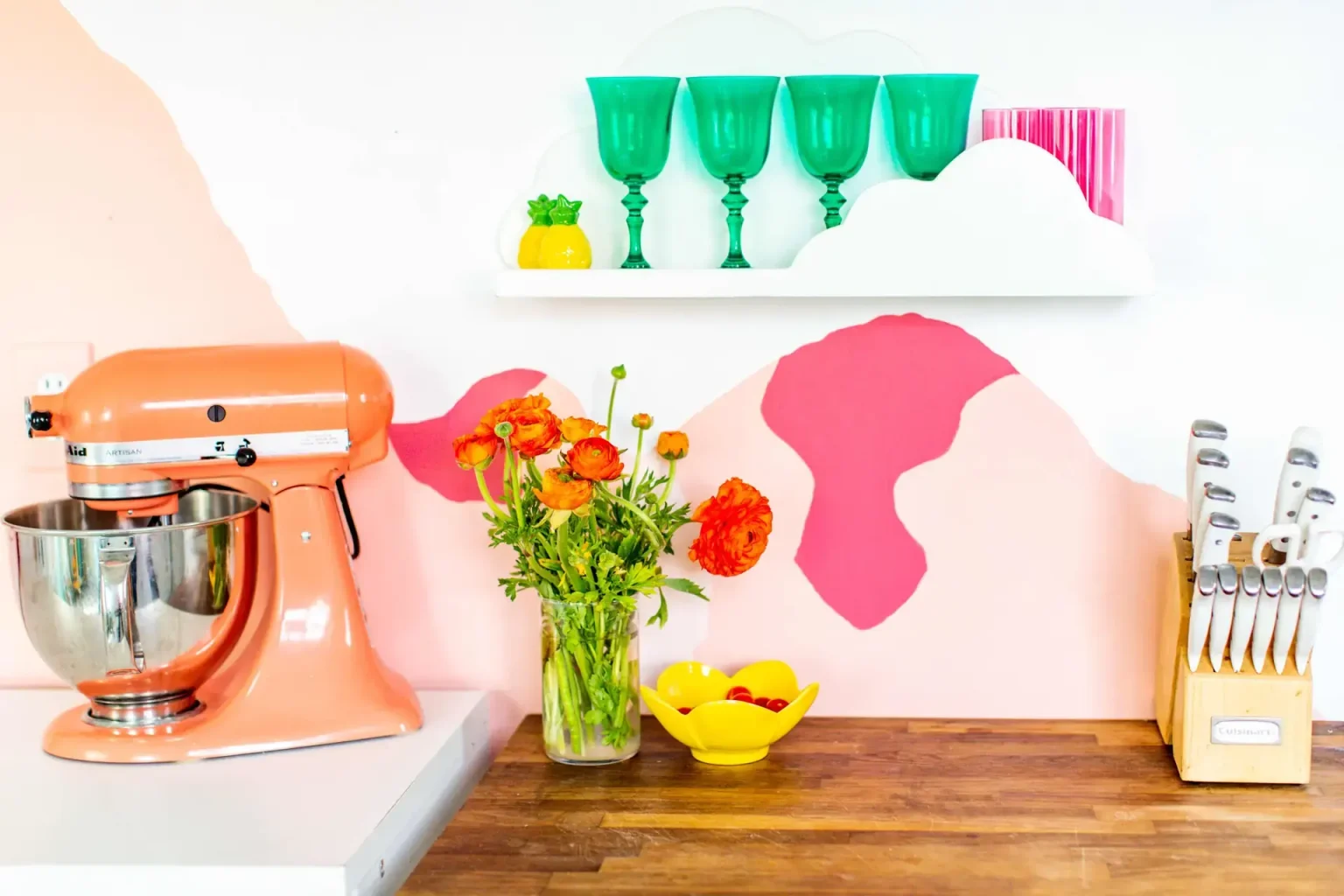
We’d borrow the compact grouping before copying every color in the room. A vase can repeat a hue from a dish or nearby artwork, while the counter itself stays simple. Consider the spread of the flowers as well as the base: a narrow vase can still have stems that reach into your working space.
Build a Kitchen Coffee Group Around the Daily Routine
A temporary vase can move freely, but a coffee machine usually needs a more settled place. This setup gathers the machine, pale canisters, and mugs in the same corner. The useful idea is their shared location, rather than the number of accessories on display.
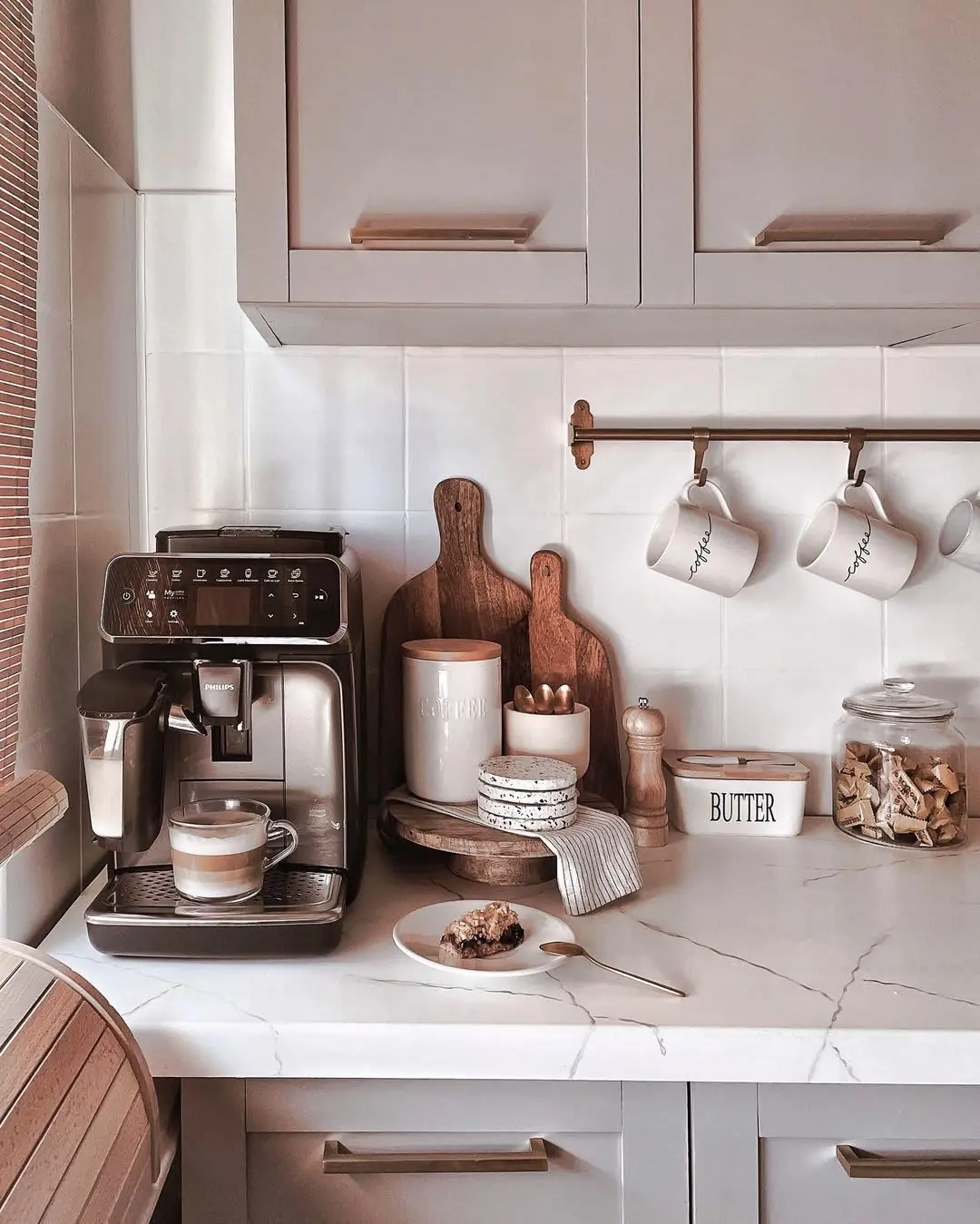
Think through making your usual drink before choosing what stays beside the machine. Keep room for the cup while it is in use, not just while everything is put away. Canisters deserve counter space when their contents belong to that routine; extra jars can remain in a cabinet.
The pictured mugs hang above the surface, but you can borrow the grouping with an existing cupboard nearby. The arrangement doesn’t require adding a rail or copying the photograph’s fixtures.
Keep a Narrow Counter’s Front Edge Clear
A smaller counter calls for a smaller version of the coffee group. Here, a slim machine, a small plant, and a bowl occupy the back of a narrow counter. The exposed front edge makes the limited surface easier to distinguish from the objects above it.
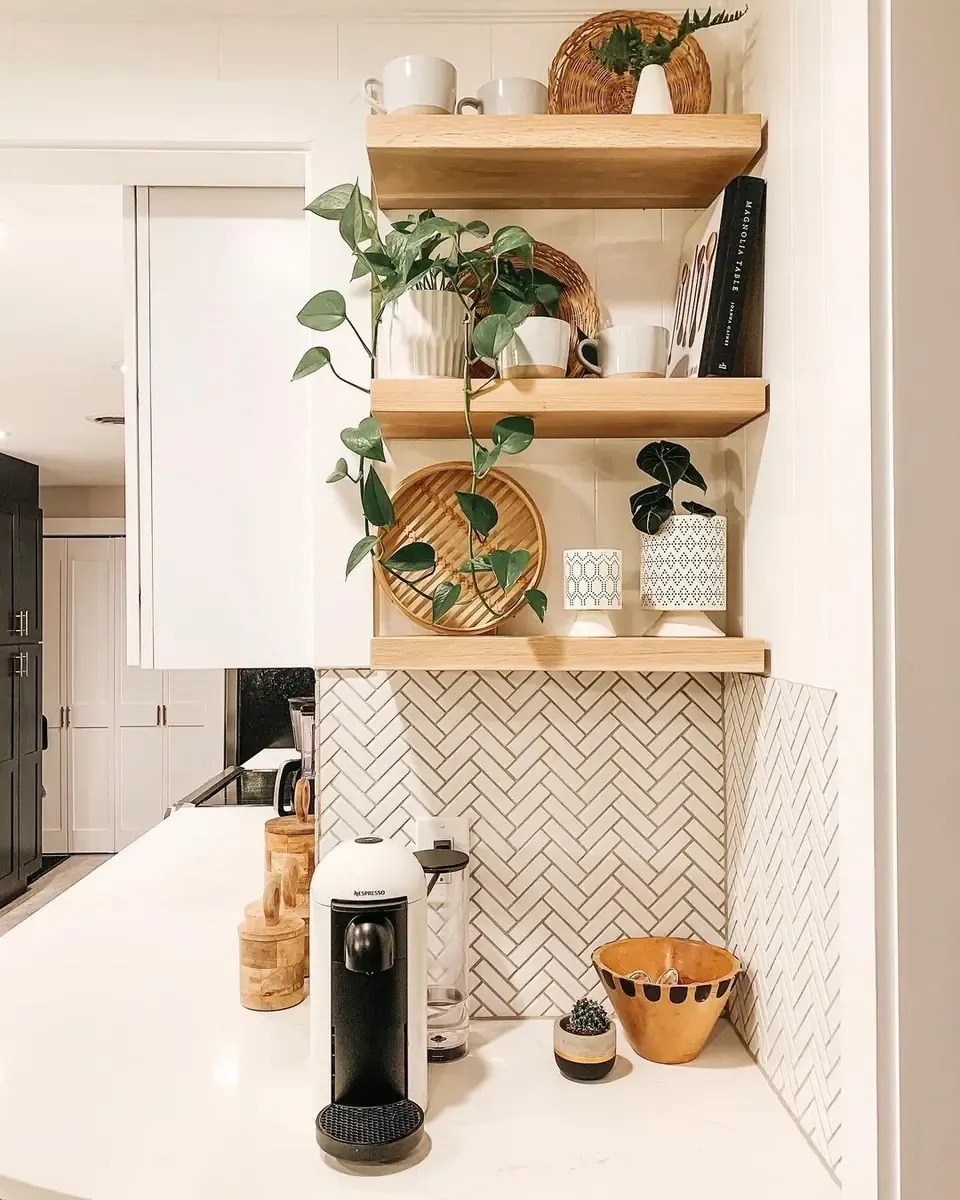
For a similarly tight spot, we’d choose the useful appliance first, then see whether an accent still fits. Try setting down the cup or dish you use there. If doing so means moving the plant each time, keep the appliance and give the plant another home.
A corner doesn’t have to carry the same amount of decoration as the island. Let the kitchen’s larger display do more of the visual work when the small surface already has a job.
Gather Sink-Side Pieces Without Filling the Counter
The same restraint matters beside the sink, where the objects are often necessary. In this example, bottles and a white brush holder sit near a white sink, with a stretch of counter left visible to the right. Their close placement reads as a group rather than a row across the whole surface.
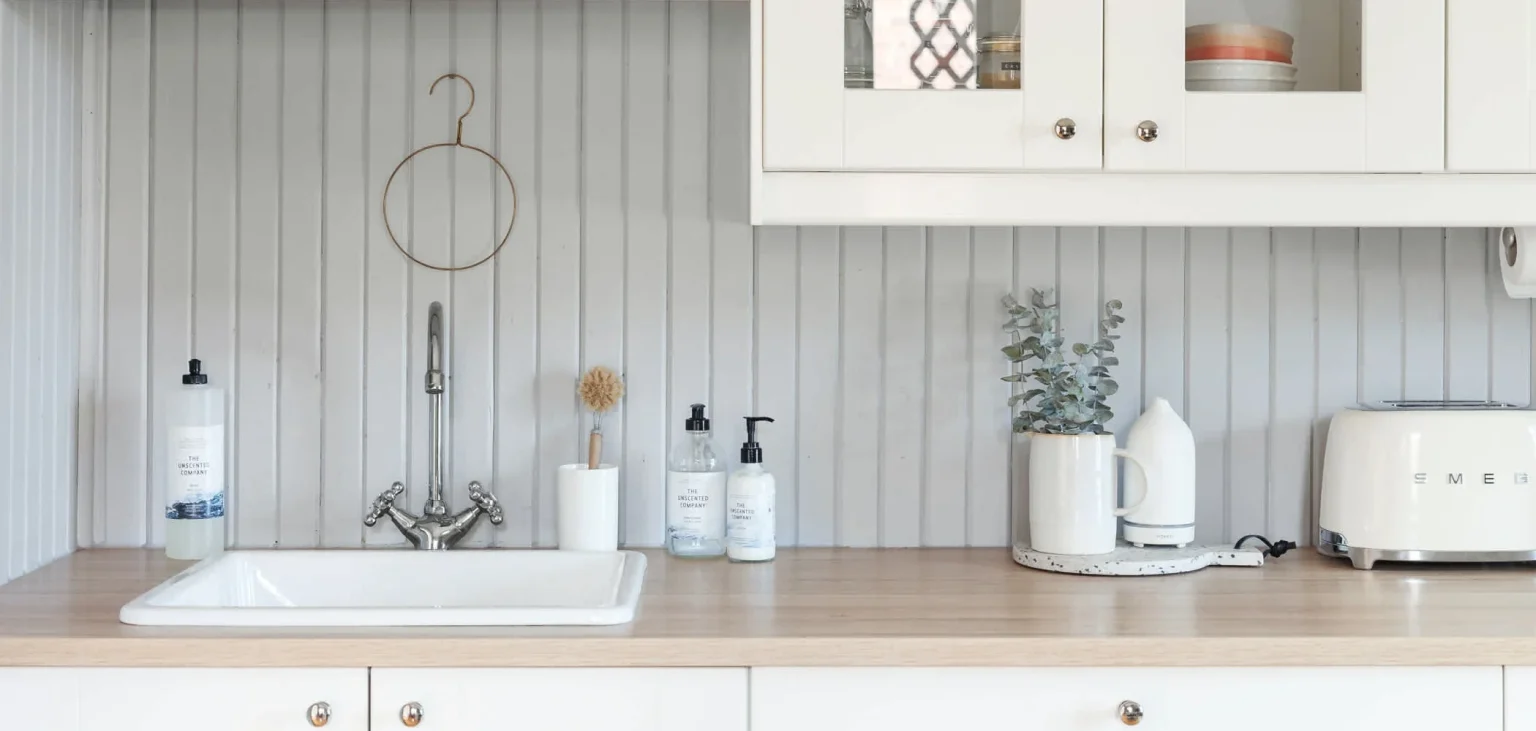
We’d make access to the sink and a place to set things down the priorities. Keep the pieces you use there together, and store spare bottles elsewhere if space is tight. A separate decorative object can wait until the ordinary sink-side items have a workable place.
Matching containers are optional. Similar colors can quiet the group, but the first question is whether each item remains easy to reach and return. Follow the care instructions for your own counter and any container you leave on it.
Use a Small Picture Where the Counter Has Room
If the practical groups are already settled, a small framed picture offers another kind of accent. Below, a compact frame rests on a long tray against a teal backsplash. Its upright outline adds detail while leaving the counter in front visible.
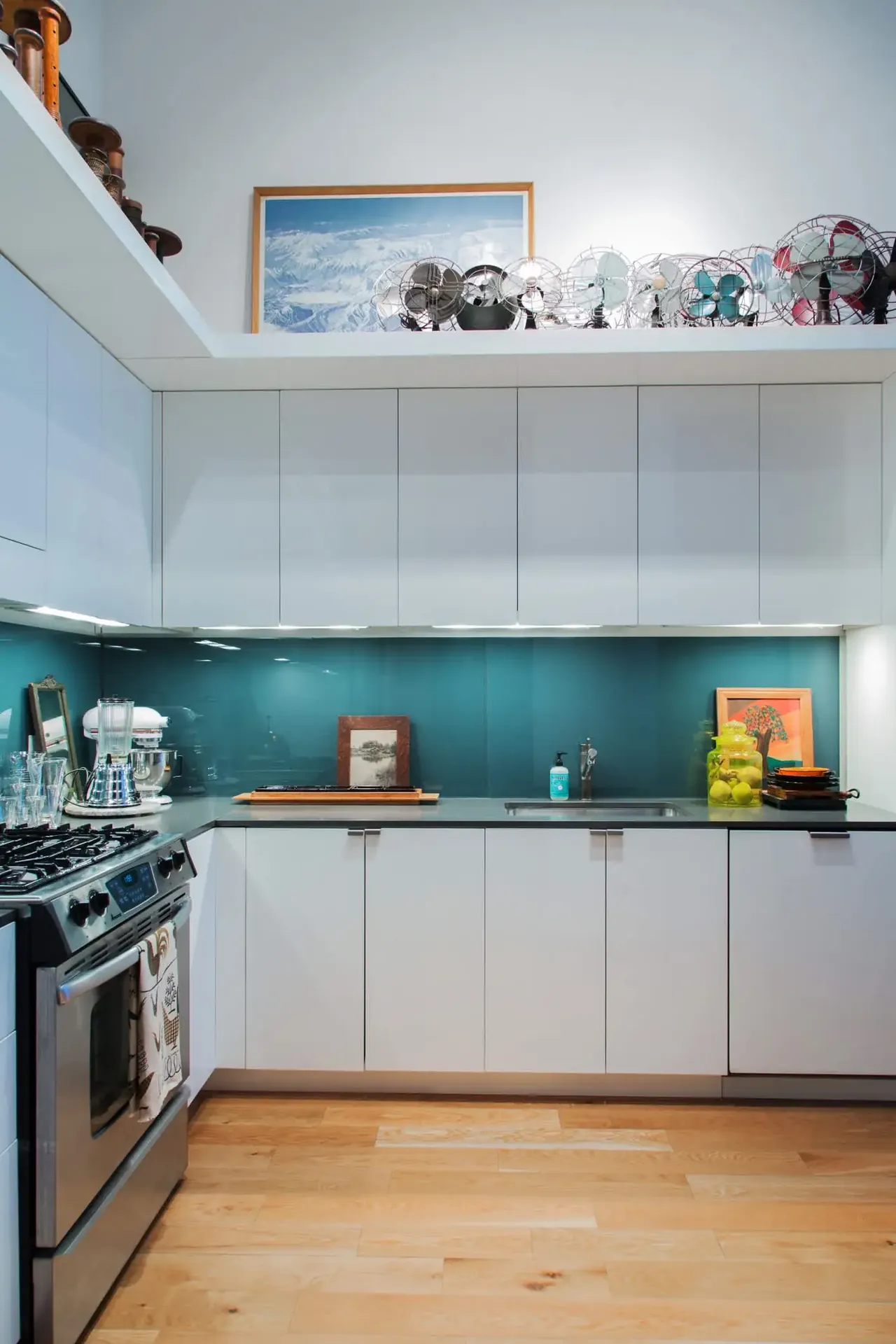
We’d reserve this idea for a dry display spot where the frame doesn’t interrupt cooking or washing. The photograph shows several separate collections around the kitchen; you can borrow the small picture without recreating all of them. Keep the display easy to move when you need the surface.
The frame’s relationship to nearby colors matters more than filling the wall above it. For a larger art display in the adjoining room, these living room wall arrangements compare compact groups, mixed frames, and open space around the artwork.
Restore the Counter’s Open Space After Use
A finished counter needs somewhere for the temporary items to go. After a meal or a round of coffee, return cups and tools to their places and move mail, packaging, and other arrivals off the work surface. Treat the clear preparation area as part of the arrangement you are restoring.
If the display keeps spreading, reduce the group that causes the trouble. Keep the fruit bowl and move the spare vase, or leave out the coffee pieces and put the extra mugs away. Stop at the arrangement you can use comfortably, even if a favorite photograph shows more.
For ideas in another room, browse ZM Home with the same question in mind: which pieces make the space pleasant to use, and which ones keep getting moved out of the way?
For ideas that bring the whole room together, explore Home Decor Ideas for Rooms You Use Every Day.